7-year tax break to underpin 79 downtown senior apartments
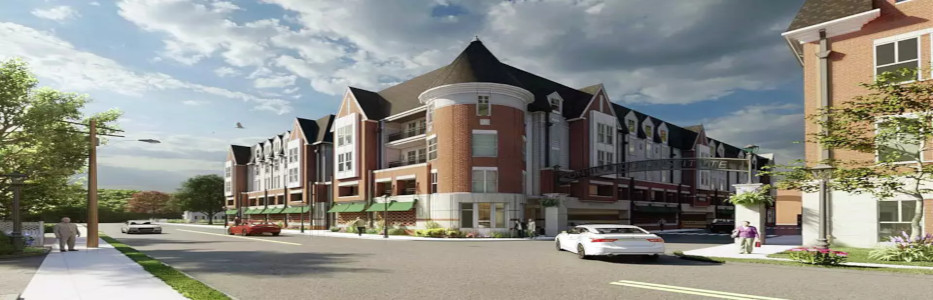
LONDON: A seven year tax break is set to underpin a city centre seniors apartment community.
A plan for affordable senior apartments in downtown Danbury that has been on the drawing board for 14 years will begin construction as soon as 2026 after the City Council granted the nonprofit project a seven-year tax break.
The city agreed to forgo a total of $1.75 million in future property taxes that the new apartment house would have had to pay through seven years after an 83-year-old Danbury woman implored leaders to act during a public meeting.
“I have been asking you for at least 15 years for senior housing,” said 50-year Danbury resident Lynn Waller during a City Council meeting last week. “I was with a lady named Charlotte Barrows who has now gone on to heaven. She’s found her permanent home. And I hope to get into some senior housing before I do the same thing.”
Jim Maloney, a former congressman and the retired founder of the Danbury-based nonprofit Connecticut Institute for Communities, has been spearheading the project.
“It has been literally a generation since the last substantial apartment complex for low- and moderate-income seniors has been developed in our city,” Maloney said during a June 5 City Council meeting about a project planned for the parking lot behind CFIC’s Main Street headquarters. “The project is a good deal for Danbury taxpayers.”
Maloney was referring to approved blueprints for a three-story apartment house atop a two-level parking garage at 11 Boughton St., which would offer 61 one-bedroom units and 18 two-bedroom units – 80% of which would be affordable.
“I am concerned about this project, and I will be voting in the negative,” City Council member Barry Rickert said during the meeting.
Democratic Mayor Roberto Alves responded that normally, “we are not in favor of new seven-year tax breaks at 100%.”
“But this is a parking lot right now that we’re not collecting anything on, and if (CFIC) doesn’t get this tax abatement nothing will be built there,” Alves said of the Boughton Street site. “It will be a parking lot for an organization that does not pay property taxes. We have an opportunity in seven years to make $250,000 a year because of a seven-year tax abatement. That is why our administration is supporting this.”
Maloney, who retired from CFIC leadership and works for the nonprofit as a consultant, said the $33 million project would not be feasible without financing from the state and federal government, and that securing government financing depended on the city’s tax abatement.
The June 5 debate about CFIC’s tax break was less contentious than a year ago when a divided City Council granted a developer who had twice missed project completion deadlines for a 149-unit market-rate apartment house the same seven-year tax break.
City Council member Emile Buzaid, an at-large Republican who is running against Alves in November’s mayoral race, said he supported the CFIC tax break.
“I think it is wonderful idea that we’re providing housing for our seniors,” Buzaid said before the vote. “Would it be guaranteed that Danbury seniors would be the ones that would be going into this housing?”
“As a matter of law, the answer is ‘no.’ As a matter of practicality, the answer is ‘yes,’” Maloney said. “The federal government will not allow us to discriminate against people from other cities or states but … we can make sure that Danbury knows as early as possible about the opportunity and the (Danbury) people will then be able to sign up (first) on a waiting list.”


