Rough sleepers build tiny pallet house beside train tracks

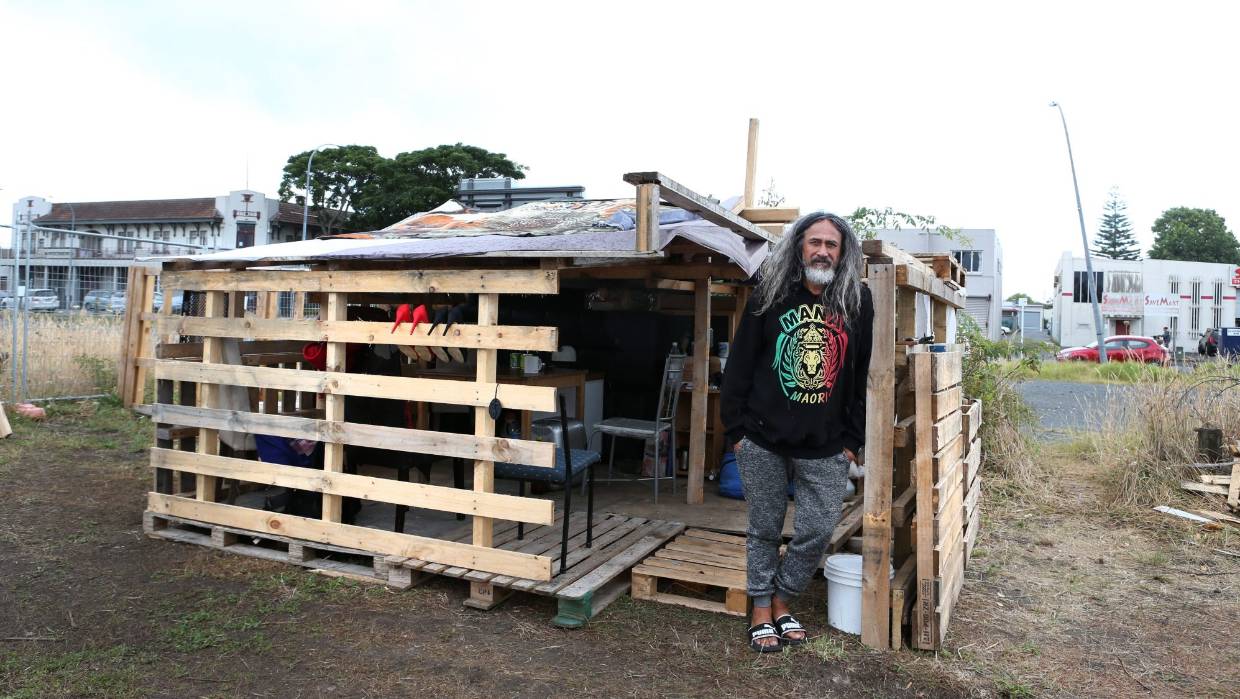
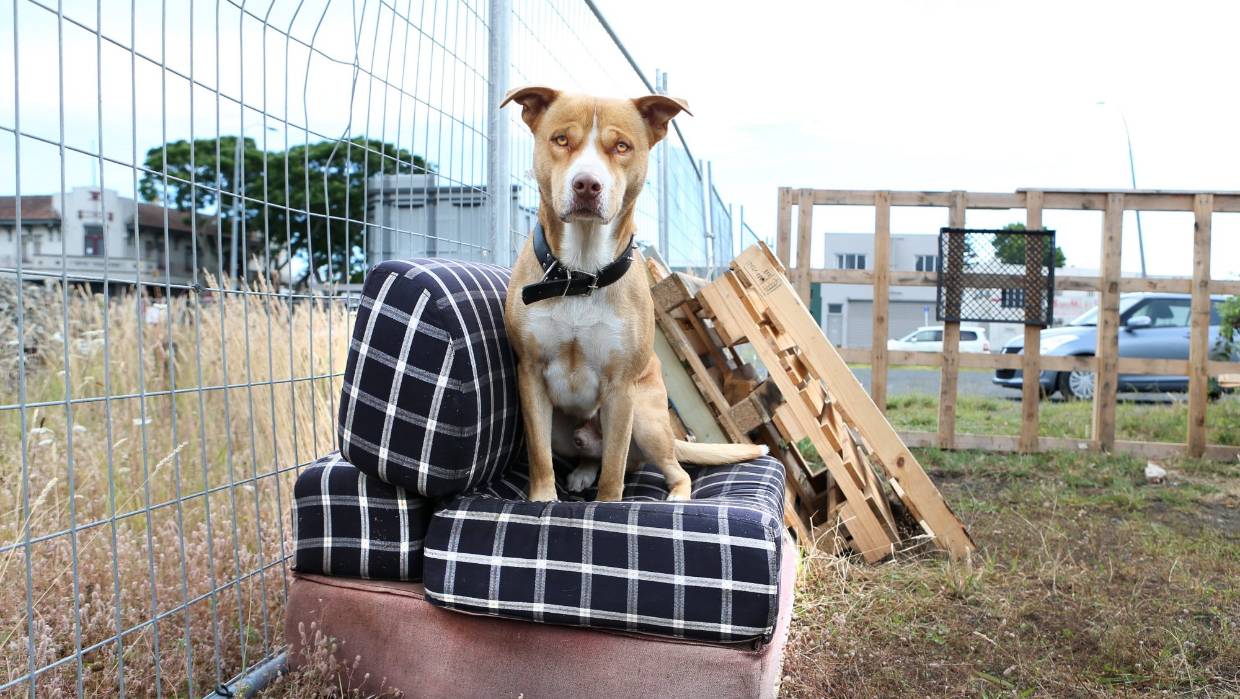
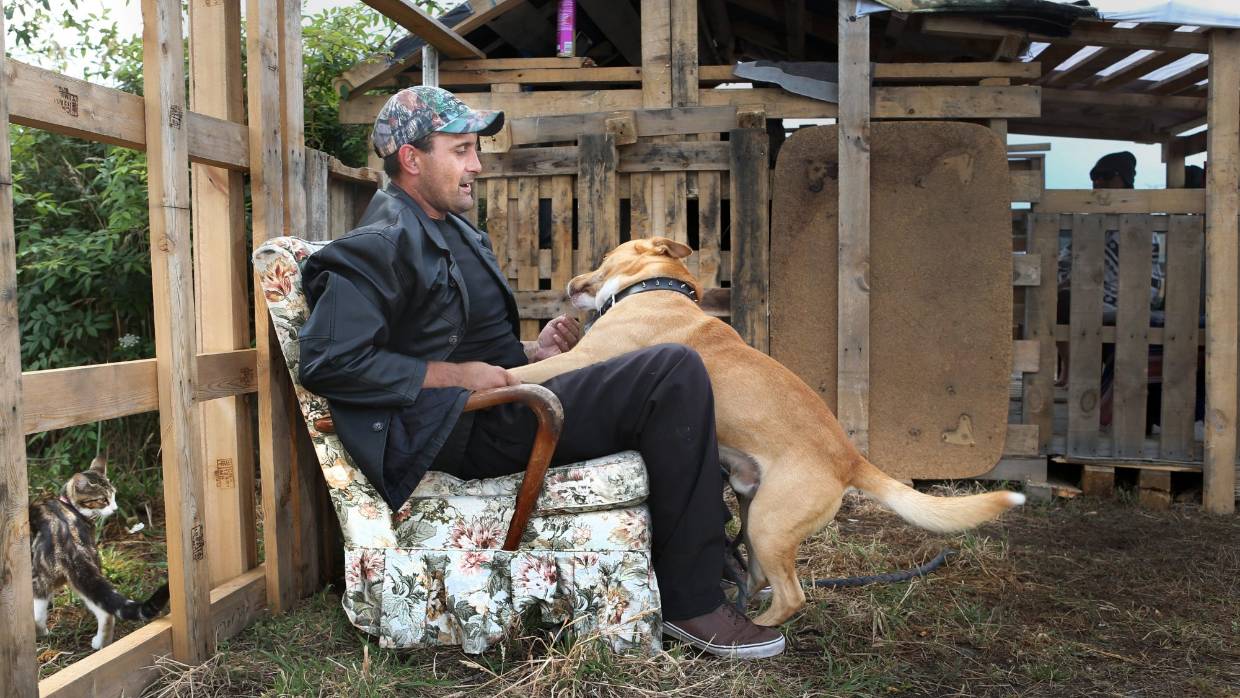
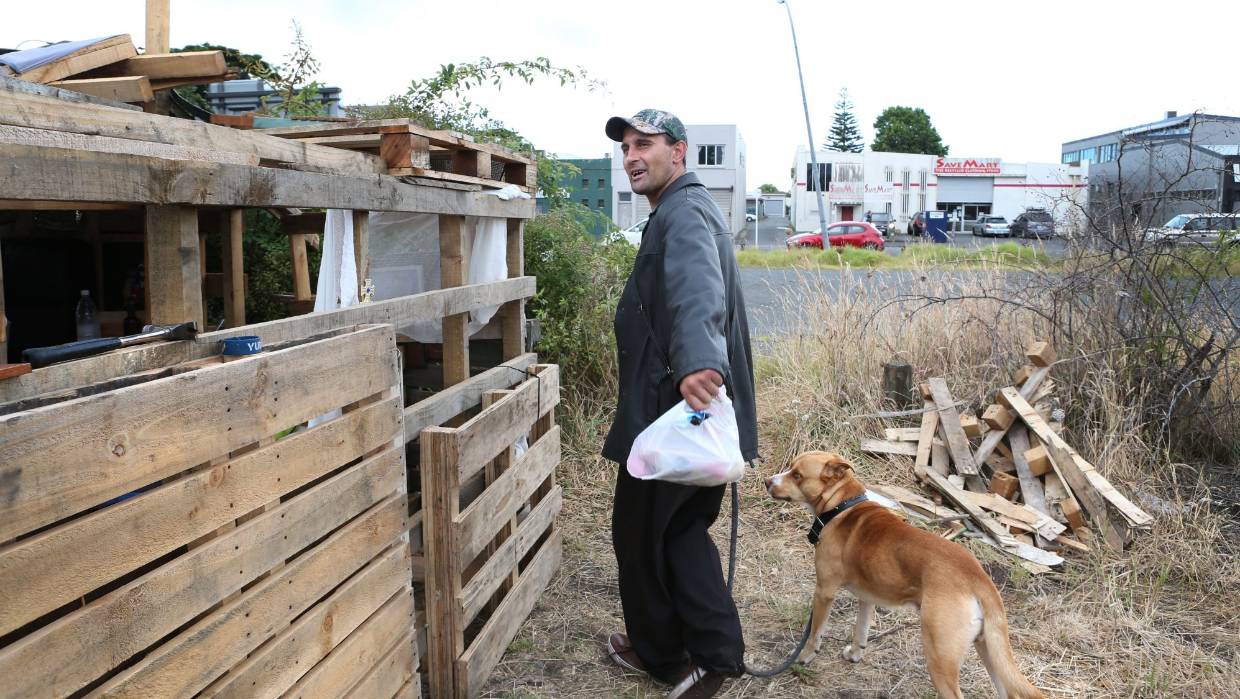
AUCKLAND: Kaisten Webster was homeless so decided to build himself a house made of old pallets. He lives there with his dog Achilles.
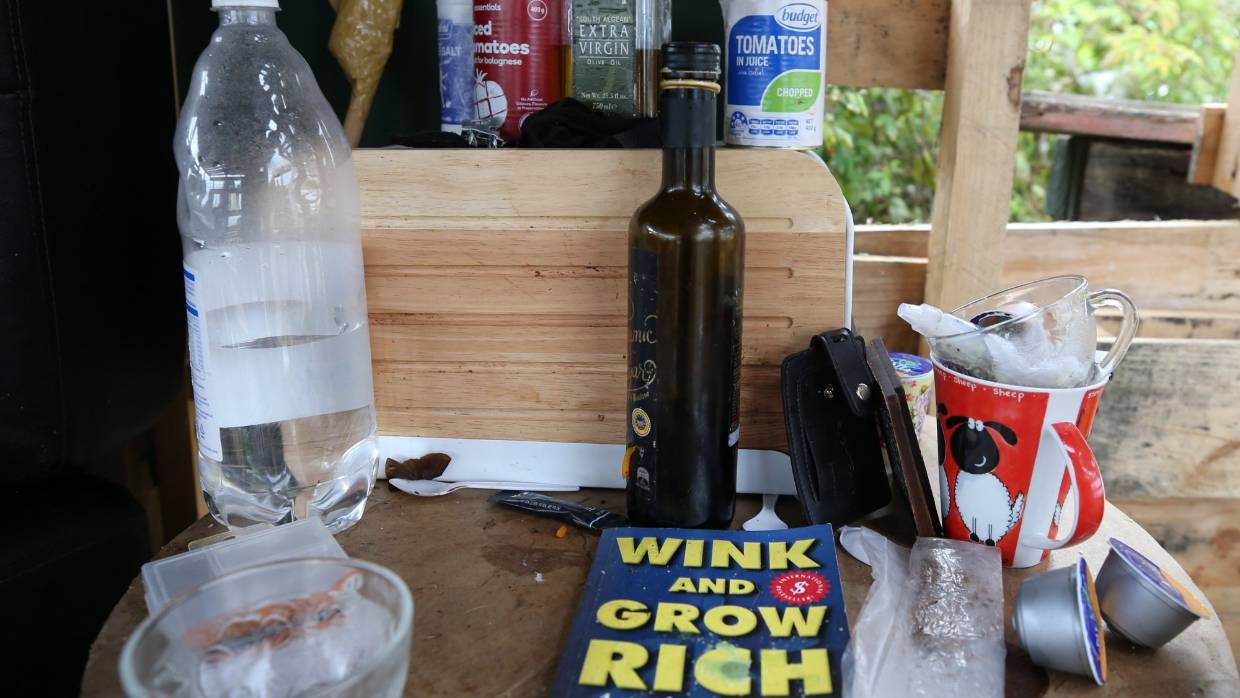
A copy of Wink and Grow Rich sits on a water damaged side-table as droplets of rain breach blankets over a ramshackle hut.
It’s one of those motivational books, a road map to “extraordinary wealth”, that looks out of place in the crudely built shanty beside the train tracks in the heart of Hamilton.
Pallets stacked behind shops at Frankton’s Commerce and High streets form its foundation. Old shower curtains and blankets collected from around the city are draped over a centre beam to form a slightly pitched roof.
Built to ward off the heat of the midday sun, it leaks in the rain.
“There was a big mess over there so I cleaned it all up and made a floor out of all the mess and the rubbish,” says Kaisten Webster, 39, pointing to a space outside the hut.
“I cleaned all the pallets up and pulled the broken ones apart and smacked them all together and got us a house.
“Now, hopefully, the rain doesn’t come through.”
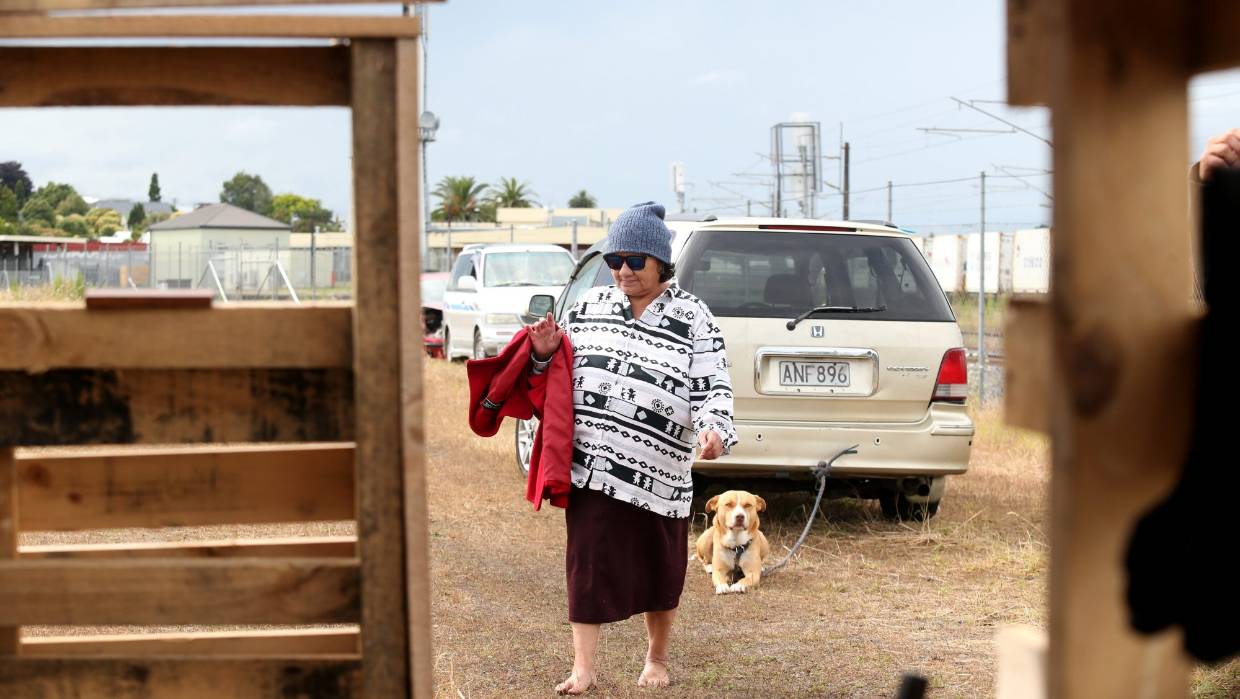
At the end of Frankton’s Commerce St, four cars are parked. One has the front end removed and they are all packed to the windows with clothes and personal belongings.
Curtains are drawn. This is home for about five regular rough sleepers.
“One rusty nail holds this all together,” Webster says. “But it’s solid as. It won’t fall down.”
Frankton’s squatters cop abuse from “drunks and gangsters”, deal with stares from the public and glaring lights from late-nighters doing burnouts on the gravel, says John Dixon, 64.
“The worst thing is all of the comments you get from people calling you a hobo and stuff like that but at the end of the day, you’ve just got to suck it up and, really, life is to be enjoyed, not endured.”
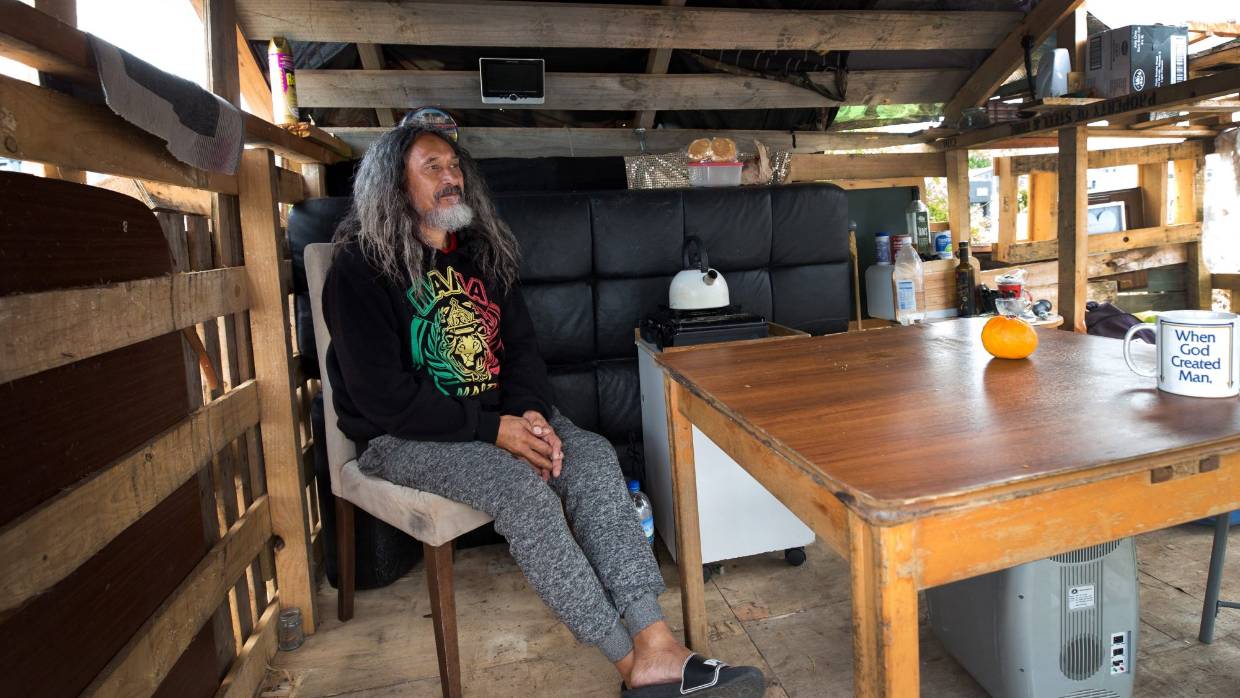
They also get visitors looking for a place to doss down for the night. A sofa-bed in the corner of the hut is well used.
There is a public toilet 100m away and it costs $2 to use the showers at the public pools at Melville or Te Rapa.
Recently, a young woman looking forlorn, dropped her bags by the roadside and walked towards a gap in the fence to the railway tracks. She intended to harm herself, Webster says, before they intervened.
“We’re just looking for somewhere to live and all we could come up with was this idea. There’s a lot of people out there with no homes,” Dixon says.
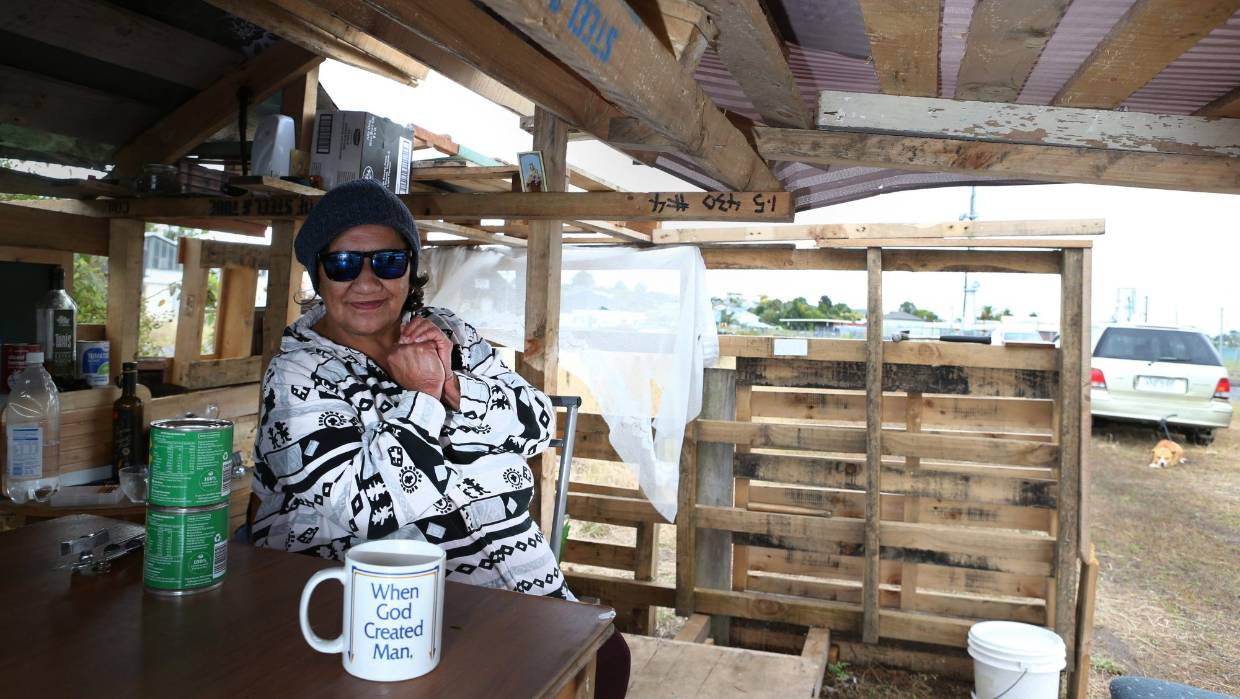
He stoops low to enter the chest-high hut and sips his coffee from a tall mug as he takes his seat. A kettle behind is still warm on the butane camp cooker. Kitchen utensils hang from the roof.
“We just survive the best that we can, really. We were living in the cars for a while.
“We were looking for somewhere to live and all we could come up with was this idea. We thought we could move this to family land in Raglan or develop to the point where we could actually live in it.”
Dixon was a truck driver in Christchurch, Auckland and Hawkes Bay and his daughter’s pet would travel with him everywhere.
He lost his job, the dog went missing in Hamilton and in November, Dixon came looking.
Now, he’s stuck living from Thursday to Thursday but has hope. The library has books to read and internet access so he’s researching what it would take to open a shop.
“We’re pretty close. We’ve got no money but at the end of the day we’ve got hope. We’ve got an idea of what we want to do but we’ve just got the dream of doing something.
“We’re sort of just trying to put something together. You can’t really see anything but it’s got a feeling, and just living in that hope that there is something better, that we can do better for ourselves.”
“It’s just one day at a time, really.”
Suzie Bidois, one of the other rough sleepers calls it Suzie’s Doll’s House.
Webster laughs an uncomfortable laugh that suggest he disagrees with the name.
It’s called Te Whare Kura, he said, after his ex-partner who escaped homelessness and moved south.
“She wanted a house so I quickly built one but she had already left,” Webster says.
Through Dixon’s eyes, they’re just “trying to survive, really, everyday”.