Pharmacy sector increasingly muscling into beauty business
LONDON: The international pharmacy sector is increasingly moving into the discount beauty business to build profits via distribution efficiency.
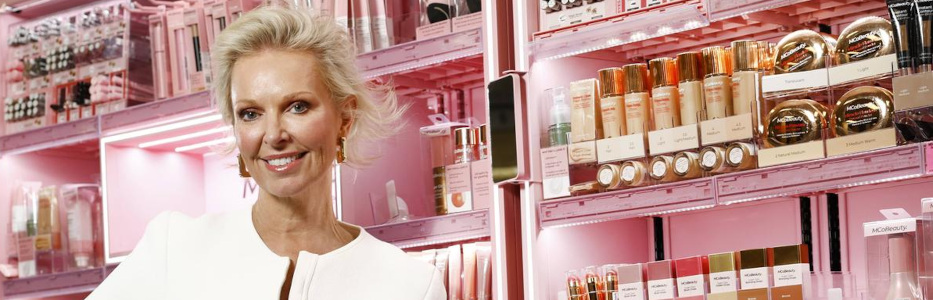
Billionaire businessman Dennis Bastas has bought out MCoBeauty, the cosmetics and skincare company best known for making cheaper versions of popular products, in a deal that values the company at $1 billion.
Started in 2020 by serial entrepreneur Shelley Sullivan, MCoBeauty replicates – or dupes – big-name cosmetics and skincare products and sells them at affordable prices in supermarkets and chemists.
Mr Bastas’ DBG Group took a 50 per cent stake in the business in 2022. The businessman, who made his fortune in pharmaceuticals, will take full control of the company with his latest transaction. While the price has not been disclosed, people briefed on the deal say DBG paid at least $500 million.
In an interview, Ms Sullivan said she was fielding takeover offers within six months of launching MCoBeauty. She turned them all down, until Mr Bastas.
“We never needed funding,” she said. “It was purely strategic. I chose DBG because they brought pharmacy distribution to the table.”
Mr Bastas’ initial investment “majorly accelerated” MCoBeauty’s growth, Ms Sullivan said. Last year, it began selling its products in 1800 Kroger supermarkets in the United States. In February, it launched products in 1200 Target stores in the US. With revenue expected to rise to $300 million this financial year, Ms Sullivan said Europe is next on the company’s agenda.
As part of the transaction, Ms Sullivan will step down as chief executive and MCoBeauty will become part of VidaCorp, the beauty arm of Mr Bastas’ DBG. Other companies that are part of the portfolio include Nude by Nature and Makeup Cartel, purchased by Mr Bastas last year for about $60 million.
“DBG let us run the business the way I wanted to run it – fast-paced, entrepreneurial,” said Ms Sullivan. “Eighteen months later, I’m ready to leave. I’m very proud of the brand I’ve built.”
Ms Sullivan launched her first beauty brand, Model Co, in 2002. With products like Tan in a Can and a market-first heated eyelash curler, Ms Sullivan pivoted to the more affordable MCoBeauty in 2020 when she saw a gap for more accessible, less expensive products.
A major part of MCoBeauty’s strategy has been identifying the success of viral beauty products and recreating them at a fraction of the cost.
For this reason, Ms Sullivan and MCoBeauty are well acquainted with controversy. The company has been sued twice, with both cases settled confidentially out of court. When MCoBeauty launched into Target stores this year, British beauty brand Charlotte Tilbury – whose Flawless Filter foundation MCoBeauty has duped – went on the offensive with a campaign based on its “undupable” status.
Ms Sullivan said she was not fazed by the reaction.
“It’s kind of a cool strategy,” she said of the Tilbury marketing campaign. “But it comes from the fact that the premium end of the market is finding it tough. Brands are coming up through the ranks that are doing exceptional jobs at creating products that are really similar to the luxury end.”
Kate Lancaster, a beauty brand consultant, said Ms Sullivan’s timing might reflect changing customer sentiment.
“It’s no secret that consumers are getting sick of dupes,” said Ms Lancaster.
“Shelley is very clever, she is a very smart businesswoman. She knew that the area ModelCo plays in – that premium, Mecca-adjacent space – was becoming competitive and oversaturated. She essentially duped her own brand to compete with herself. And now that strategy is everywhere – Kmart does so much close-to-the-line packaging dupes, so does Chemist Warehouse. Duping is now saturated, so it’s probably time for her to sell.”
After exiting the business, Ms Sullivan will join Creative Artists Agency in Los Angeles, one of the world’s leading talent agencies.
The deal may see Ms Sullivan create a brand for someone like Margot Robbie, for example. “It might not be within the beauty industry; it could be lifestyle, it could be anything really,” she said. “There is a huge business opportunity.” Sullivan says she will “never create another cosmetics business” of her own.
Toby Borg, head of talent business ventures at CAA, said he had been watching Ms Sullivan’s career for many years.
“It’s a unicorn in the beauty space,” he said. “She has out-marketed and outgrown some of the biggest beauty brands in the world.” Borg said the size of the MCoBeauty deal would drive interest in other Australian beauty businesses.
“We are definitely looking at some of those businesses in Australia.”
Since launching with six products in 2020, MCoBeauty has taken market share from global conglomerates like L’Oréal, Rimmel and Maybelline. It is the bestselling beauty brand in Woolworths and Big W. According to the brand, 40 of Woolworths’ top-selling 50 beauty products are from the MCoBeauty range.
“The sale sets a benchmark,” said Ms Sullivan. “It shows we can take on the big global companies and take their market share.


