Don’t sprawl into the green belt but build upwards
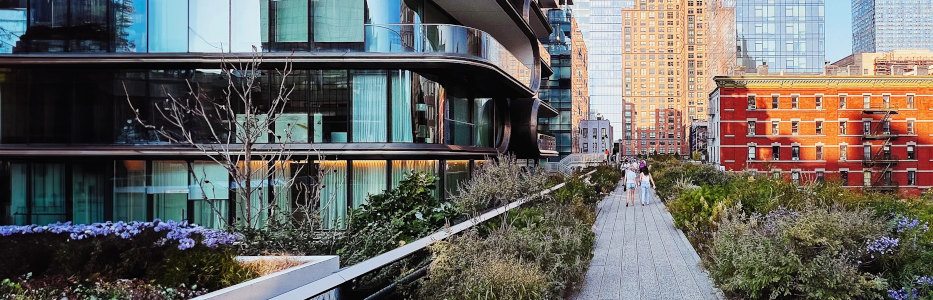
LONDON: Boomers are now leading the way in vertical city living immersed in crafted green belt environments.
Abandoned when Berlin was split into two by the Cold War, the Südgelände was once the city’s busiest railway yard. Today it is an oasis of self-seeded forest and meadows. By the city turning its back, it has burst into life. There are 334 species of flowering plants, 95 species of bees and it has become a habitat for falcons, foxes and grasshoppers.
On the edge of London a derelict place like the Südgelände would be labelled “grey belt” land under the government’s proposed revisions to the national planning policy framework. This dismal-sounding category is a new type of classification within the green belt that the government plans to create as a way of freeing up land on which to build some of its target of 1.5 million new homes.
Grey belt sites, it tells us, are those post-industrial eyesores and unloved wastelands that are a blemish on the pastoral vistas of the green belt. This means they cannot be used for public enjoyment and don’t have ecological value.
During the Blitz, Londoners were amazed to observe how quickly piles of rubble became dense with disaster-loving plants such as rosebay willowherb, buddleia, hollyhocks and ragworts. Trees and shrubs swiftly followed and, as pollinating plants proliferated, substantial populations of birds, small mammals and insects also moved in.
It is an underappreciated fact that “ugly” derelict sites, which have been ignored or forgotten, can be much more biodiverse than parks, golf courses and farmed bits of the countryside that might look green but are ecologically bland. Nature likes messy places: they teem with life.
This is why the government must resist the temptation to sprawl outwards. This policy may feel like growth in the short term but it will actually create unproductive, car-centric, sprawling suburbs. The attempt to recast the green belt as the grey belt is a lazy political sleight of hand.
There is consensus on some things: we want to build more homes in our cities and we want rapid and sustained economic growth, but we also want to preserve habitat-rich wilderness. Can all these things be reconciled?
They can if we reimagine both the green belt and the cities that are surrounded by it. The green belt was never intended to benefit nature. It was designed to prevent sprawl and protect rural landscapes.
Safeguarding the green belt is not about mindlessly preserving tradition, as the nimbys see it, but a way to reverse the UK’s biodiversity slump.
Farmland and golf courses in the green belt should be managed to maximise their potential for biodiversity, with more hedgerows, ponds, patches of meadow and woodland. These can co-exist with grey belt areas, such as disused petrol stations, abandoned warehouses, road and rail verges and neglected scrubland.
We have restrained the outward spread of London for a reason. In our push for growth, we forget all too easily that compact cities are better for our mental and physical health, and they are much more economically productive. Sprawl leads to dead city centres and car dependency — terrible for the environment, fatal for biodiversity and bad for us too.
Density does not have to mean tower blocks. Pimlico and Notting Hill, for example, are not only some of the most sought-after parts of London but they are also the densest, without much in the way of high-rises.
We can fit those 1.5 million homes within the boundaries of existing cities. Taking advantage of what is called “airspace” by adding floors to buildings has the potential to add hundreds of thousands of new homes to London and Manchester without altering the footprint of those cities.
Leave the green belt and give it the chance to get wilder. A place teeming with life. An urban jungle.


