Freedom and wealth of life at the van guard revealed
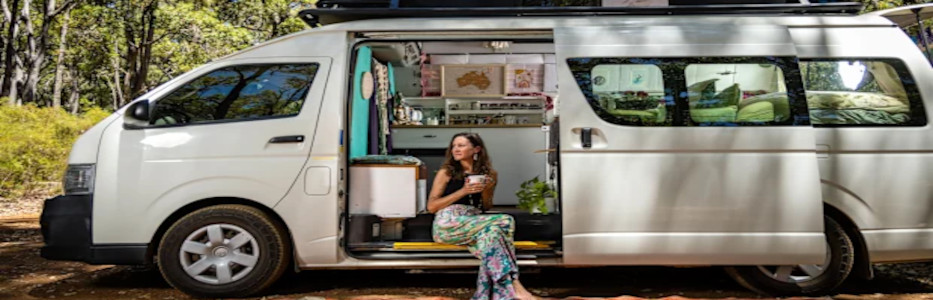
LONDON: Christie describes herself as a “capitalist hippie”, a nod to the unique balance she strikes between her career in finance and her deep-rooted spirituality and love for nature.
The 46-year-old, who is originally from Perth, has been travelling around Australia in her van called “Gypsy” since October 2021 after falling in love with the nomadic lifestyle following a road trip around Canada.
She knew when she returned to Australia after a few months that it would be difficult to return to “normal life”.
“I was at a point where my daughter is an adult now, so she’s off adulting, and I was single, and I just thought, I’m just going to do it,” she said. “So I just quit my job and sold everything and moved into the van.”
However, after nine months and draining a lot of her savings, she knew if she wanted to continue living this lifestyle long-term, she would need to continue working – also because, as a driven person, she wasn’t the type who could sit still.
For the past 4½ years, Christie has worked full-time as an operations manager for a global organisation remotely, thanks to the convenience that Starlink, Telstra and Microsoft Teams provides.
On top of her regular income, she’s managed to keep her costs down. Christie saves more than 50 per cent of her wage each week as she doesn’t have utility costs, mortgage repayments, rental commitments, or council rates to worry about – she doesn’t even pay for gas as she has solar power.
Her biggest expenses are petrol, insurance, accommodation costs like staying in a caravan park, and a gym membership – as she, like most of us, enjoys a hot shower.
So what does she do with the income that doesn’t cover her costs? In the past year, she’s turned her attention to the sharemarket as “it’s a lot less responsibility” than owning property.
“I’ve owned properties in the past as investments and having tenants, it’s still – even though you might have a property manager – there’s still a sense of responsibility and worry about that,” she said. “It costs more, in doing your tax return every year, working out the depreciation and things like that.”
She also makes money through advertisements and affiliate links on her YouTube channel, Eucalypt Design, which is also the name of her art business where she sells her artwork as prints online.
Digital nomads – or a person who earns a living working online in different locations – like Christie, who see the value of owning a home on wheels as opposed to traditional real estate, are an increasing cohort in the post-pandemic, remote-working era.
“We’re seeing more and more people choosing this option whereby the freedom and flexibility that full-time on the road actually offers, as opposed to fixing in real estate, it is a more affordable option,” Caravan Industry Association of Australia chief executive Stuart Lamont said.
“Certainly at the end of the day, you’re not exposed to the variables of the real estate market. You are effectively given the ability to have a different outlook on any different day of the week.”
Caravan park occupancy reached all-time December highs across every accommodation category in 2025, including powered sites and cabins, according to research by the caravan industry association.
Perth led powered site occupancy at 85 per cent, followed by the Sunshine Coast at 83 per cent and the NSW Central Coast at 80 per cent.
While the concept of Australians retiring and becoming “grey nomads”, or someone who is retired and spends their time travelling, was a concept many were familiar with, Lamont said the idea of becoming a “digital nomad” among younger generations – such as Generation Z and Millennials – was becoming more popular, especially since the pandemic.
“People have this love affair at the end of the day in terms of these are houses on wheels,” he said. “The property market has become so difficult to get into, particularly when you look at Sydney, Melbourne, and even Brisbane. It’s no wonder that people are flocking to caravanning [and] caravan parks.”
Marcus Nyholm, founder of Live Financial Planning, whose ethos is “freedom is the new rich”, said people could prosper in a number of ways. This didn’t always mean purchasing property.
While Aussies loved investing in real estate, it was harder today to make money out of the practice than it was 20 years ago, especially for those who were older and with more taxes affecting landlords, he said.
“If I’m 50, and I’m thinking about buying an investment property, well by the time I’m going to recoup any transaction costs, it’s going to take until at least 60,” he said. “Then I’m going to have capital gains tax. I would have been better off putting money into super maybe.”
For Christie, it’s the freedom of being able to travel around the nation and not feeling tied to one spot that has captured her heart. And she hasn’t had to sacrifice her ability to save for her nest egg in the process.
Her plan is to explore more of southern Western Australia this year and then cross the Nullarbor to the eastern seaboard to spend the majority of the chilly season in Queensland. She may even venture to the Top End – wherever she decides in the moment.
“I’ve been going for 4½ years, but I feel like I’ve just scratched the surface,” she said.


