Extra 17 Boomer units at Ocean Village now set for approval
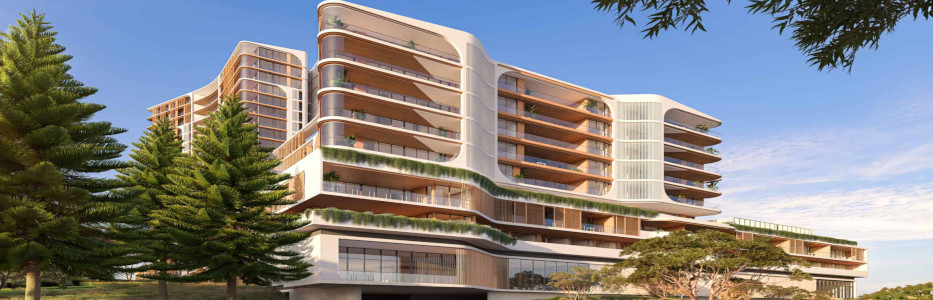
LONDON: An extra seventeen Baby Boomer luxury apartments now look set to be added to an ocean village community project.
WA’s peak planning body has approved an extra 17 apartments for the Ocean Village complex in City Beach, while a legal battle between a resident and the Town of Cambridge over the development continues.
On Thursday, the Western Australian Planning Commission determined it would allow developer Blackburne to make modifications to the high-rise development.
The changes include a reduction in the size of the planned tavern to make space for 17 additional apartments, just weeks before the units are open to purchase on February 26.
The $200 million complex, at the site of the now-demolished Ocean Village Shopping Centre complex in City Beach, was approved by State planners in March last year.
The design spans two towers, one 10 storeys high and the other 22 storeys.
Blackburne said it was “pleased” with the outcome, stating the changes will provide “world-class spaces” that its residents and other City Beach community members can enjoy.
“These refinements further enhance the ground plane component of the development and will ensure the retail and food and beverage component is well integrated,” Blackburne development director Jordan Ennis said.
“These changes also facilitate additional housing stock, in a tightly held area . . . we look forward to delivering this much needed housing product within City Beach.”
But Town of Cambridge mayor Gary Mack was not impressed, hitting back at the commission for approving the changes and reaffirming the council’s disappointment in the approval process.
“While there are improvements in design, accessibility, parking and landscaping, there remains a further loss of commercial activity which weakens the intended mixed-use role of the site,” Mr Mack said.
“Our role as a local government is to assess the merits of what is put before us, but our community rightly expects that large projects will be subject to meaningful local scrutiny within an established planning framework.”
As a trade-off to increasing the number of apartments, the development’s commercial tenancies will drop from 16 to 11 — including the removal of the ground-floor tavern and relocation of the liquor store — while the total number of apartments will increase from 247 to 264.
An extra 25 parking bays, facilities for almost 200 bicycles and parking for 18 motorcycles have also been touted.
The modifications were advertised for public comment from October to November last year and received a total of 299 submissions, with feedback ranging from about one-third in support, one-third supportive with changes, and one-third against the changes entirely.
“Key concerns raised in public submissions related to the removal of the tavern use, which was largely seen as a detrimental change,” the report read.
Blackburne said the comments relating to the tavern “omit some key factors”, and that the changes they asked for and received were based on market feedback and other public suggestions since the City Beach plans were approved.
“Introducing a tavern that may not be able to be leased can harm both the ambience and how the development functions,” a Blackburne spokesperson said.
Despite the tavern’s removal, a second licensed venue will be part of the complex, as well as a 430sqm food and beverage precinct.
Blackburne also said taking away the tavern would reduce peak vehicle use into the site by 22 per cent, increase landscaping space and environmental protection, and make space for ground-floor residences.
Concerns relating to WA’s decision-making body have been put in the spotlight after the Liberals and Greens joined forces in August to establish a parliamentary inquiry into WA’s significant development pathway.
The process — brought in partly to cut red tape and streamline consideration — effectively allows big developments to bypass local council consideration before they are ultimately decided by State planning authorities.
It was introduced by the McGowan Government as a temporary significant approvals channel to help expedite WA’s COVID-19 recovery, and was made permanent in 2024.
The inquiry’s select committee is led by shadow planning minister Neil Thomson and comprises Liberal, Labor and other MPs.
Mr Thomson said the committee would create new levels of transparency where it is “sorely needed”.
“The Significant Development Pathway has now been in effect for a few years. It’s probably a good time to do an assessment on how that is now delivering for the people of Western Australia,” he said.
Mr Mack added that the special process enables significant developments to get the tick of approval without the ordinary checks and balances, diminishing the role of residents and local businesses.
“We will continue to advocate for planning reform that strengthens accountability, aligns State and local strategy, and provides meaningful opportunities for community participation,” he said.
Thursday’s meeting also comes a week before a Supreme Court hearing, where resident Adrian Corp is taking legal action against the Town of Cambridge over a technicality in the development’s approval process.
Mr Corp claims the Town did not comply with the Cambridge Endowment Lands Act 1920 — a local law that requires any developer seeking to use land within a certain area (comprising mostly of Floreat and City Beach) to receive approval from the Town of Cambridge.
The Town claims it was aware of the law during approval but says the law been made redundant by the Town Planning Scheme, as well as R-Codes and the Town’s Design Guidelines having superseded a number of requirements.
“The Town is of the view that Local Law 43 is not able to restrict the development that was approved by the SDAU,” a Town spokesperson said.


