Largest non-profit led social housing project with 900 units approved
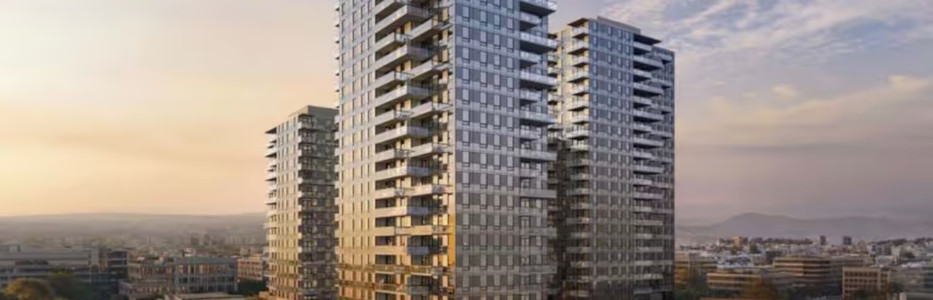
LONDON: A Council has unanimously approved a major rezoning application that will pave the way for the largest social housing development spearheaded by a non-profit organization in the city’s history.
The decision came Thursday evening during a public hearing on Purpose Driven Development’s proposal to redevelop the 1.9-acre site at 8080 Yukon St., situated at the northeast corner of the intersection of Southwest Marine Drive and Yukon Street — just northeast of the Marine Gateway retail complex and SkyTrain’s Marine Drive Station and bus exchange.
This is the redevelopment of Southwynd Place, which is a 1976-built, low-rise complex with 90 units of social housing.
With the existing structures now aging and a desire to generate additional affordable housing in a manner that is financially and economically feasible, non-profit organizations the Kiwanis Club of Vancouver and the Soroptimist International of Vancouver have partnered together to pursue the redevelopment.
Kiwanis offers initiatives that support the well-being of children, while Soroptimist’s efforts focus on empowering the lives of women and girls. Over half a century ago, both organizations partnered together to achieve the current social housing complex.
The project’s application was first submitted in January 2025, and some minor revisions were made to the proposal in September 2025 that led to a nominal increase in height, density, and the number of units. The lead design firm is GBL Architects.
The approved concept calls for the construction of four new buildings, entailing a six-storey seniors’ building and three high-rise towers — 26 storeys, 28 storeys, and 32 storeys, reaching up to 318 ft.
There will be a total of 903 units, with 30 per cent with below-market rents under the Housing Income Limits and the remaining 70 per cent at market rates to financially support the entire project, while also generating housing suitable for working middle-income individuals and families. This income mix is subject to final construction financing agreements.
Speaking to City Council during the public hearing, Carra Guerrera, founder and CEO of Purpose Driven Development, described the project as “a landmark affordable housing project, not just for Vancouver, but nationally.”
“This single project is delivering close to 10 per cent of the City of Vancouver’s 10-year affordable housing target,” Guerrera told City Council, highlighting that the development is located at a public transit hub with major amenities within walking distance.
The project is planned as not only mixed income, but also an intergenerational rental community.
Guerrera confirmed that 90 senior tenancies currently at the site will be relocated during construction and will move back into the project upon completion. They began working with tenants on their temporary relocation process over the past year. Some tenants have already moved, and others are expected to relocate in the coming months, including to a partner non-profit project nearing completion near Cambie Street and 13th Avenue. Some of the existing tenants will be relocated to Soroptimist’s new 13-storey social housing project at 546 West 13th Ave., which will reach completion later in 2026.
She also said the unit size mix and overall design were shaped by both the focus on seniors and the complicated financing required to deliver a project of this scale entirely under non-profit ownership. For this reason, 30 per cent of the overall number of units will be sized for families — defined as units with at least two bedrooms — instead of the municipal government’s usual requirement of 35 per cent. Guerrera shared that such a five per cent increase would have created a financial loss of over $3 million for the project, directly impacting the financial viability.
“So with the focus on seniors, that reduction of the family unit count was a key driver. And then I’d say the second key driver is that this project requires financing and funding from all three levels of government, and each unit comes, to keep the affordability low, each unit comes with a certain level of subsidy per door,” continued Guerrera.
Both non-profit organizations have already leveraged their land to secure about $12 million in pre-construction financing and are in active discussions with the federal government’s Build Canada Homes program for further low-interest construction loans.
“With all of the changes in government and financing that has happened over the last few years, it’s incredibly difficult to secure construction financing. Canada Mortgage and Housing Corporation’s programs have closed, [and] BC Housing’s programs are very tentative right now,” she said.
“It’s definitely one of the most complex projects in the country from a financing landscape because of the scale and the changing landscape in Canada for financing affordable housing in the last few years.”


