City backs 150+ low income housing lots amid resident concerns
LONDON: In just one meeting, more than 150 low income and affordable housing lots were backed by the City of Launceston council.
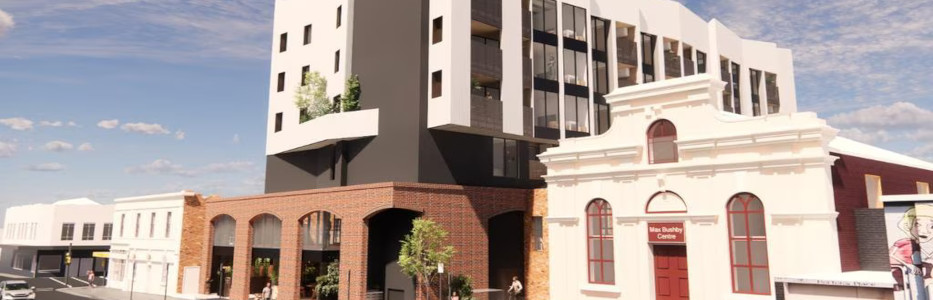
Two major developments were given the green light, the $30m City Mission Wellington Street housing project and the Homes Tasmania 106-lot development on Techno Park Drive in Kings Meadows.
City Mission’s project includes 48 affordable units, a purpose‑built health clinic, and services expected to support 500 people each week. Objections focused on parking, building height, and potential anti‑social behaviour.
One resident pointed to existing issues in the area like public urination, discarded needles and swearing, he feared the project would “bring more of this behaviour to the already struggling CBD”.
A property manager for a nearby shopping complex flagged the “fundamental issue” of parking.
The proposal included only eight new car parks, when it required 67 according to planning documents.
City Mission chief executive Dr Jo Fearman said there would be 35 leased off-site parking spaces nearby, bringing their total available parking to 43 spaces.
Planners and proponents argued demand would be low because tenants without cars will be prioritised.
The height was a concern given the building will be seven storeys, or 22.5 metres tall, despite the area having a 10 metre maximum.
Planners reasoned the height allowance was compatible with the streetscape and had a 12-20m set back from the street.
A frustrated resident claimed “the planning department can bend rules and ignore recommendations such as parking requirements and building height recommended restrictions when they feel like it”.
City Mission stressed the project was not crisis accommodation but long‑term housing.
“Tenants are assessed as ready for stable independent living,” Dr Fearman said.
Councillor Krista Preece called it life‑changing support: “We can see in our daily lives the need for a facility like this.”
While the City Mission development passed with only one councillor against, the Homes Tasmania 106-lot development passed but had three councillors vote against it and others “on the fence”.
Nearby residents argued the roll‑out was “too intense for a low‑density”, semi‑rural pocket, citing traffic, loss of green space, and infrastructure gaps.
One resident warned it would harm the “liveability of the area”.
Others said they’d “paid a premium” for the existing amenity and argued the land was “prime real estate” where larger‑priced blocks would “keep current residents happy”, noting at least one neighbour had already moved since learning of the plan.
The development lots are for majority public buyers and 15 per cent of the lots are for social/affordable housing.
A five year delay to critical infrastructure in the state’s north has sparked outrage from one of Tasmania’s fastest growing municipality, with claims any hold up would wreak havoc on housing plans.
A significant upgrade as part of TasWater’s $1.7bn community infrastructure works was the Launceston Sewer Transformation project, which included the Ti-Tree Bend Sewage Treatment plant upgrades.
The draft 2026 Water and Sewerage Price Determination Investigation Report recommended the project be put on hold until July 2030.
Due to rapid growth and housing plans, a sewage treatment upgrade was dire for West Tamar, with plans to decommission the Legana Sewerage Treatment Plant and upgrade the Ti-Tree Bend plant, without it, the Legana facility was non-compliant, according to West Tamar Council.
Mayor Christina Holmdahl said any delay was “completely unacceptable”.
“Any decision to defer the urgently required upgrade of Ti-Tree Bend means any growth in this area of the West Tamar would be done knowing that the current sewerage infrastructure is inadequate and over capacity,” she said.
West Tamar’s rapid growth in Legana was one of the state’s biggest, to accommodate, the council have plans to have over 2300 houses built by 2036, to help home an estimated 6332 new residents.
The Launceston Sewer Transformation project has a cost of $435m, the Ti-Tree Bend Sewage Treatment Plant would take $356m out of that budget.
TasWater customers would get hit with an annual price increase of 8.8 per cent over four years to foot the bill.
The report from the Tasmanian Economic Regulator stated TasWater was unable to demonstrate that the investment was necessary for the current period, saying it could be delayed to 2030.
According to the document, the goal appeared not to be compliance, as the Ti-Tree Bend sewage treatment plant was found to be compliant with its environmental protection notices, but “rationalising the seven existing sewage treatment plants in Launceston to just one”.
TasWater Chief Executive Officer George Theo said the investment to modernising treatment plants and sewer networks was needed, especially for growth.
“We know that Legana is key for housing growth around Launceston. But the reality is that the area’s existing sewage treatment plant is currently operating at 150 per cent over its designed capacity,” he said.


