New plan for affordable rental housing on regeneration sites
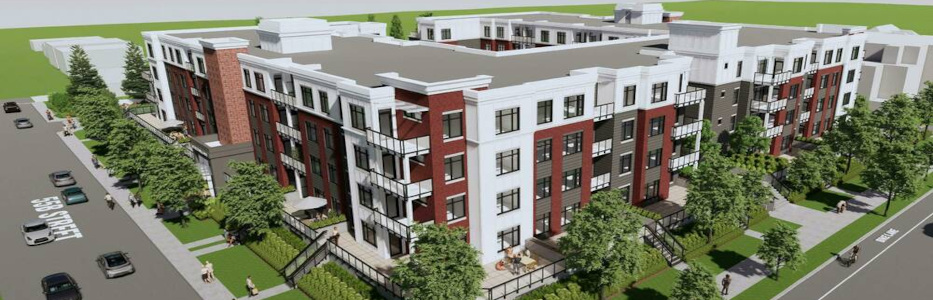
LONDON: A new plan for affordable multigenerational rental housing for a cluster of regeneration sites has been announced.
Metro Vancouver has announced that, through Metro Vancouver Housing, the region finalized a plan to create thousands of new non-market rental homes over the next decade.
“The region has diverse and growing affordable housing needs, and Metro Vancouver Housing is doing an exceptional job of helping to fill those gaps,” said Mike Hurley, Chair of Metro Vancouver’s Boards of Directors, in a news release. “This updated long-range plan prepares us for growth, resilience, and continued excellence while responding to significant changes in the political and economic environment.”
Metro Vancouver Housing is one of BC’s largest non-profit housing providers with 49 active sites across the region, offering over 3,400 non-market rentals to nearly 10,000 residents, the regional district notes.
The previous Metro Vancouver Housing 10-Year Plan was adopted in 2019. Since then, construction or redevelopment of about 2,000 units has been started or completed across 11 sites, Metro points out.
A study released last year, the Metro Vancouver Affordable Housing Gap Analysis, showed a need for 29,250-to-54,500 affordable rental units for low- to moderate-income households over the next five years.
Non-market housing projects in Ladner
Meanwhile, while Metro Vancouver has its own ambitious non-market housing plan, work is well underway on the second phase of a major non-market housing redevelopment project in Ladner.
Council had approved the rezoning and development amendment that will see a six-storey development containing 138 apartment units for Phase 2 of the Evergreen Lane project, located at the southern section of the now completed first phase in 4600-block of Evergreen Lane.
It will include a mix of one, two and three-bedroom units.
The proposal followed a previous application by the owner, Dogwood Holdings Society, for a 198-unit, two-phase, non-market rental apartment building development, which was approved by council in July 2022.
The first phase includes 130 seniors housing units in a four-storey apartment building on the north portion of the site.
A second phase was approved for 68 family housing units in a 48-unit four-storey apartment building and a 20-unit three-storey townhouse building on the south portion of the site.
Since the original project was approved, economic and affordable housing need conditions changed and additional BC Housing funding became available.
The applicant identified an opportunity to respond to current housing needs by requesting additional density and height to increase the affordable housing supply and economic viability for the project.
The applicant subsequently proposed modifying the second phase, which is focused on seniors and families.
The owner proposed operating all of the 138 dwelling units at affordable rental rates moving forward.
BC Housing is providing a grant for the project, as well as an on-going operating subsidy to ensure affordability is maintained.
Elsewhere in Ladner, the old Ladner Willows below-market rental complex has been demolished and site cleared for an upcoming major new project along Ladner Trunk Road.
That project by the Red Door Housing Society will redevelop the site at Ladner Trunk Road at 55B Street with 146 units in a five-storey building.
The application had the support of BC Housing and the owner proposed that they would continue to operate all units under three affordable rent classifications.
Those include rent geared to income (50 per cent of the units), affordable market rentals (30 per cent of the units) and deep subsidy rentals (20 per cent of the units).
The site previously contained an older 40-unit, non-market townhouse development.
As far as “as of right” zoning for non-market housing, while such a zoning initiative has not been proposed by Delta planning staff, the city’s Housing Needs Assessment notes inclusionary housing policies can specifically target affordability that other strategies, such as pre-zoning or gentle density, cannot.
When developing an inclusionary zoning pilot, there are a few important considerations, including locational criteria for a pilot, target affordability levels for units and duration of the affordability.
The report notes a “made-in-Delta approach to inclusionary zoning must be taken to adequately address the specific needs of our communities.”
Any piloting efforts should be focused on or near town centres or existing development corridors, the report notes.
The current housing target order to Delta by the provincial government stipulates that the city is required to add 3,607 new units by September of 2028, but the province also provided guidelines for unit sizes and tenures.
While those guidelines are not mandatory, the province suggested that of the total new units, Delta should add 830 below-market rentals, including 95 with on-site support.
The City of Delta last year issued a request for proposals for a consultant to help develop an inventory of properties in Delta designated as civic and institutional in the Official Community Plan (OCP) and identify potential sites for future housing projects.
The city noted the Housing Accelerator Fund (HAF), provided by the federal government through the Canada Mortgage and Housing Corporation (CMHC), will help unlock new housing supply by speeding up development and approvals, introducing zoning reforms and incentivizing key housing types.
As part of the funding, the city would undertake work to identify opportunities for housing on civic and institutional lands.
Delta’s new OCP enables the opportunity to develop housing as a supporting use on city-owned and institutional lands that fall under the “Civic and Institutional” land use designation, the city explained.
The city’s request for proposals noted the Delta lands initiative focuses on inventorying civic and institutional land and identifying priority sites for redevelopment based on existing use and suitability for housing, and the outcomes of the project may inform future pre-zoning and pre-servicing to be undertaken. The city did not specify if lands identified would be targeted for non-market housing, and any results of a land study have yet to be announced.


