Retirees stuck between spending now and saving for later
LONDON: Stopping work at the right time is a balancing act – and the challenges don’t stop there.
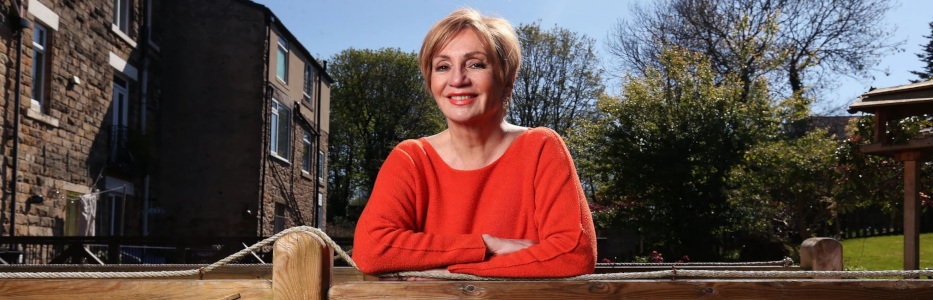
“I’d blow the lot now if I knew I only had a few years left,” says Wendy Gregory, 69.
It is a dilemma faced by many retirees. Should they continue to be careful and keep saving or should they start spending the money they have spent their working years building up?
Not knowing how much time they have left only makes this difficult adjustment even more agonising.
Many of those approaching retirement are part of a so-called “squeezed middle” generation. They are likely to live into old age and may well need to pay for care, but they will probably also need to put some money aside to help their children and grandchildren. Being stuck between these different priorities can make knowing how to spend now a real challenge.
A further problem is knowing when to stop earning altogether, with increasing numbers of people partially retiring for fear of losing their career income too soon.
Gregory is a prime example.
She lives alone in Derbyshire after downsizing from Slough, Berkshire, in 2025 – a move that freed up £250,000 and brought her closer to her family after 39 years in the South.
Freeing up equity was the only way she could realistically consider moving towards retirement.
She has no workplace pension, only the state pension. As a single parent, she worked part-time as a teacher to raise her children. Earning between £20,000 and £25,000 for 35 years, she says she couldn’t afford to pay into a pension scheme.
After several years spent retraining, she now works part-time as a freelance psychologist one or two days a week.
Physical limitations are a factor for Gregory’s retirement plans as well. A degenerative back injury from lifting heavy boxes has made her question her mobility and stamina.
“I can’t work forever,” she says. “It’s a nuisance we don’t know how long we have to live.”
Yet she is fearful that if she stops working now, she will lose her professional network and she might not have enough money for the future. She estimates that she’ll probably stop working entirely in about five years.
“One of the biggest challenges is knowing when you have enough, rather than assuming you do and retiring too early,” says Claire Trott, of wealth manager St. James’s Place.
Legacy is a major consideration. Gregory wants to leave some money to her daughters and grandchild, balanced with spending on herself.
“I’ve written three books and self-published one. I’ve decided to use some savings so I can spend time on my writing but also eventually travel more,” she says.
Trott suggests a professional cash flow analysis – covering essentials, nice-to-haves and big-ticket items – for retirees such as Gregory who are struggling to weigh up how to spend in retirement.
“It also finds the most efficient way to draw on funds – using Isas, direct investments or pensions depending on your tax position,” says Trott.
“An annuity is a further option that can remove a lot of stress, acting in a similar way to an income, bridging the anxiety gap of moving away from a salary.”
Yet even with detailed analysis, many still find starting to spend their retirement funds after years of careful saving excruciatingly hard.
Gavin Smithers, 66, from Moreton-in-Marsh, Gloucestershire, worked for NatWest for 18 years until 2002. He ran a children’s indoor play centre between 2002 and 2009. Eight years ago, he survived stage three kidney cancer.
“I’m at higher risk of other cancers, which makes spending complicated,” he says.
He had to think about whether he would need more capital for any future medical costs or need a higher income over a shorter lifetime.
Reassessing his finances after his diagnosis, he switched his final salary pension – a defined-benefit scheme with the Royal Bank of Scotland (which acquired NatWest in 2000) – to a self-invested personal pension (Sipp). He also accessed it early at the age of 60 because of his ill-health.
He had three options: £18,600 a year, a £90,000 lump sum with £13,600 a year, or a £500,000 transfer value. He chose the third option.
Transferring out of the final salary scheme meant sacrificing guarantees and inflation-proofing but a financial adviser agreed that the uncertainty in Smithers’s medical outlook made the extra flexibility of a Sipp more attractive.
He took most of his tax-free cash early – “I thought Rachel Reeves would be after it” – recycling it into Isas and Premium Bonds. His total portfolio is now £680,000, with half in cash “in case a crash is imminent”.
But the real difficulty for him isn’t investing, it’s how to spend now.
Smithers has five children, aged between 28 and 34, from his second marriage. They divorced in 2006 and she died in 2020. He married for a third time in 2018.
He anticipates that he could have to help his children with housing costs at some point, but he does not know how much he might need to set aside.
“I find the whole question of what kind of life to have now difficult,” he says.
Smithers has spent the past 17 years working in a different role as a self-employed tutor and an author of study guides, which he plans to wind down.
His earnings put him in the basic-rate taxpayer bracket, bringing in some money but not a lot. The state pension of £965.20 a month offsets the drop in earnings, though he spends half of it on council tax and utility bills.
His second marriage was a period of high saving thanks to bonuses and share options but most of that wealth was passed to the children as inheritance after their mother’s death.
Smithers adds that while he has a high tolerance for risk and uncertainty, he paradoxically feels a strong pull to preserve capital rather than spend it.
“My parents’ generation were careful with money. They believed in education and saving. It has cast a long shadow and it’s hard to take a different path, even if that means you fail to broaden your horizons as much as you could,” he says.
Not all retirees are as cautious. Some, such as Sonia Law**, are spending their money and pursuing their dreams.
She left the police force aged 60 after 23 years, five in an unpaid capacity.
“My pension is good but because of that period, it isn’t a full 30-year entitlement,” she says.
When the time came to retire, she yearned for a new life abroad with an improved quality of life.
“I fell in love with Costa Rica on my first trip in 2018 – the country, the people, and the ‘pura vida’ lifestyle.”
She sold her house in Britain and left with just four suitcases’ worth of belongings, arriving on the other side of the world with her partner in March 2025.
“Although we don’t live like kings here, my pension does go further than it would in the UK. I rent a two-bedroom property with a lot of land. With utility bills, it comes to roughly £744 a month.”
Law admits to doubting her choices at times: “After a busy career, one colleague told me I would get bored with retirement and want to come back. Was he right? Partly. But not bored enough to return to the UK and find employment.
“Now, instead of worrying about a heavy workload, my biggest stress is what to cook for dinner,” she says.
When it comes to deciding which path to take, Trott’s advice to those approaching retirement is simple.
“First, cover your essentials. Then find a balance – treat yourself now but save for later life and surprises. Set a goal for your rainy day fund: when it overflows, you have more to play with. Don’t plan alone – talk to a financial adviser or a trusted friend. Two heads are better than one.”


