Work to begin on first regional vertical retirement village project
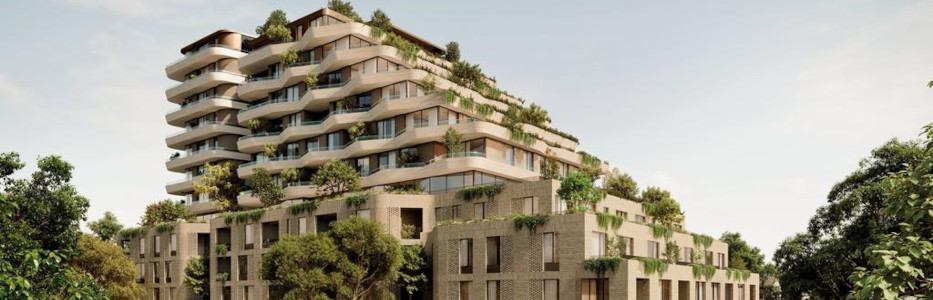
LONDON: Work is now set to begin on the first regional vertical retirement village community project.
Geelong’s first vertical retirement village is preparing to get off the ground this winter.
The groundbreaking central business district (CBD) development will be the first in the region’s fast-growing independent living sector to move into the waterfront apartment space, that’s been successful across other major cities.
Lineal Developments director Mick Aylett said the Bellerine St project designed by architects Cera Stribley, with interiors by Studio Tate, is set to deliver 88 one, two and three-bedroom independent living apartments, with premium finishes, generous proportions, and many with sweeping views across Corio Bay.
“It addresses a clear market gap as nearly 40 retirement communities exist across greater Geelong, but none currently offer apartment style living in the CBD,” Mr Aylett said.
The project will offer elegant lounges, communal and private dining areas, a cinema, library, wine and coffee bar, and a golf simulator.
Mr Aylett said the complex is designed with dedicated wellness offerings such as a pool, sauna, gym, yoga studio, salon and consulting suites, while retail tenancies are set to include a providore, cafe and allied health clinics.
The 11-storey village will be walking distance to cafes, Eastern Beach, botanic gardens, medical services and cultural life within the CBD.
A builder has been appointed, with construction commencing this winter, he said.
A sales and display suite will be launching this winter, but the developer has already been proactive in promoting the project at independent living shows in Geelong and Melbourne.
He said 300 potential buyers had registered interest received ahead of the project’s launch, revealing demand for this gap in the market.
“Where it’s a luxury independent living offering, so we’ve been very conscious and considered as to what we’re putting in, in terms of amenity for our residents,” Mr Aylett said.
The project is the first of a growing number of permit-approved medium or high-rise private-sector office, accommodation or residential developments yet to proceed to construction in Geelong’s CBD.
The 18 state government-approved projects would provide almost 1500 new homes, going a significant way to achieving an ambition to grow Geelong’s CBD population to 10,000 by 2050.
Developers have pointed to economic factors, including a feasibility gap between the cost to build in Geelong versus what price apartments could realistically be sold for in the regional setting.
Hamilton Group developer Cam Hamilton told a recent UDIA Victoria lunch event in Geelong that developers were looking for support to improve the feasibility of moving developments into construction.
“We really need to enhance the desirability of the CBD, I would love to see more incentives for developers by looking at what the council or state could do via reduced costs to help people lead that change,” Mr Hamilton said.
Mr Hamilton said incentives such suspending rates and taxes on properties under development could improve cost feasibility and help more to start building.
His comments come after Morphy Birrell developer James Morphy revealed he was seeking additional tax breaks from three levels of government to make a start on a 477-dwelling build-to-rent apartment complex.
Property Council Victorian executive director Cath Evans said central Geelong continues to face the same economic and feasibility pressures seen across Victoria, with rising costs and dwindling investor confidence making it increasingly difficult to get projects out of the ground.
“Many projects in central Geelong are also carrying strenuous permit conditions and financial contributions that often don’t deliver a direct benefit back to the local community, further impacting project feasibility,” Ms Evans said in a statement.
“Without more creative policy solutions to unlock stalled projects and restore investor confidence, Central Geelong risks remaining stuck in a cycle where much-needed development simply cannot proceed,” she added.
While some of development sites continue to operate as existing commercial buildings, others are buildings have been removed or demolished.
Amber Property Group was pushing to get approval for its mixed use Cunningham Place project ahead of the now-cancelled 2026 Commonwealth Games in regional Victoria.
But the Corio St site has become emblematic of the stasis in private sector development since demolition of the 1950s ten-pin bowling lanes left a gaping hole between the city’s rising office towers as dozens of concrete drain sections sit in neat rows.
And groundwork started on a Bellerine St serviced apartments project, before the end-user walked away.
Owner EVR Group, headed by former AFL footballer Jose Romero, later altered plans to a 12-storey, 34 NDIS-compliant apartment complex for an unnamed community care provider.
Two private sector projects have been completed in the past year – the 129 apartment Motif development on York St, next to the Latrobe Tce flyover, of which 70 per cent are sold.
The first tenants last year moved in to a $68m, 117 apartment social housing project delivered by the Pitard Group in Myers St.
The Melbourne developer passed formal ownership of the 11-storey building to National Affordable Housing Victoria, which is leasing to households that are essential workers, seniors and lower income earners.
Several developers have indicated projects could be launched soon, with Gurner has also indicated in 2025 that a $300m Brougham St mixed use development could be launched this year, while the 12-storey Ginn + Mercer apartment building from Melbourne-based Anu Corp Developments’ could later this year.
Hygge Property is seeking to increase the size of an approved Little Ryrie St development, anticipating to start construction at the end of next year.
Premier Jacinta Allan told a recent Future Geelong forum the government’s role is to get projects approved.
“And we have approved many projects through our development facilitation program that is slashing the time that it takes cutting through red tape to get projects exactly like these to the stage being ready to get under construction.”


