Baby Boomers are finally choosing smaller homes
LONDON: Many baby boomers are bucking traditional downsizing trends, opting to free up capital, minimise maintenance and enhance their lifestyles earlier.
The trend reflects how boomers, born between 1946 and 1964, are cashing in big blue-ribbon properties for easy-care compact dwellings and opting for more carefree lifestyles.
Tom Offermann, principal of Noosa Head’s Tom Offermann Real Estate, says he is seeing boomers downsizing earlier than did previous generations.
Lifestyle optimisation is a key motivator, with a demand for lock-up-and-leave flexibility, more manageable homes, and more time for travel, dining and family.
“They are making conscious shifts towards simplicity, lifestyle and liquidity while remaining in the same premium market,” Offermann says.
“Significant uplifts in property values over the past decade are enabling owners to sell high and redeploy funds.’’
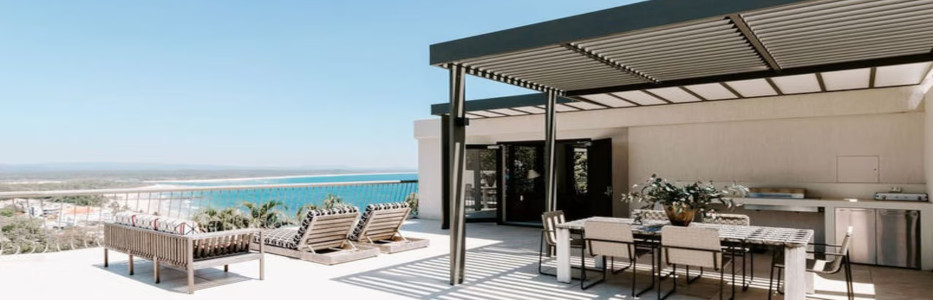
Offermann says he is seeing owners realise significant untaxed capital gains, often selling homes in the $5m-$20m-plus range and repositioning into luxury apartments, smaller homes and lower-maintenance properties and funding their lifestyles.
“Many express that they had never expected to live so long or that living costs would become so expensive,” he says.
Offermann says that, historically, downsizing tended to occur later, often triggered by health and mobility concerns and partner loss.
“Many baby boomers are now downsizing in their late 50s to mid-60s while they’re still very active,” he says.
“Low-maintenance living, walkability, and proximity to Noosa’s Hastings St, restaurants, and the beach are major drivers with high-quality, well-positioned apartments being highly sought after.”
Offermann says that many boomers built on the waterfront of fashionable Noosa Sound in the 1970s and early 1980s, sold in the 1990s and moved to the new waterfront precinct of Noosa Waters. They pocketed about 50 per cent of the difference in values, then later moved to non-waterfront properties to again fund their lifestyles.
“Downsizing in value as well as size is a common theme and includes holiday homes and apartments,” he says.
Through Offermann Real Estate, baby boomers sold a six-bedroom house at 13 Dolphin Cr, Noosaville, for $13m in 2024 and went on to purchase a five-bedroom house at 4 Seahorse Pl, Noosa Waters, for $6.8m. In a second example, baby boomer vendors sold a prime five-bedroom waterfront on 611sq m of riverfront land at 78 Noosa Pde, Noosa Heads, for $16.9m. They subsequently purchased a three-bedroom, two-bathroom apartment on Upper Hastings St, Little Cove, Noosa for $6.45m.
Bernard Salt, founder and executive director of The Demographics Group, says baby boomers are not going to sit in the suburbs and watch daytime telly.
“They are going to boldly reimagine how the retirement years can be lived,” Salt says.
“The boomer bulge has always been with us, but now this ‘portly’ cohort is spread-eagled across age groups in their 60s and 70s who are looking to make the most of their retirement years.”
Salt says the Covid experience shook up older Australia, forcing many to reassess their lifestyles. “It was time for many to question, is working on worth it and how many good years do I have left? And then it saw boomers making up for lost time,” he says. “With the property boom in Sydney and Melbourne, it was time to cash in and move out to a lifestyle place on the coast.
“It was time to make every year and every experience a winner.”
Gerald Delany, chairman of Melbourne’s Kay and Burton, says generations that held homes through the 1950s and 1960s generally remained in the family home much later in life.
“By contrast, baby boomers have been more inclined to ‘right-size’ earlier, particularly since the 2000s. That shift is reflected in the strong growth of apartments and town homes, replacing the older concept of the basic ‘flat’ with more sophisticated lifestyle-oriented housing,” he says.
Today’s downsizer is more deliberate, more lifestyle driven, and far less compelled by necessity, according to Delany. “Many baby boomers are selling larger family homes and moving into premium apartments or townhouses in established locations, often at comparable or even higher price points,” he says.
“The motivation is usually about reducing maintenance while improving lifestyle, convenience and amenity.”
Meanwhile, the South Australian government is making it even easier for boomers, recently introducing a full stamp duty exemption for residents aged 60 and over who are downsizing their homes.
The government wants the policy to encourage residents to move to smaller, new properties, thereby freeing up larger family homes. The potential savings are more than $100,000.


