Pair of architects creating innovative affordable housing community
LONDON: A enterprising pair of architects has created an innovative multigenerational affordable housing community.
Firm KoningEizenberg, founded by married couple Julie Eizenberg and Hank Koning, who moved to Los Angeles in 1979 after studying architecture at Melbourne University, won the institute’s International Medal for the Santa Monica Vermont Apartments project.
Designing public housing in Trump’s America is not for the faint-hearted – last June’s planned formal opening of the development for previously homeless people and low-income families had to be cancelled because Immigration Customs and Enforcement raids were sweeping through the area.
But KoningEizenberg, which still has projects in Australia as well as at home in California – where it runs an office of about 20 people – specialises in it.
The firm says a growing focus on public transport is driving developer interest in co-operating with land-owning utilities such as the Los Angeles County Metropolitan Transportation Authority, also known as Metro.
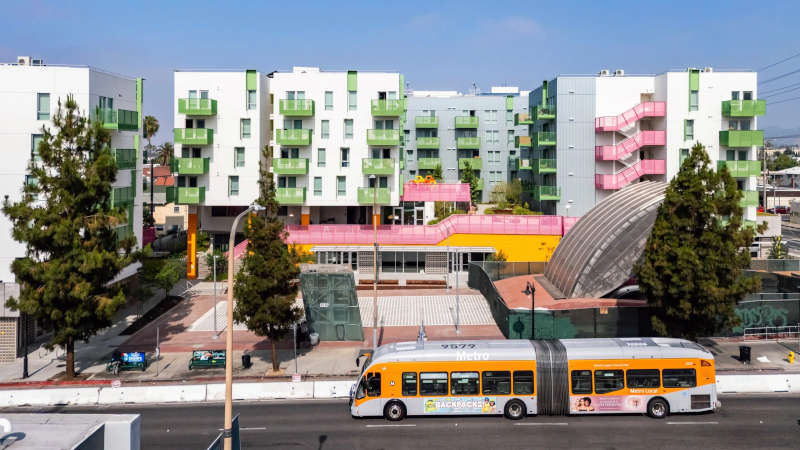
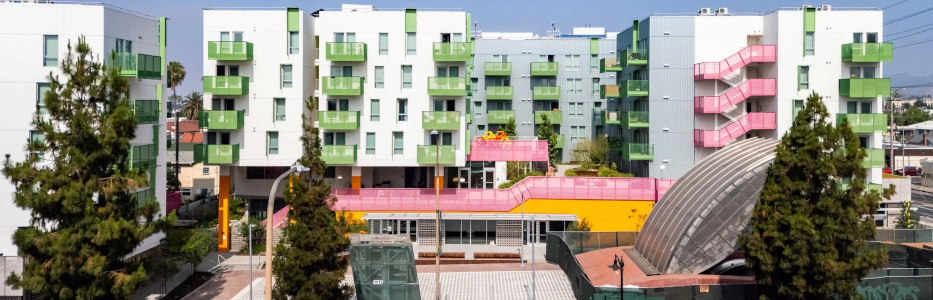
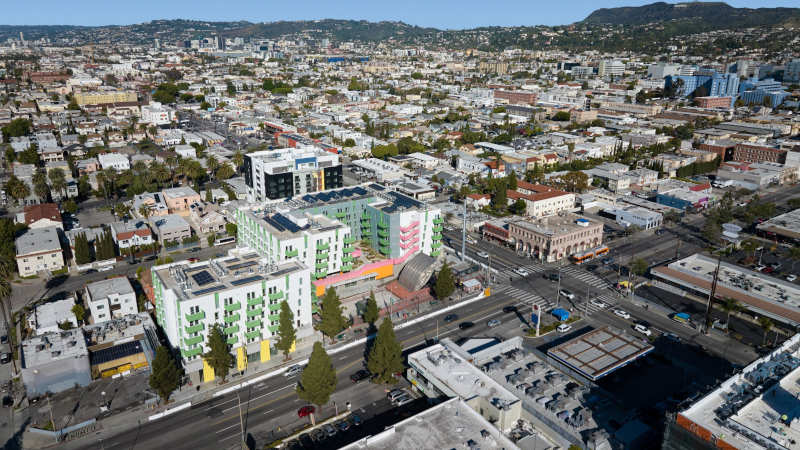
That’s what happened in the East Hollywood area of LA, where a public housing developer worked with Metro to realise the $US118 million ($164 million) project KoningEizenberg designed.
“East Hollywood is a very poor neighbourhood,” Eizenberg said. “It’s mainly an immigrant population. [Sales prices] never attracted a market rate [that would make private projects feasible] for developers.”
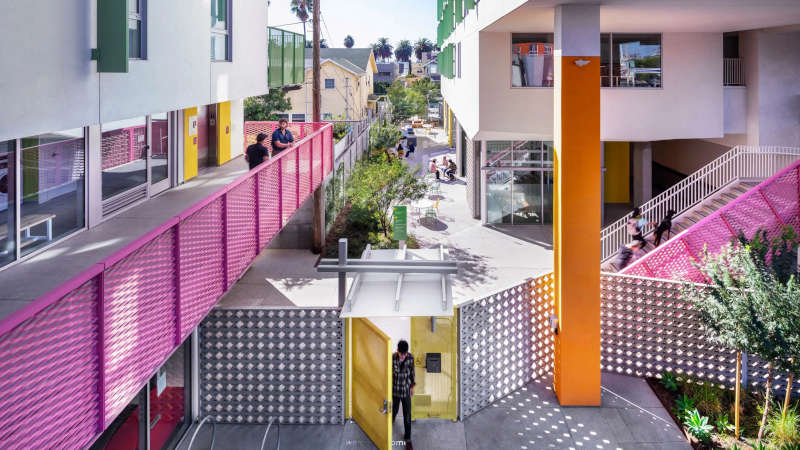
It has been a big success, having transformed a previously empty site outside the subway train station by putting food and retail outlets and a gallery at ground level, and linking the public space to the housing above with terraces, balconies and bridges.
“The Santa Monica Vermont project is an excellent example of a development which transforms its community,” Los Angeles housing department spokesperson Sharon Sandow said.
“It provides housing, a sense of place, and a sense of community to the entire area.”
There’s a huge need in the US for new affordable rental housing. A report published in March by the National Low Income Housing Coalition advocacy group found a national shortage of 7.2 million affordable and available rental homes for extremely low-income renter households – defined as being at or below the poverty level or 30 per cent of their area median income.
In Los Angeles alone, Metro in 2021 undertook to develop 10,000 new homes on land it controlled by 2031, with half of those to be earmarked at rents affordable for low- and mid-income households.
But while the intended residents of this housing – immigrants, homeless and low-income households – are the people most at risk from the harsh social policies of the US federal government, the key public funding source developers rely on for these projects is politically secure, Eizenberg says.
Up to 70 per cent of the equity developers of affordable housing need comes through so-called Low-Income Housing Tax Credits from the US federal government, which a developer typically sells for cash to mainstream institutions such as banks, at a price of about 80¢ in the dollar.
Despite well-publicised measures by Trump’s government to cut public spending, banks love the system of tax credits and it enjoys strong bipartisan support across the Democrat-Republican divide, she says.
However, in an environment of rising costs, the credits are becoming less popular. Developers are increasingly steering clear of them as a source of funding so as to not be subject to the higher-quality standards – for amenity, durability, sustainability or accessibility – the funding requires, Eizenberg said.
“What we are seeing is a number of companies saying ‘I can do this a lot cheaper when I build it at market rate and sell it after to a not-for-profit operator’,” she said.
-

- The Santa Monica Vermont Apartments by KoningEizenberg Architecture
-

- The Santa Monica Vermont Apartments by KoningEizenberg Architecture
-

- The Santa Monica Vermont Apartments by KoningEizenberg Architecture