Granny flats open door to multigenerational housing boost
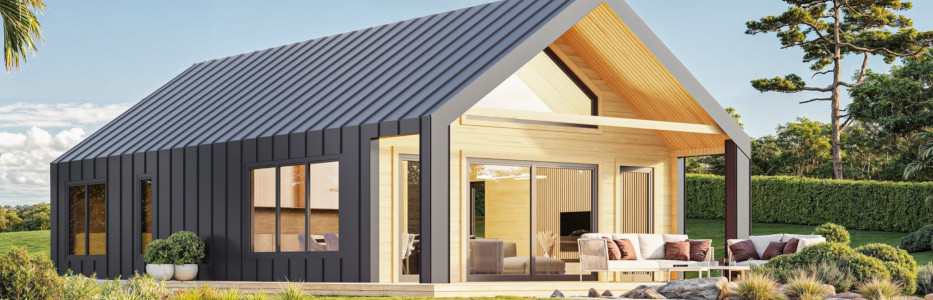
LONDON: Sisters Monica and Nola McKay are downsizing to live on the same property. One sister will live in a house at the front and the other will live in a granny flat on the lot, a few streets back from the beach at Point Lonsdale on Victoria’s popular Bellarine Peninsula.
“This was decided over a few wines … I’d planned on subdividing so I could live happily ever after financially, but I realised that I don’t really want strangers living behind me,” Monica said.
Nola, the younger sister who works as a nurse, is planning to sell her four-bedroom house in a neighbouring suburb and move into Monica’s three-bedroom house.
Monica, a retired nurse, is going to move into a granny flat in her backyard paid for by Nola. They will put both of their names on the property title.
“We don’t have kids and we’re not currently married. [We’re] very strong, single, independent women at this stage and we spend a lot of time together … there’ll be boundaries required, but we know each other so well,” Monica said.
Analysis by property platform Archistar showed Australia’s suburbs could host another 3.6 million dwellings under current planning rules. Building more granny flats, along with duplexes, could be most efficient way to increase suburban density.
Despite the national property downturn, which stripped almost $100,000 from the median price of a Sydney home this year, homes remained out of reach for many after decades of price growth outstripping wage rises.
Rather than relying on property market cycles – with first home buyers still daunted by the high cost of borrowing despite falling prices – analysts and policymakers said a substantial improvement in supply of new dwellings remained the best long-term hope for improving affordability.
The McKay sisters’ decision to downsize together, instead of staying in their houses with spare bedrooms or moving from the area they loved into an expensive unit, made full use of the land and freed up a four-bedroom home for a family.
“[The granny flat] was also the type of house we wanted. It’s a little bit groovier than your average flat … we’re groovier grannies,” Monica said.
The Archistar zoning investigation found 44 per cent of properties in suburbs across Australia could fit another house or duplex and 15.5 per cent of sites could hold six or more additional houses.
The analysis found the middle ring of suburbs in capital cities held the most opportunity for increased density without zoning changes, with the lack of housing diversity in those areas referred to as the “missing middle”.
“The question is no longer whether the land can take more housing – the data says it can – but what sits between that capacity and actual delivery. In most markets that is the assessment pathway, not the land,” Archistar founder Ben Coorey said.
Master Builders Australia chief executive Denita Wawn said the Productivity Commission found Australia did not build enough houses in the areas where people wanted to live and boosting housing supply was essential to improve affordability.
“Whether duplexes and townhouses are feasible depends on factors including the economic environment, land costs, construction costs, financing, infrastructure charges and local planning requirements,” she said.
Wawn said uncertainty in the housing market, driven by the Middle East conflict, rising interest rates and Labor’s federal tax changes, meant many types of builds were no longer stacking up.
“There is scope to encourage more duplex and townhouse development through faster approvals, more consistent planning frameworks and the removal of unnecessary regulatory barriers that make otherwise viable projects too difficult or costly to deliver,” Wawn said.
In one initiative to speed supply, the NSW government last year launched seven terrace house designs that can be sped up for low and mid-rise build approval.
However, Coorey said granny flats were among the fastest and cheapest ways to increase housing stock in the suburbs.
Its data showed 2.5 million lots in Australia could accommodate at least one granny flat, with 800,000 of those suitable lots within two kilometres of train stations and 755,000 near hospitals.
Overall, the research found Victoria had 690,509 sites with capacity for extra homes, greater than NSW’s 636,708.
Granny flats were not permitted in Victoria until 2024. Before that, the state only allowed a dependant person’s unit for a relative requiring care and it could not be rented out or used for any other purpose.
Melbourne-based Innovista Group chief executive Theodore Stone, whose firm builds granny flats, started his business in Victoria when the granny flat rules changed and inquiries for the small homes had increased each month.
“The Australian dream was to have a nice big backyard with an alfresco barbecue area and a pool. I feel like that Australian dream died over a decade ago and people just do not care about these things these days as much as they did,” Stone said.
Stone’s clients were mostly building granny flats for their parents, children or siblings before Labor’s property tax changes were announced in the federal budget.
Tax concessions for negative gearing and the capital gains discount have been retained for investment into new housing, but the definition excludes the addition of a granny flat to an existing property. Nevertheless, Stone said about 35 per cent of his customers were building them for investment purposes.
“Granny flats often punch well above their weight in terms of yields. Granny flats often are yielding double-digit returns … that’s because the cost to build one is relatively low compared to the amount of rent that you can get for the product,” Stone said.
“With the negative gearing changes, we found that we’re getting a lot more inquiries from investors – especially brand-new investors – because it’s pretty much the last lever they have left to pull to actually help them obtain a cash-flow neutral or a cash-flow positive asset, especially now if they’re on an established property,” he said.
As well as making better use of suburban plots to increase housing, empty nesters and downsizers represented further potential to boost housing supply. About 13 million bedrooms were empty each night in the residential property market as older couples stayed longer in big family homes due to a lack of reasonably priced downsizing options, Barrenjoey banking analyst Jon Mott told a Senate committee in July.
Sydney YIMBY chair Justin Simon said there were more effective ways of encouraging people to downsize, including building units in nicer suburbs or by upzoning where they lived, thereby boosting its value – and potential offers – for developers.
“That frees up opportunities for a young family to purchase their home with the garden that’s too hard to maintain in your 70s, or several of them if the site gets developed,” Simon said.


