Gen Xers join Baby Boomers in land lease villages
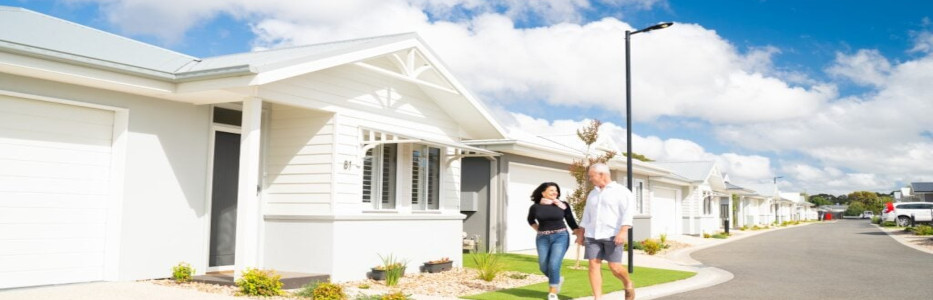
LONDON: Leanne and Greg Paul have just moved into a land lease community. They’re both working and at the ages of 56 and 53 respectively, they laugh that they’re younger than most residents in the 245-home lifestyle village.
“We are probably a good 15 to 20 years younger, but that’s okay,” Leanne Paul said.
But they’re not alone. Land lease may still have an image as a sleepy retirement option, but ASX-listed GemLife, the company operating the Woodend community says “four or five” people in their 50s have moved in.
Further, the company says 20 per cent of purchasers over the past 12 months work full- or part-time, compared with a decade ago, when the figure was below 5 per cent.
But the company said it had only recently started collecting date-of-birth data and didn’t have definitive figures on ages of residents.
For Leanne and Greg, who downsized after their last child left home, it was an obvious step.
“It’s really an untapped market for our age group,” Leanne said.
The business of land lease has emerged as the bright spot in Australia’s residential housing market, tapping the fertile ground of an ageing cohort of home owners who take the opportunity it offers to sell their family home, buy a cheaper home and, in many cases, pocket some cash.
The sector stood out from traditional build-to-sell housing in a generally weaker residential market for listed developers in the corporate reporting season that finished last month, Citi analyst Suraj Nebhani said.
“Land lease developers have had good results this period with flat-to-up margins, sales rates falling, but a number of community launches benefiting aggregate sales and settlements, and guidance generally coming in better than … consensus,” Nebhani said.
“We see this as flagging the resilience of the space and the strong growth fundamentals of ageing population driving demand.”
There’s a fight for scale in the sector, which in recent years has witnessed the largest ASX-listed developers Stockland and Mirvac establish themselves as major players alongside long-term operators Ingenia Communities and Lifestyle Communities.
GemLife, previously the private company of Queensland’s Puljich family, a pioneer of the sector, became an ASX-listed entity last year with a market capitalisation of $1.58 billion, which has since risen to $1.6 billion.
Earlier this month, New York private equity firm Warburg Pincus made a $2.9 billion takeover bid for Ingenia, which the board rejected.
The Pauls’ experience is only anecdotal, but it is a sign the sector may be widening its appeal beyond the traditional market of retirees to offer a housing solution for a younger cohort of buyers who are still working.
In land lease, a client – who typically sells their family home to fund the purchase – buys a home in an established community, but not the land on which it sits. They pay ongoing rent to the operator for the land and to cover services such as maintenance of common facilities and gardening.
It’s a growing business. Consultancy Chadwick Property Valuers publishes an annual report on the sector that puts total market penetration – the number of land lease residents out of the national cohort of 50-to-84-year olds – at about 3 per cent in 2024.
Separate figures from CBRE, predicting Australia’s population of over-65s to rise from the current 4.75 million to 7 million by 2040, put land lease’s penetration rate in the over-65s cohort at between just 1 and 1.5 per cent, far smaller than the 5 per cent of traditional retirement villages and the 5.2 per cent of aged care facilities.
Director Luke Chadwick says Gen X – the oldest people in this cohort born between 1965 and 1979 are now 61 – is adding extra steam to the demand for land lease housing to that of Baby Boomers, born between 1946 and 1964, the youngest of whom would now be 62 and the oldest 80.
“With the lifestyle afforded by modern land lease communities coupled with the equity release opportunities, the earlier Gen X cohort should begin to increase demand over and above the Baby Boomers’ generation,” he said.
UBS analyst Solomon Zhang, who covers stocks including GemLife, was more cautious. He said the core market of baby boomers would be the main driver, but “at the margin” a younger cohort would pay a role.
“Part of the issue is brand awareness,” Zhang said. “As the acceptance of this concept increases in Australia as the penetration rate increases as well for the target demographic of 55-plus, that age cohort will start to spread.”
The Pauls may be an anomaly. They have sons aged 33 and 29 – giving them four granddaughters already – and a 24-year-old daughter who made them empty-nesters when she moved out a year ago.
They say their ability to downsize is something many Gen X parents can’t yet do, having had children later in life and now finding themselves with children unable to move out due to Australia’s chronic housing unaffordability.
“The way the world is today, most kids are still at home,” Leanne said.
“In a sense, we can say we’re lucky. Ours are out, got their own places, doing their own thing.”
The couple wanted a lock-up-and-leave lifestyle but didn’t want to live in an apartment. Woodend is 70 kilometres from central Melbourne.
“We do work in the city,” Leanne said. “Greg has to go in a couple of times a week. My base is in the city, but we’re not city people, so apartment-style living wasn’t really our thing.”
And while they haven’t taken cash off the table in selling their mortgage-free family home (and an investment property) to buy into GemLife Woodend, where the resales over the past year ranged from $650,000 to $1,060,000, they expect to at least break even on their purchase, even though it doesn’t include a land component.
“We’ll always make our money back,” she said. “I have no doubt about that.”
There are signs the homes do increase in value.
Chadwick measured land lease home values over the five years to June, finding a median 48 per cent increase from the sale of 302 homes in the southern Queensland town of Hervey Bay, compared with a 95 per cent leap clocked by Cotality in the median value of houses over the same period.
The consultancy also measured a 13 per cent gain from the sales of 165 land lease homes in the mid-north coast of NSW – while Cotality house values fell 13 per cent over the same time – and a 63 per cent median increase from the sale of 174 land lease homes in Queensland’s Sunshine Coast, less than the 123 per cent jump in the value of privately owned houses over the same period.
There was another advantage to moving into the community in Woodend, the town where Leanne grew up, Greg Paul said.
“There’s no stamp duty,” he said. “That was a big thing. If we were to move up here to a regular house or a unit or something like that, we would have to pay stamp duty of $40,000 or $50,000, which we’re not having to pay here.”


