Veteran presenters of Boom Radio became a smash with oldies

LONDON: The 35 DJs at one of the UK’s fastest growing radio stations, aimed at baby boomers, have an average age of 76 — and a loyal and growing band of listeners.
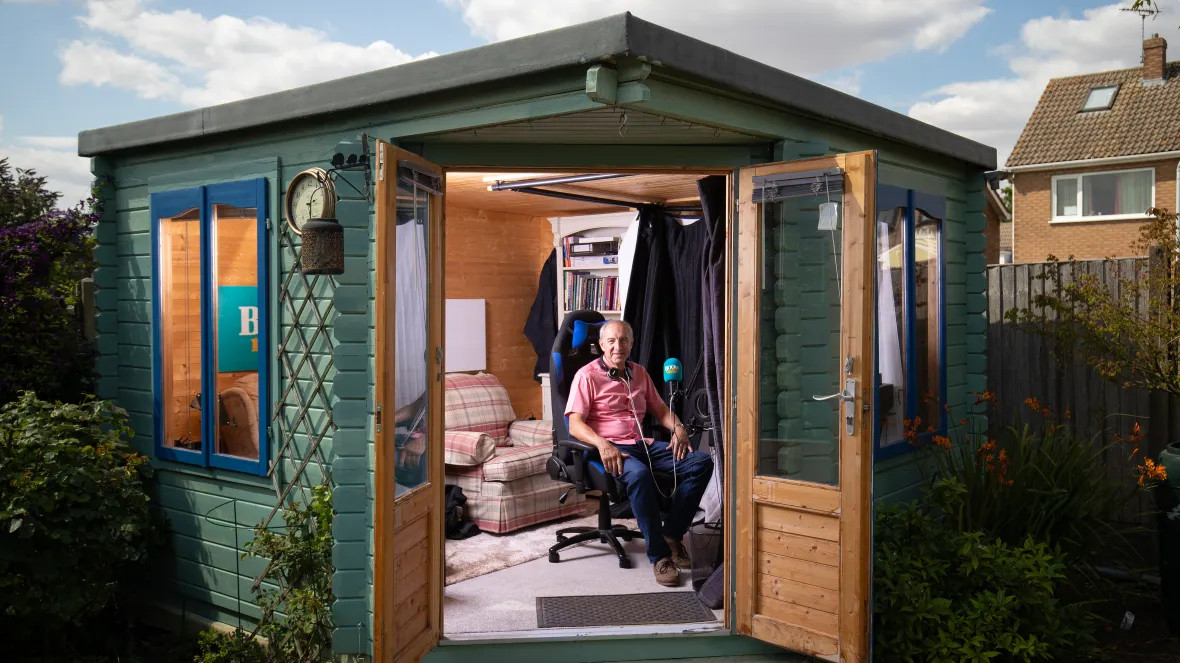
“It’s not a bad start to the day here in the heart of Lincolnshire,” says Rod Whiting as he studies the garden from his shed window. “The last of the roses are hanging on in there while the berries on the sorbus trees swaying around in the wind are putting on quite a show.”
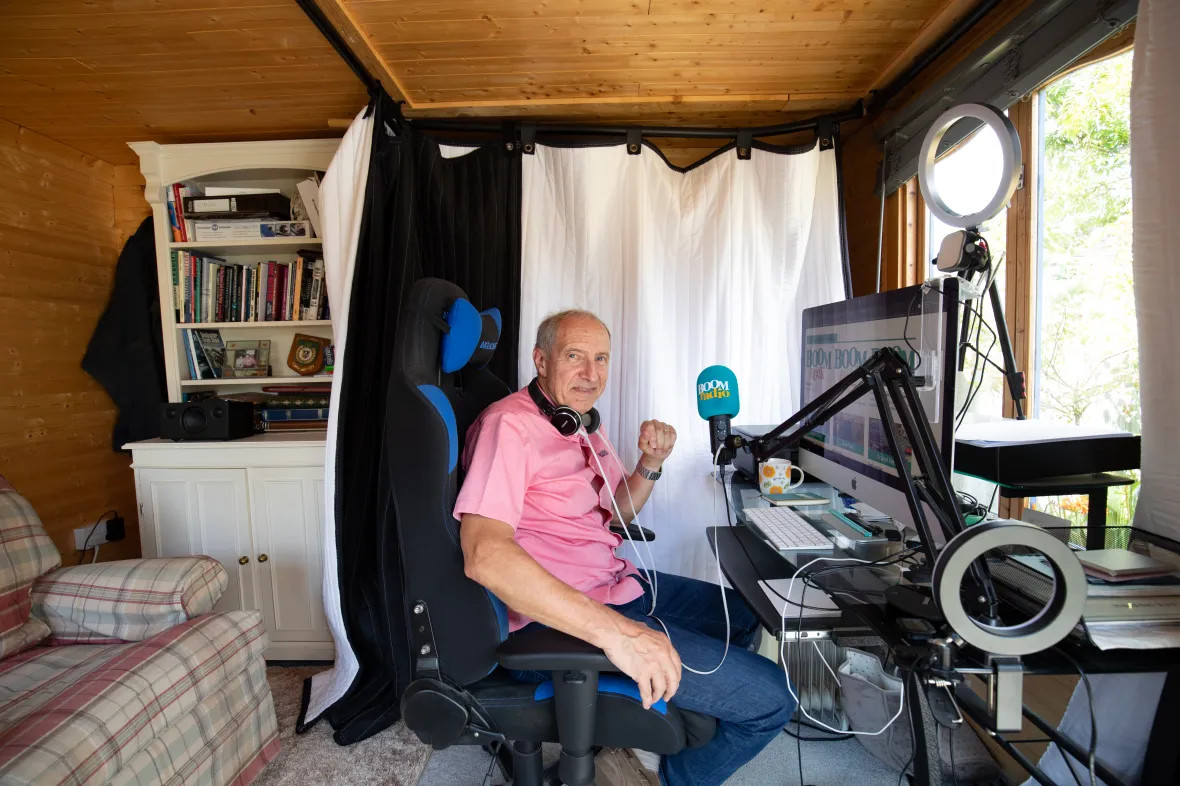
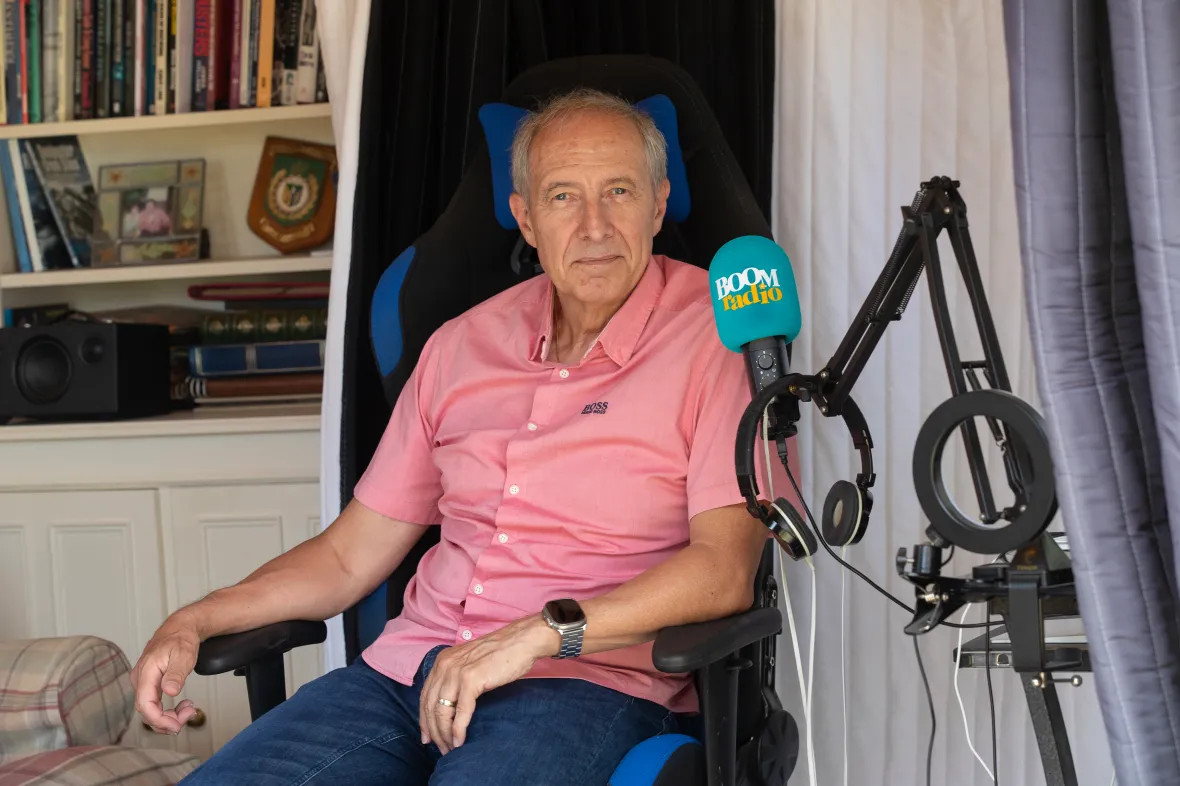
Like those berries, Whiting is also staging a performance of sorts. The former BBC broadcast journalist is presenting on Boom Radio, a station aimed at older listeners — his two-hour segment later launches into adverts from Simplicity Cremations and Boom Singles, a dating site for the baby boomer generation.
Whiting is one of Boom’s 35 presenters. They have an average age of 76, a number that has risen slightly since David Lloyd and Phil Riley launched the station in 2021.
Now, their independent music station is one of the fastest-growing in Britain. It has more than a million monthly listeners, annual turnover of £4.3 million and, they say, is healthily profitable. The average listening time is 14.7 hours per listener per week, according to Radio Joint Audience Research (Rajar), the official body responsible for measuring radio audiences in the UK.
“The length of time that people are listening to us is unrivalled,” said Lloyd, 65. “Our listeners are more loyal to us than just about any other radio station in the United Kingdom. We never dreamt that we would be this size in quite such a short time.”
Lloyd, who has 40 years of experience presenting on LBC, Virgin and BBC local radio, among others, was facing retirement when he noticed that radio was becoming increasingly focused on younger audiences in its music selections and broadcasters. “I thought, hang on a minute, they’re leaving an audience — a disenfranchised audience — who actually are radio’s most loyal customers, because the older you get, the more you listen to radio.
He also knew a number of veteran radio broadcasters he thought might have an appetite for a channel of their own. “Do you think it might fly?” he asked an old colleague, Phil Riley, 67, who has also spent four decades in radio. Riley did indeed, but his rough calculations suggested they would need about £500,000.
They raised the cash from 25 friends and former colleagues, some of whom were coaxed out of retirement and all with backgrounds in media or advertising.
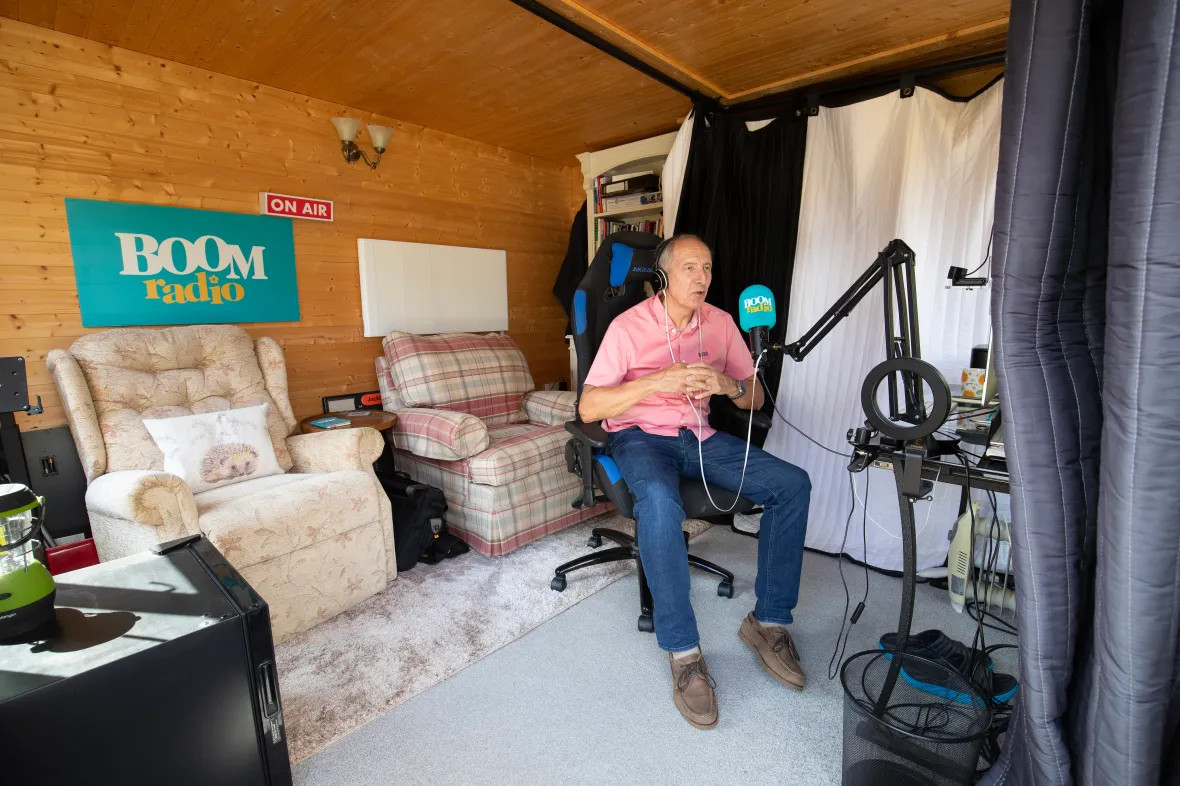
Having presenters scattered across the country, in their respective homes and gardens, has worked to Boom’s advantage. It has no studio costs and most of the presenters already owned all the kit they needed.
In many cases, the unexpected late-career gigs have given the broadcasters a new lease of life too. Among them is David Hamilton, 88, who hosts his daily show from an attic room. “I’ve had another chapter,” he said, after receiving a phone call from Lloyd and Riley asking if he’d like to join Boom.
Lloyd believes that older presenters can offer more to listeners. “You’re a much better radio presenter when you’ve lived, loved and lost and have got stories to tell. And the irony is, most radio presenters get the big gigs when they’re in their 20s and 30s. Actually, you are much better, speaking personally, when you’re in your 50s and 60s. You’ve got more to say.”
Back in Whiting’s summerhouse studio, the programme continues with Blind Faith’s 1969 recording of Can’t Find My Way Home before later moving into Misty Blue by Dorothy Moore
Part of Boom’s success, the founders say, is down to the depth of music they play. Tunes aired on the station are often from the 1960s and 1970s but there is plenty of room for easy listening from the 1950s, some 1980s tracks and newer music.
“People our age do love to reminisce,” said Lloyd, “but also we’re living lives in 2026 so we wanted to be a radio station for now.”
Listeners are nostalgic, he added, for the presenters they grew up listening to, who are now living similar lives. Boom is open about mishaps such as hearing aids falling out or trips to the doctors. Sometimes the at-home studio format leads to the occasional disruption — the Ocado delivery arriving or the grandchildren bursting in — but presenters are encouraged to go with the flow.
“Listeners love that because it brings real life into people’s lives and they feel that they’re invited, particularly [ones] who are on their own,” said Lloyd. “It’s not meant to be pristine 1950s BBC broadcasting.”
The corporation had a run-in with Boom last year. Lloyd and Riley objected to a “Boom killer station” planned as a Radio 2 spin-off aimed at the same older audience they have built their business around.
BBC executives insisted Radio 2 continued to target listeners over 35, but described the proposed station as a “comprehensive nostalgic experience”. Boom argued to Ofcom, the media regulator, that the move represented unfair competition, leading it to block the BBC’s plans.
“Our audience are the ones who absolutely adored the BBC,” Lloyd added, “and we’ve just got them at a time when they’re probably not feeling too happy about the way the BBC is these days.”
As well as competition from bigger fish, another challenge is bringing new listeners through the door, Riley admitted. “Once we get them, we think they’re ours for life, and they listen to us almost exclusively.” To achieve that means spending on advertising, including on Facebook and ITV, and it also led to a six-week deal with Times Radio.
However, at Boom’s monthly board meetings the first point of order is neither audience nor revenue figures.
“Agenda item one of the board meetings is ailments,” Riley laughed, revealing his fitness regime. “We have to go round the board table and say, how’s your hip? Have you had that operation? Just to check in on people.”
Nevertheless, most are still going strong and have no plans to put down the mic and headphones anytime soon. “We are just a bunch of old friends with a dream and we’ve managed to make that dream come true,” Riley said. “It’s just been a heck of a ride.”