When your neighbours are your closest friends
LONDON: The afternoon sun bathed the manicured patio in light, while a dozen friends chatted around a picnic table. Doors opened to a communal kitchen where a feast of apricot-glazed salmon and kale salad was being prepared. The scene was interrupted only by the shrieks from the gaggle of children running about and the whir of the nearby BART train.
This wasn’t a birthday or a holiday gathering. At Radish, a commune spanning seven units and 14,000 square feet in Oakland, Calif., it was just Thursday. The early evening “baby happy hour” is one of many rituals that developed over the past eight years as the co-living compound evolved.
Phil Levin bought the property in 2018 with his wife, Kristen Berman, a behavioral scientist who studies decision making. The two built its foundation on what they refer to as the “obvious truth”: People are happiest when surrounded by those they care about.
It has housed as many as 20 adults at a time. Ten children were born along the way. Now, the whole property is ready for its next owner — for $3.95 million. And Mr. Levin has built a new real estate endeavor around the concept of communal living, aptly named Live Near Friends.
“When we started Radish, our sort of view was like, oh, we’re a little weird, our friends are a little weird. We’re building something very unique just for us,” said Mr. Levin. “What we basically learned over the course of Radish is like, there’s a pretty universal desire to live this way.”
One such convert was Diana Danoff, who first visited the campus in 2020 during the Covid pandemic when she began dating her partner and early Radish resident, Misha Safyan.
“Everyone else was kind of lonely and sitting in their apartments and Radish was having the time of their lives,” Ms. Danoff said. She moved in soon after, and has since become a proponent of community-based living.
Certain buildings on the property have their own thematic nicknames — the Blueberry, the building that houses the communal kitchen, is across the way from the Fig, a two-story accessory dwelling unit built right in the center of the action. And clogs have become the shoe of choice for residents who are always only steps away from visiting a friend, Mr. Levin said, sporting a custom-branded Live Near Friends pair.
The project began with a group of six residents, one apartment building and one single-family home. Mr. Levin and Ms. Berman were the property’s buyers, but its development was supported by financial investments from 22 people, housed under an LLC. There are three ways people were involved, Mr. Levin said: People who both lived on-site and contributed capital, people who lived there without investing and people who never lived on the property but backed it financially.
Deena Rosen, who was an early Radish resident, said the support she received from the community, which was core to her decision to have a child as a single mother, was also the reason she continued to contribute financially, despite moving elsewhere in the neighborhood.
She’s among the roughly 75 people who are in the Radish orbit, some of whom pay dues to use the shared amenities or participate in group meals.
“We lived here once and then loved it so much that when we needed a different space we just found a place very close by, so we could stay part of the community,” Ms. Rosen said.
With the Radish sale underway — necessitated by the timeline promised to early investors, as well as space constraints — its current residents are splitting off into three new compounds in the East Bay. Two will be in Berkeley and one in Alameda, where Mr. Levin and Ms. Berman will move.
Osman Koc, who is running the new space in North Berkeley, said that Mr. Levin and Ms. Berman have been “trailblazers” for both building and running this type of community.
In South Berkeley, Mr. Safyan and Ms. Danoff have started “The Roundabout,” which will house at least nine adults, including some from Radish, and a handful of children.
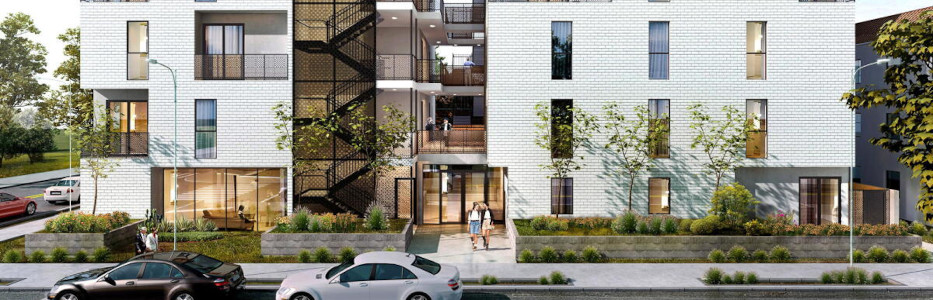
Their property is Live Near Friend’s first development to break ground, Mr. Levin said. In addition to helping people find and purchase multiunit properties, he hopes to help clients develop their compounds from the ground up, buoyed by new housing laws in California.
Among them is SB-1123, which allows development of up to 10 new starter homes on some vacant single-family lots, according to Ben Metcalf, the managing director of the Terner Center for Housing Innovation at UC Berkeley. The law also streamlines the public hearing and environmental review process, among other measures..
But building in this way is not without challenges, even with this new pathway, he said. Getting permits for additional infrastructure or extending a sewer line, for example, can be technically difficult, making the process less accessible to prospective home buyers.
“It gets back into this trap of like, wow, this is a cool idea. And also — it costs a lot, it takes a lot of time,” Mr. Metcalf said.
The urge to live in proximity to others may be a result of rising isolation, said Jeffrey Hall, a professor at the University of Kansas, who studies friendship. It could be seen, he said as an “analog response to our digital world.”
The small interactions a person has while living near others can be hugely beneficial, he said, but the more complicated parts of everyday logistics may scare people off from trying to live communally. Ms. Berman, the Radish co-founder calls this the “coordination tax,” referencing the necessary, but unglamorous collaboration it takes to figure out who takes out the trash and sources groceries.
“It’s very hard to see the good things from the outside, but it’s very easy to see the uncomfortable or complicated things from the outside,” Mr. Hall said.
Of course communal living isn’t a new concept, and Radish certainly doesn’t stand alone in the modern version of this movement. The Embassy House (a source of inspiration for Mr. Levin) sits across the Bay Bridge in San Francisco. Further East, the more recently minted Bird Nest houses 11 women in a tiny home compound in Texas. And corporate co-living communities and companies have come and gone over the last decade.
As Mr. Safyan builds out his new venture in South Berkeley, he said he’s aware that the lifestyle isn’t for everyone, but for him, its been an antidote to the strain of being a working parent in an unaffordable place.
“The answer seems to be it’s like either join a tight-knit religious community or like do this co-living thing,” Mr. Safyan added. For now, he’ll stick with the commune.


