‘Eco’ label straddles tiny homes to off-grid manors

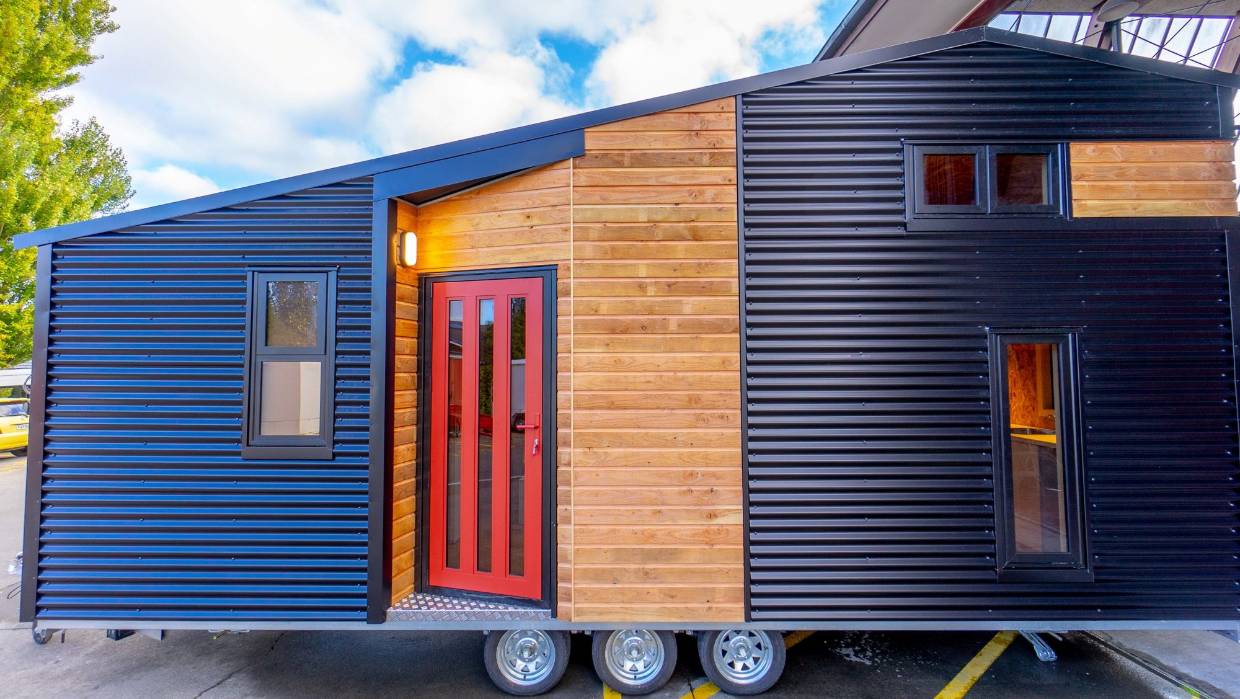
CHICAGO: Two tiny eco-houses built by a group of 20 students will soon face the ultimate market test at auction.
The portable houses contain sustainable features that real estate marketers increasingly highlight. Eco-homes advertised on auction site Trade Me range from totally off-the-grid houses, or just better insulated and heated to higher levels than most traditional Kiwi homes.
The money raised from the tiny houses auction will fund several Ara polytechnic students on a week-long working trip to Fiji to help Habitat for Humanity build new homes in cyclone devastated areas.
Cost of materials within a constrained budget was a major challenge for carpentry tutor Mick Cooke who was forced to buy structural insulated panels from overseas at half the price available locally.
The structural panels have a thick layer of polystyrene sandwiched between two boards, used in many commercial buildings and homes, including the Master Builders 2016 house of the year.
“Some of the other components were easier to find. A local company made the custom braked trailer base,” Cooke said.
The sloping roofs of the of the 23 square metre 3.5 tonne homes were designed for the possibility of solar panels, and batteries can fit in a rear storage compartment, although they didn’t fit within the current budget for the project.
“The students also learned about minimising waste by taking care when cutting materials to reduce the amount that would have to be sent to a landfill,” Cooke said.
The double glazed homes have kitchens, bathrooms and gas heating, and can be connected to electricity mains.
The project was a motivational way of lifting the skills of the students and some of them have gone on to building apprenticeships.
Asking prices of tiny homes range from about $40,000 to more comparable ones approaching $100,000.
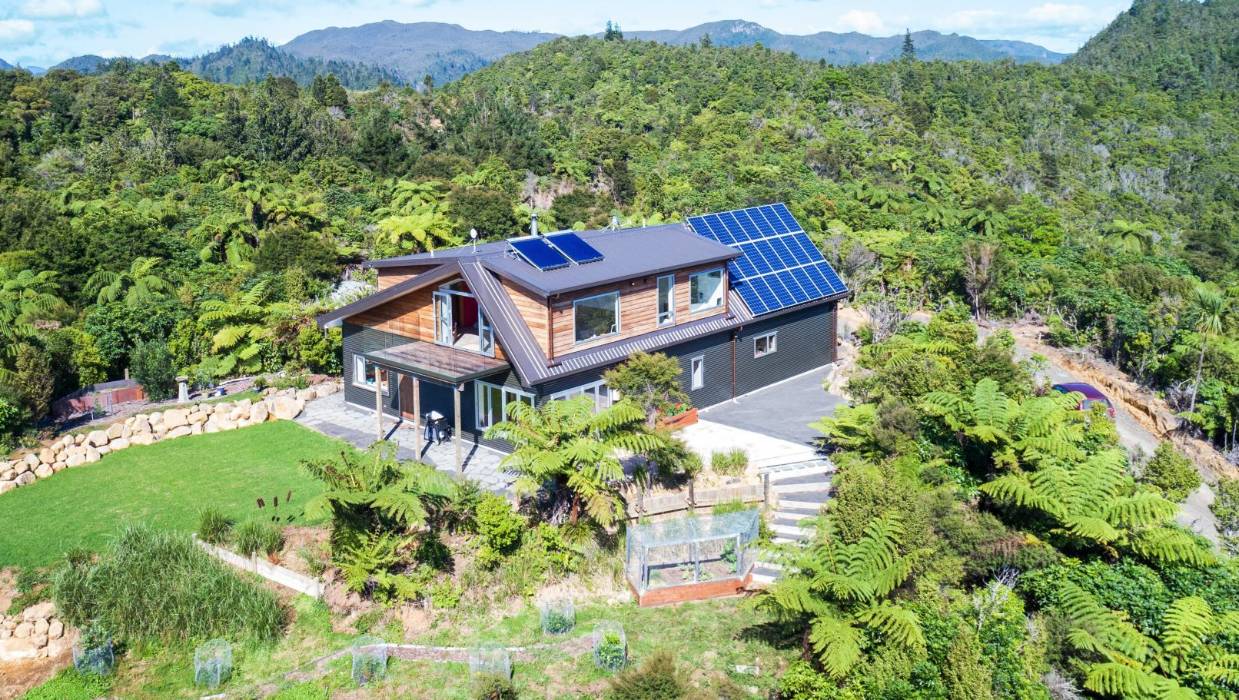
Meanwhile, off-the-grid enthusiasts have beaten a path to Tom Cooper’s home at Coromandel which is on the market for $1.5 million.
“I’ve never done anything like this before although I’ve been involved in the marine industry setting up energy systems for boats,” Cooper said.
“Because the house is some distance from the nearest power lines it was a cheaper option.
“I’m a bit sceptical about the money you can get back from sustainable features when you sell. People love the idea of being ‘green’ but they also want the comforts they’re used to. There are some shysters who will oversell the idea,” Cooper said.
In Cooper’s house the comforts included underfloor hearing, woodstove, large windows and views.
“From a social responsibility point of view it makes sense to include sustainable features because at a national level you don’t need to build more dams or coal powered stations that have to be managed.”
Cooper installed a greater number of solar panels than normal and he said they proved themselves in poor weather. He also installed a backup generator in case he miscalculated the battery storage or there was a technical hitch, but he hadn’t used it in three years.
He was selling the house because it was bigger than he and his wife needed, and he planned to build a smaller home next door on one of four adjacent sections he developed at Tairua.
Cooper said he would like to see a better national system for selling power back to the grid, and local councils needed to bring themselves up to speed when it came to consenting. Initially he had been told he would still have to pay an electricity connection fee.
“With an off-grid system you have a finite amount of power and that makes you more aware and careful of usage. That may not seem a selling point if people assume they can’t operate all the mod cons, but you can.
“An analogy is owning a smaller car. They take less fuel but you still get there,” Cooper said.
Even banks are promoting eco-homes as a marketing tool, because reduced running costs makes sense.
ANZ will shave 0.7 per cent off fixed interest home loans and 1 per cent off floating loans plus fee waivers, equating to an annual saving of about $1000.
The Healthy Home Loan is based on one-to-10 Homestar ratings, and applies to homes that achieve six stars or more.
“Most existing homes only achieve a two or three rating, and even new homes will often only achieve three or four,” Antonia Watson, managing director retail and business banking, ANZ said.
The New Zealand Green Building Council has calculated that it only costs about 1.5 per cent more to build a three-bedroom house meeting the six Homestar rating with annual savings of $500, compared with a similar house built to minimum standards.
One way to measure warmth, dryness and efficiency is available by using Homefit, an online questionnaire that has attracted more than 10,000 people since it launched in December 2018.
However, a more controversial online calculator aimed at solar panel buyers was recently taken off the Energy Efficiency and Conservation Authority website.
EECA’s general manager strategy, Jenny Lackey, said it was taken down for enhancements to allow people to factor in appliances such as dishwashers and dryers during the day when the sun is shining, and the calculator will be back on the Energywise website in July.
Architect Wulf Borrmeister said he received many inquiries about sustainability. There were three basic features for any house; orientation of the house for warmth from the sun; insulation and good glazing.
It was impossible to quantify the amount that sustainable features might return in a sale, except they were undoubtedly attractive to buyers, Borrmeister said.
The uptake of solar panels was constrained by the payback period, because most people only owned a house for an average of about seven years, according to Ray White real estate agent Eddie Spry who is helping market the tiny homes.
The cost of different solar panel systems can range from about $5000 to more than $15,000.
Alternately, Solar City rents panels on long term contracts, both for water heating only, and also for battery storage, with the aim of halving power bills over 20 years.
Solar City marketing manager Liesel Rowe said her company also managed the sale of surplus electricity to power companies.
Would-be buyers can find information from Consumer NZ about payback periods to compare different offers.
In most homes the space heating and hot water take 63 per cent of energy, the refrigerator 10 per cent, electric range 6 per cent, lighting 8 per cent, and other appliances 13 per cent.
The choice of so-called “eco” home buyers depends on budgets but begins with features that experts say should be common to all homes. Materials such as concrete pavers to capture warmth, airtightness and ventilation.