Boomers and single mothers embrace tiny off-grid homes

MELBOURNE: Downsizing boomers and single mothers are bolstering the trend to off-grid tiny houses.
Couples separating have to rethink everything – from how they will manage finances to working out where they will live.
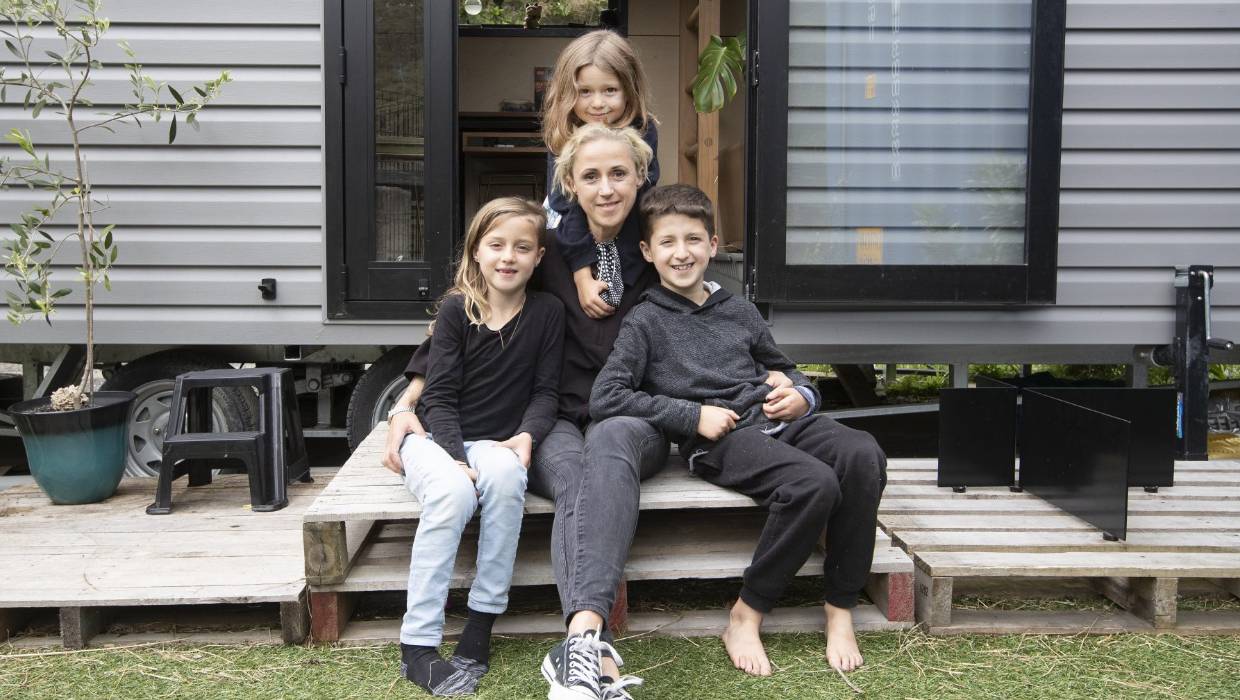
Tasha Garcia was faced with exactly this situation. The family was living in a large house on Wellington’s south coast. But a separation put paid to that.
And with the average asking prices of houses in Wellington sitting around $760,000, Garcia says she knew she had to think outside the box to solve her personal housing crisis.
The IT worker was able to crash temporarily at a friend’s house where she and the three children slept four to a room.
“When I separated from my husband I started reimagining what my life would look like, in a way I had never had to do before,” she says. “My number one priority was having a warm, dry, safe space for me and the children, and I knew I needed to be able to take time off work, if necessary, without having to worry about a huge mortgage.”
Having seen tiny houses on social media, Garcia thought she would take a look at the concept. “I saw a few videos of a family of five up in Hawkes Bay who are living in a tiny house, and it made me pause and think, well can you live with much less space?”
She loved the idea of using fewer resources and having a more sustainable lifestyle. And, most importantly, as she shares the care of the children with her ex, she wanted to create a good life for Alfie, who was then 9, Esme, 7, and Olive, 5. And, she says, a tiny house offered her the chance to do all of these things.
But Garcia knew there would be compromises: “It’s all very well as an adult being minimalist and getting rid of a whole load of your possessions and trying to live that way. It’s a whole different thing trying to persuade three children that they don’t want to hoard all these precious things they collect on a daily basis.
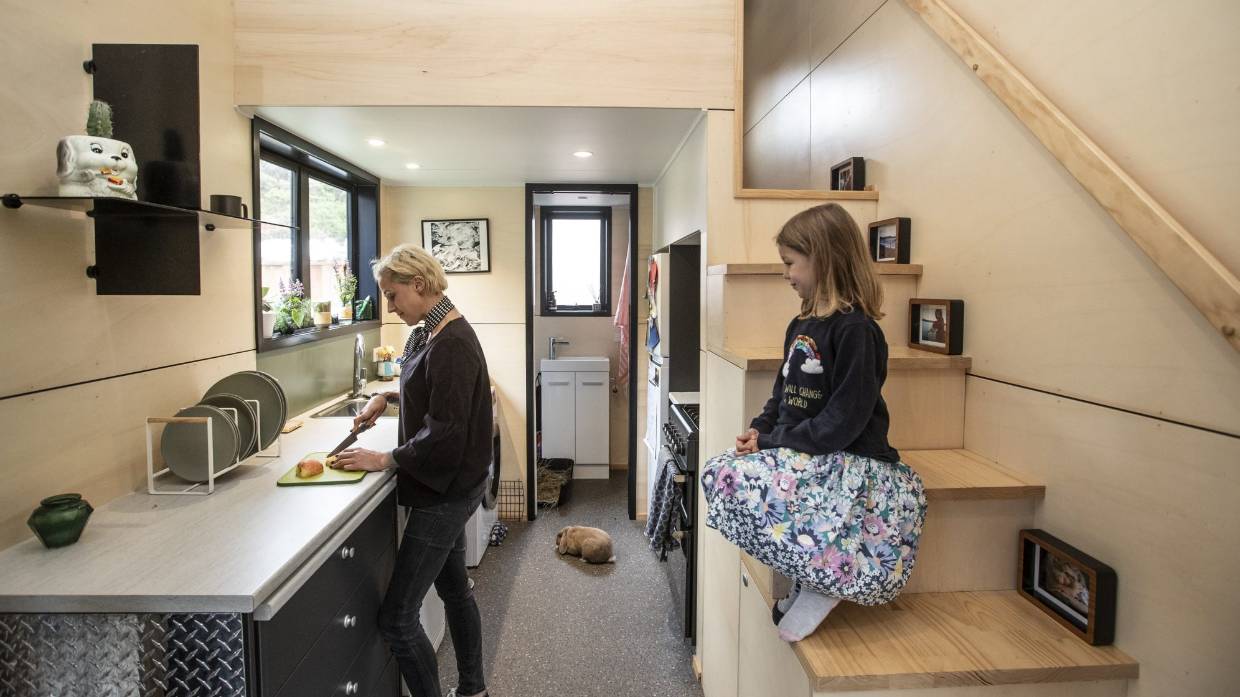
“Alfie’s main concern was that his beloved goldfish had some space in the kitchen, Esme wanted chandeliers and Olive wanted her rabbits to be up in the bedroom.”
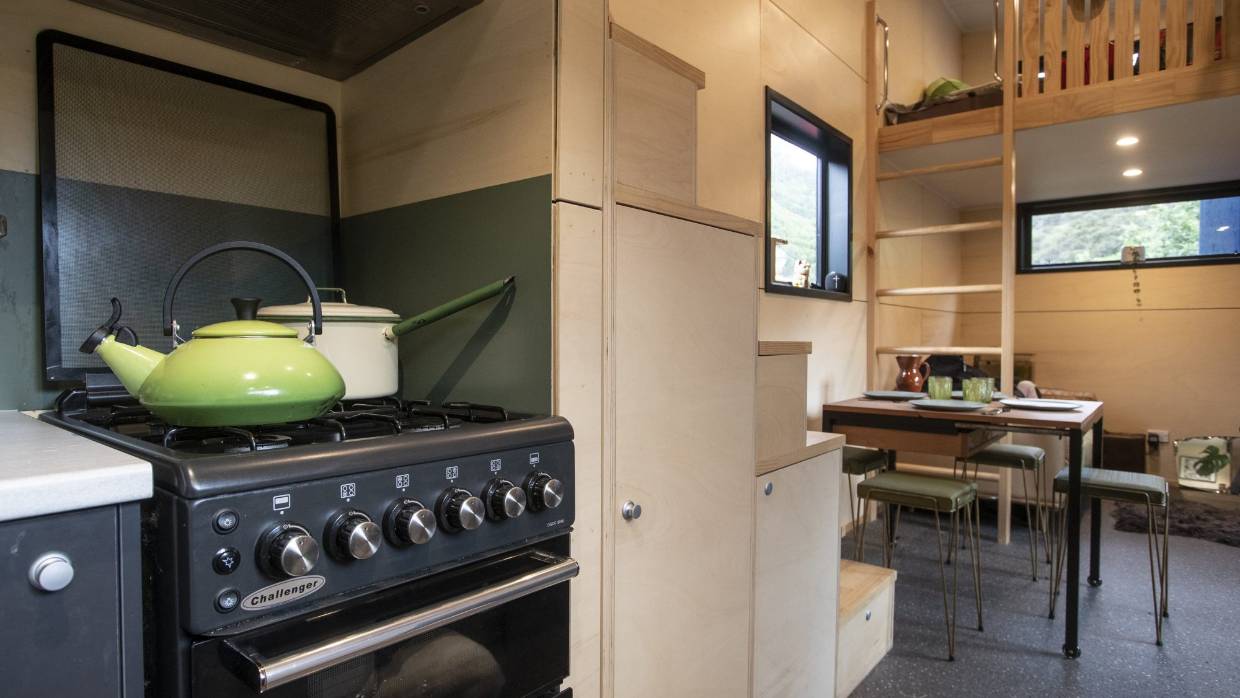
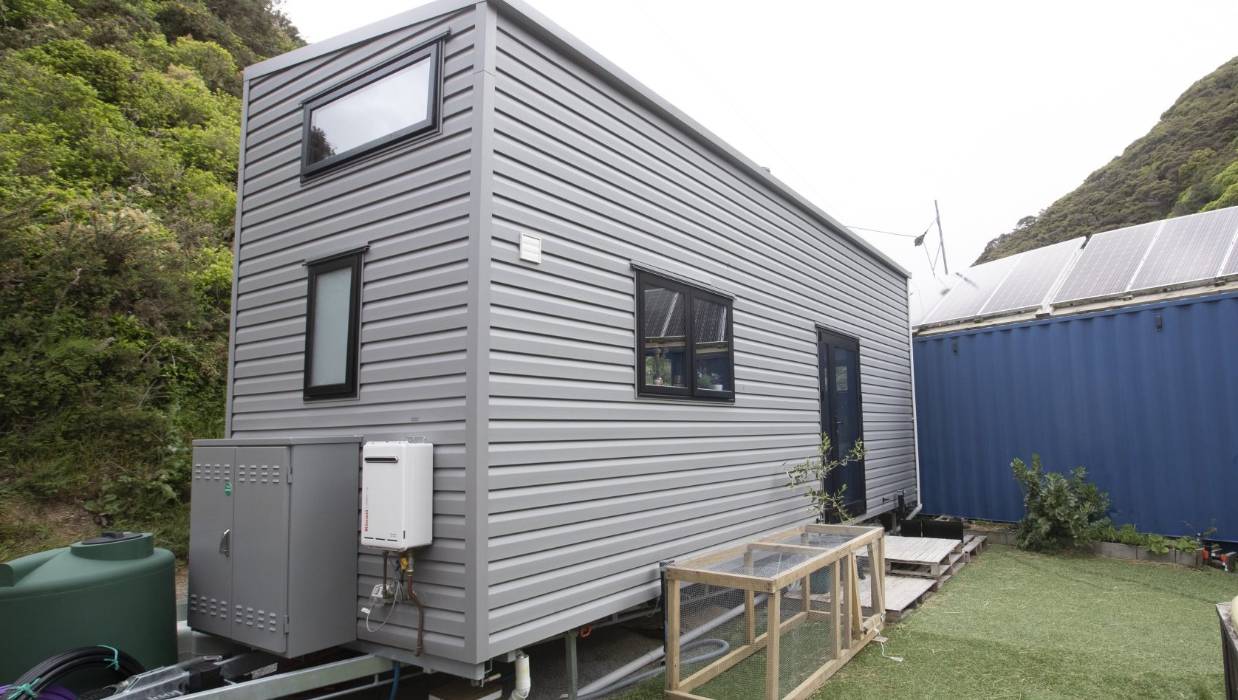
Garcia had her 8m x 2.4m tiny house custom built by Build Tiny in Katikati for around $130,000, which included the solar panels she needed to be able to go off grid.
The house was towed to a site in the bush at Karori South in Wellington – she is renting the land from friends. The solar panels provide most of her power, but she does have a back-up generator and gas bottles. And water is pumped from a spring on the property.
With the family now settled into a routine, Garcia, who comes from Gilbraltar, about the move. And it turns out she is a total convert to tiny house living.
“It’s absolutely wonderful. I wanted to create a refuge, and that’s exactly what we have – a lovely sanctuary hidden away from the world.
“People ask us how we don’t kill each other in a tiny house (on wet days), but there are so many little areas and hidey-holes, we can all find a place to ourselves. And as soon as the weather clears, the children just disappear out the door, having their own adventures.”
Garcia says the family moved in at the start of winter, jumping straight in to off-grid living. “There were a few hiccups when we ran out of power a couple of times, but once I learned to read the solar panel system, we were OK. I think I have only used the generator twice.”
Moving to a much smaller home has not been a sacrifice for this family.
“We took it quite easy in terms of getting rid of stuff,” says Garcia. “The Salvation Army did really well out of us. It has been very liberating. The things we have around us now are really precious to us.
“The kids absolutely love it. They feel a real sense of ownership and are invested in helping to keep it tidy.”
And the family don’t feel they are doing without modern convenience: “We have a dishwasher, washing machine, full stove and a fridge-freezer. It’s not like we’re living out of a chilly bin. We grow our own vegetables. And we have a good shower and a composting toilet, which is no hardship at all.”
Other pluses include the wild life: “We have wild boar and wild goats, plus quail and possums and because we are close to Zealandia (wildlife reserve) we gets lots of birds. There are even glowworms down the driveway. And there’s a swimming hole that’s absolutely heaven.”
And what about the cold in winter? Turns out the log burner provides more than enough heating: “We used it every day during the winter. But I just put one log on and everyone has to open the windows and take their clothes off.”