Couple turn heartbreak into healthcare app to aid virus fight
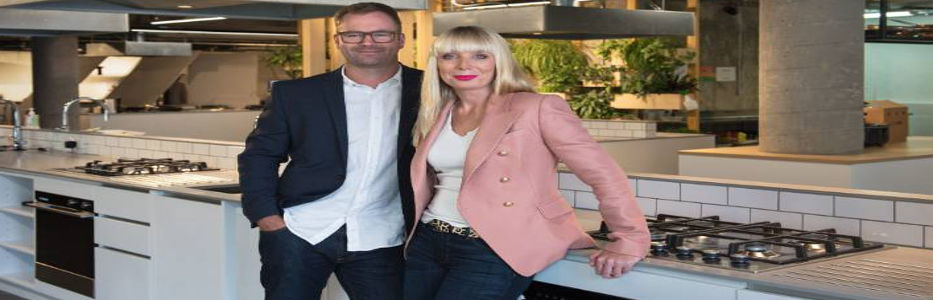
MELBOURNE: A long pregnancy struggle and the gut-wrenching loss of two babies had left Cecilia and James Robinson devastated.
They desperately wanted another child, but doctors were unable to give them the answers they were looking for.
“I spent all my time, dedicated weeks and months scouring the internet for someone who could help us,” says Cecilia.
A friend suggested she look for a specialist who had experience with the particular medical issues she had, but acknowledged that she may have to look offshore to find the right person.
“Ultimately we had a digital consultation with two specialists in Australia and when James and I came off that conversation, we just looked at each other and said, ‘that was so easy’.
“To have that ability to just talk to someone who had seen what we had experienced before and was able to give us context around it. I just thought, ‘wow, this is the future of healthcare’.”
The digital consultations ended up being not only convenient but life-changing for the Robinsons.
Four years ago Cecilia gave birth to their beautiful daughter Leila, a younger sister to Tom.
It also spurred them to investigate whether they could bring the concept of digital diagnosis to other New Zealanders.
The power couple are the founders and former CEOs of meal-kit delivery company My Food Bag, which disrupted the traditional food supermarket duopoly in New Zealand. Cecilia was also the supreme winner at the 2017 Women of Influence awards.
As seasoned entrepreneurs finding viable solutions to everyday problems is never far from their mind.
“During that time we were doing the video consultations we were so busy with My Food Bag, but we always had this idea of digital healthcare in the back of our minds. It helped us so much and we knew if we could help other people, we should do it,” said Cecilia.
Years later when their daughter fell off a trampoline and they ended up rushing to an after-hours doctor to have her assessed, that was the last push they needed.
The result is Tend, a digital primary healthcare service that, according to the Robinsons, will transform the healthcare system as we know it.
It is a privately funded mobile app that will make a doctor’s visit as easy as logging into a video call. The app aims to eliminate unnecessary doctors’ visits, cut down on time spent in waiting rooms and being exposed to others who are ill, and make it easy for New Zealanders to see their doctors without having to take time off work or travel.
Through Tend patients will have access to healthcare professionals from 7am to 9pm every day of the week from their smartphones. Patients can choose a specific healthcare provider they would like to see or simply select the next available appointment.
Consultations with healthcare professionals are done via a secure video-link and e-prescriptions can easily be issued through the mobile app. The app also stores all your health and wellness data for easy access and monitoring.
When face-to-face exams or procedures are needed, patients will be referred to a conveniently located Tend clinic.
The formidable team behind the service include the Robinsons, Harvard-educated Dr Mataroria Lyndon and Josh Robb, former senior vice president for product and engineering at Pushpay.
Telemedicine is not a new concept and has been used globally to improve access to healthcare for the past few years. In 2019, one in four people surveyed in the USA had used live video telemedicine over the past year. But Kiwis seem more reluctant to move their healthcare to a digital realm.
“Telemedicine is much more widely available overseas than in New Zealand. I think a lot of people are not even aware there is the possibility of accessing medicine and healthcare digitally, so there have been very few providers doing some of this work,” says Lyndon.
But how can a doctor diagnose an illness without being able to physically examine the patient? “There are multiple ways of being able to assess patients, including by video or over the phone,” says Lyndon.
With the current coronavirus alert level 4 restrictions, GPs have had no choice but to consult patients remotely proving that it is indeed possible.
“Most of the clinical reasoning happens through the patient history. It is not from the examination or the tests, it is from the story you get from the patient,” says Lyndon.
“Simply by looking at a patient you can already tell if they are well or unwell. Are they breathless, are they sweaty, do they look comatose or semi-comatose, etc.
“Of course they will also describe their symptoms just like any patient would in a face-to-face consultation.”
Lyndon believes digital consultations provides no greater risk for misdiagnosis than traditional clinical practice.
“We need to have relevant safeguards in place. If we can’t manage a patient virtually, then we definitely need to make sure we refer you to one of our clinics or an emergency department if necessary,” he says.
One of the critical components in the development of Tend was protecting confidential medical data and ensuring complete patient privacy. Robinson says this is one of the reasons why the team has been working on the app for more than a year.
“We’ve got experts in security and data protection working for us and patients can rest assured we are taking security and confidentiality seriously.
“This is a world-class platform and the team we have in place to look after this aspect are some of the best in the field,” she says.
The team behind Tend had planned to launch the service by the end of 2020, but the sudden arrival of the Covid-19 pandemic – and the immediate shift to teleconsultations – have led to the app being fast-tracked. It is set to launch by the middle of this year.
“The coronavirus pandemic has left New Zealand responding to a rapidly changing health system and consumer demand will only increase over the next 6 to 12 months placing strain on resources,” says Lyndon.
“Tend’s technology gives easy access to patients who might be experiencing Covid-19 symptoms, protecting the public and healthcare workers and relieves some of the pressure on primary healthcare.”
Lyndon is quick to point out that Tend was not developed as a response to coronavirus, although its timing could hardly be more impeccable.
“We’ve spent over a year on due diligence, ensuring everything is in place in terms of technology, security, privacy, workflow, standards of the clinical workforce, etc.
“We are not simply being opportunistic in bringing this to market. We’ve designed our own video-conferencing platform from scratch and we’re aiming to be a real standard for digital health in New Zealand.”
Tend will focus its service on Auckland when it launches, but is working with primary health organisations and district health boards to have the service available nationally as soon as possible.
It is set to operate in the general practice market under the primary health organisation services agreement.
“We know that New Zealanders want easier and more affordable access to their GP, and we know we can do better than expecting people to take time off work, travel across town and sit in a waiting room for a routine appointment,” says Robinson.
“That is why we have developed Tend – we believe it is a game-changer.”


