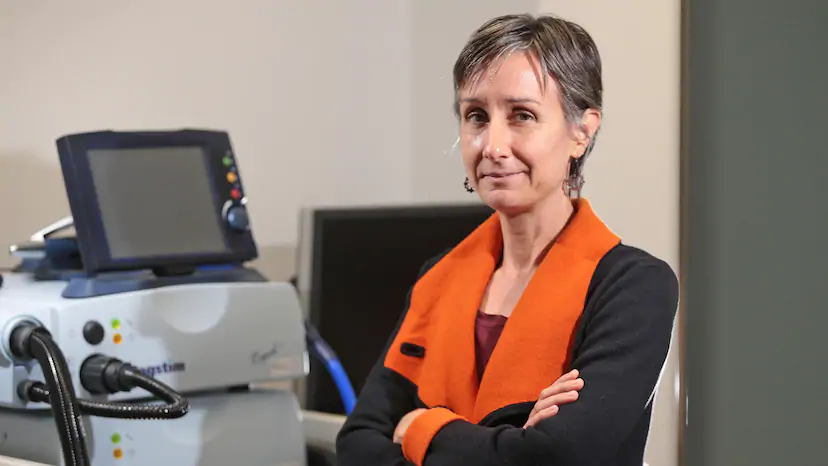
Scientists working on creating at-home depression treatment

MELBOURNE: People with depression could one day treat themselves at home with a device small enough to slip in their handbag but capable of delivering magnetic brain stimulation, under pioneering research being done by Perth scientists.
Brain stimulation — currently only offered to depression sufferers who are resistant to conventional therapies — could also become a mainstream option on par with cognitive behavioural therapy and antidepressants if a new theory about how to make it more efficient is proven correct.
The therapy, known as repetitive transcranial magnetic stimulation, uses magnetic pulses to stimulate parts of the brain. Unlike the electroconvulsive therapy depicted in the book and film One Flew Over the Cuckoo’s Nest it is painless and with fewer side effects.
Perron Institute’s head of brain plasticity research and MSWA senior research fellow, associate professor Jenny Rodger, said currently the treatment was only sometimes successful and there was no certainty about how long it would last.
Pre-clinical trials conducted by Professor Rodger have suggested that delivering lower dose magnetic pulses could make it more effective and longer lasting. If proven in planned clinical trials that could open the door to much more widespread treatment and scope for patients to treat themselves at home.
“We would like to offer more hope to people suffering from depression. Everybody responds differently to treatment, so our goal is to personally tailor stimulation to the individual,” she said.
“We would like to be able to describe to patients precisely how the treatment is working and the most effective options that will give the longest lasting effects.”
Professor Rodger said if a lower intensity magnetic pulse was shown to be more effective there was potential for the device used to administer it to be dramatically redesigned.
“If we can reduce the intensity to about 20 or 30 per cent, suddenly the scale of all of that equipment becomes much smaller. And one of the things that doctors and patients both want is something that patients can deliver at home,” she said.
“Ideally we might be in a position to redesign this whole equipment and build a stimulator for depression that would be portable. Depending on what we find and the intensities that turn out to be effective for people we could have a device that would fit in your handbag or backpack or at least that could be set up at home with guidance and training from medical professionals.”
Still regarded as something of an “experimental treatment”, Professor Rodger said the research being done at Perron could help RTMS “cross the line” to become a “first line treatment for depression”.