Assisted living facility proposed next to downtown senior apartment tower
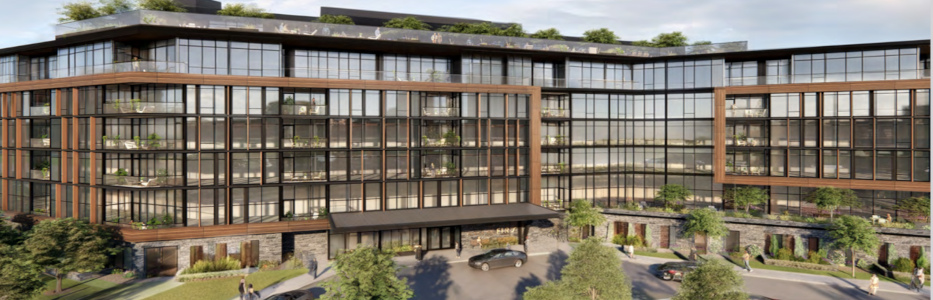
LONDON: A 25-unit assisted living facility could rise beside the seven-story senior apartment tower under development downtown, expanding the former block into a 95-unit senior living campus.
The Wausau Plan Commission on Tuesday will hold a public hearing on a conditional use permit request from Beacon Resources, LLC for 151 McIndoe St., a vacant lot that for decades served as surface parking for the Prange’s department store at First and Grant streets.
The proposal is a companion to Grant Place, the 70-unit apartment building for residents 55 and older that city officials approved earlier this year. Demolition of the former Prange’s building, most recently home to office suites and state agencies, is underway.
The two projects were conceived together, Beacon Resources’ Jeff Stubbe said in written responses.
“The plan from day one was a senior living community with an adjacent assisted living facility,” Stubbe said, adding that no additional phases are planned for the block.
Grant Place will be privately funded by Beacon Resources, while construction of the assisted living facility will be paid for by the Dwight and Linda Davis Foundation, Stubbe said.
Stubbe said the downtown location was chosen for its proximity to The Landing and the Woodson YMCA, Aspirus Clinic, Wisconsin Eye Clinic, the Grand Theater, the 400 Block, restaurants, churches and financial businesses, calling downtown Wausau “a great campus for this kind of facility.”
The two buildings would be physically connected. In a letter to city planners, Tom Radenz of Land Planning Services, writing on behalf of Beacon Resources, said the assisted living facility “provides a safe and familiar place to live for those that need additional care and assistance from Grant Place” — allowing residents to move to a higher level of care without leaving the block.
Stubbe said the facility will be leased to and operated by a licensed firm, though final details of that arrangement are still being worked out and he could not yet provide the operator’s name. Grant Place residents will be able to move to the top of the assisted living facility’s waiting list if they wish to relocate, he said.
The three-story, 64,000-square-foot building would include covered parking, a public entrance and support space on the first level, with 12 resident units on the second floor and 13 on the third in one- and two-bedroom layouts. Plans also call for a kitchen, dining room, activity room, salon and an outdoor terrace.
City documents show construction scheduled to begin in fall or winter 2026, with occupancy anticipated in 2028. But Stubbe said a final decision on moving forward will come after both projects go out for bid, once building design and construction documents — now nearing completion — are finished.
“Once we have those costs we can make a final decision on moving forward,” Stubbe said, adding that he expects favorable bids because of the work of general contractor Ghidorzi Construction. REI Engineering is also part of the project team.
The proposal lands as national and local data point in the same direction: demand for senior housing is outpacing the industry’s ability to build it.
City planning staff, in a report on the proposal, cite Wausau’s 2026 older adults housing report, which projects demand for assisted living in the area to grow through 2040. The city’s own demographics underscore the trend. A draft chapter of Wausau’s updated comprehensive plan, also before the commission Tuesday, shows residents 65 and older made up 19.4% of the city’s population in 2024, up from 15.7% in 2010.
The pattern holds statewide. Wisconsin’s population of residents 65 and older grew from about 777,000 in 2010 to more than 1 million in 2020, and the state Department of Administration projects that number will top 1.3 million by 2030 — while the working-age population holds flat.
Nationally, senior housing occupancy reached 89.5% in the first quarter of 2026, the 19th consecutive quarterly increase, with assisted living at 87.9%, according to data from the National Investment Center for Seniors Housing & Care. At the same time, the number of new senior housing units under construction fell to its lowest level since 2012, and industry analysts estimate the U.S. will need roughly 800,000 additional senior housing units by 2030 to meet demand. NIC projects average occupancy will top 90% before the end of this year, the highest level in the 20 years the organization has tracked the data.
In other words: the beds are filling faster than they are being built, in Wausau and nearly everywhere else.


