Best housing regeneration designs for Global Awards shortlisted

MELBOURNE: The shortlist for the best housing regeneration design has been declared.
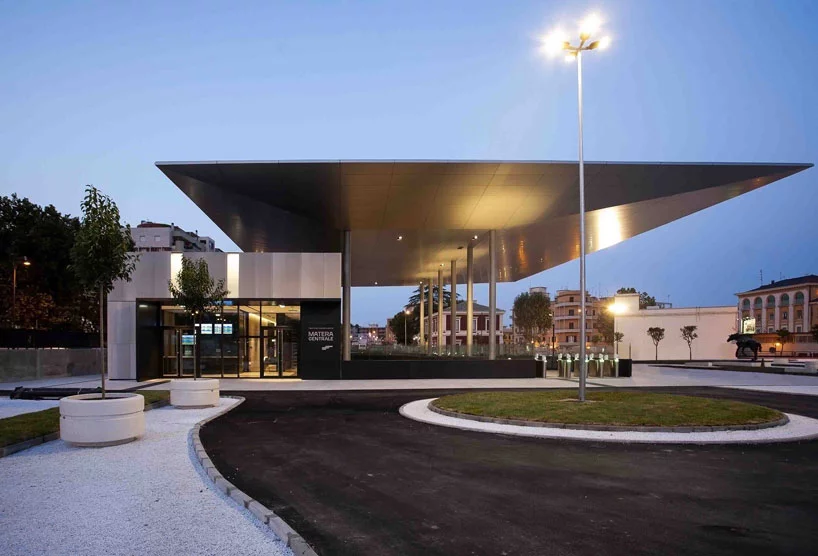
Over 250 designs have been considered by the awards secretariat. One of the finalists in this category is shown above.
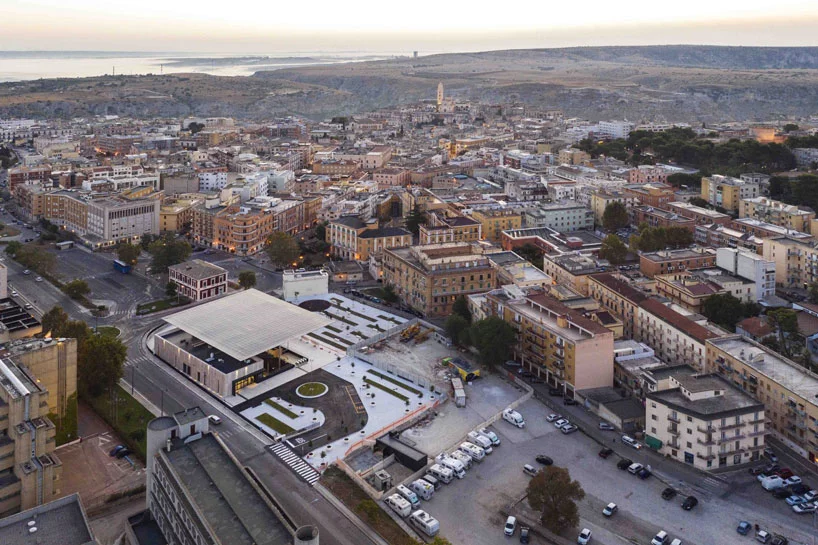
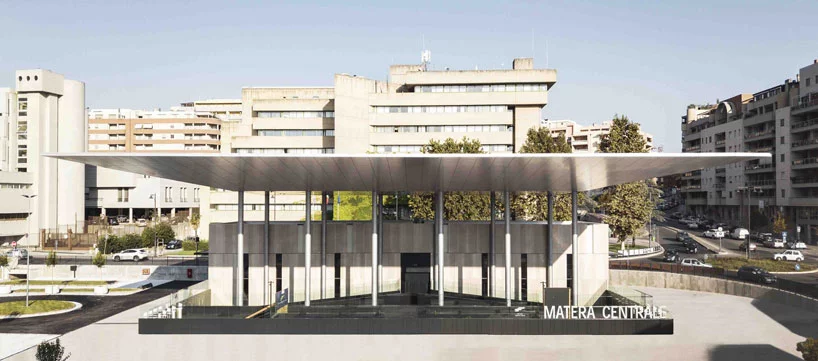
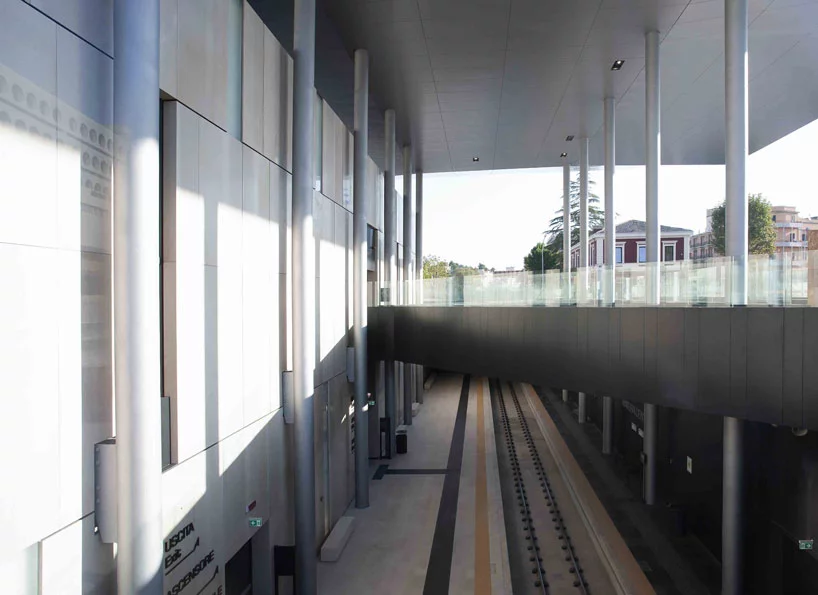
The train station designed by Stefano Boeri Architetti has opened in southern Italy, featuring 696 solar panels to eventually power a public piazza that is incorporated into the design. Linking the old town of Matera, a troglodyte city on a rocky outcrop in the region of Basilicata, with the surrounding post-war and modern districts, the station is an urban landmark in harmony with its forthcoming role as the 2019 European capital of culture.
Once plagued by extreme poverty and unsanitary conditions, in the 1950s the city’s entire population was relocated to new housing projects as part of a government program. Since then the regeneration of Matera, the city of Sassi, has promoted a remarkable regeneration. Stefano Boeri Architetti uses materials to highlight this history, reflecting on its historical and current prospects.
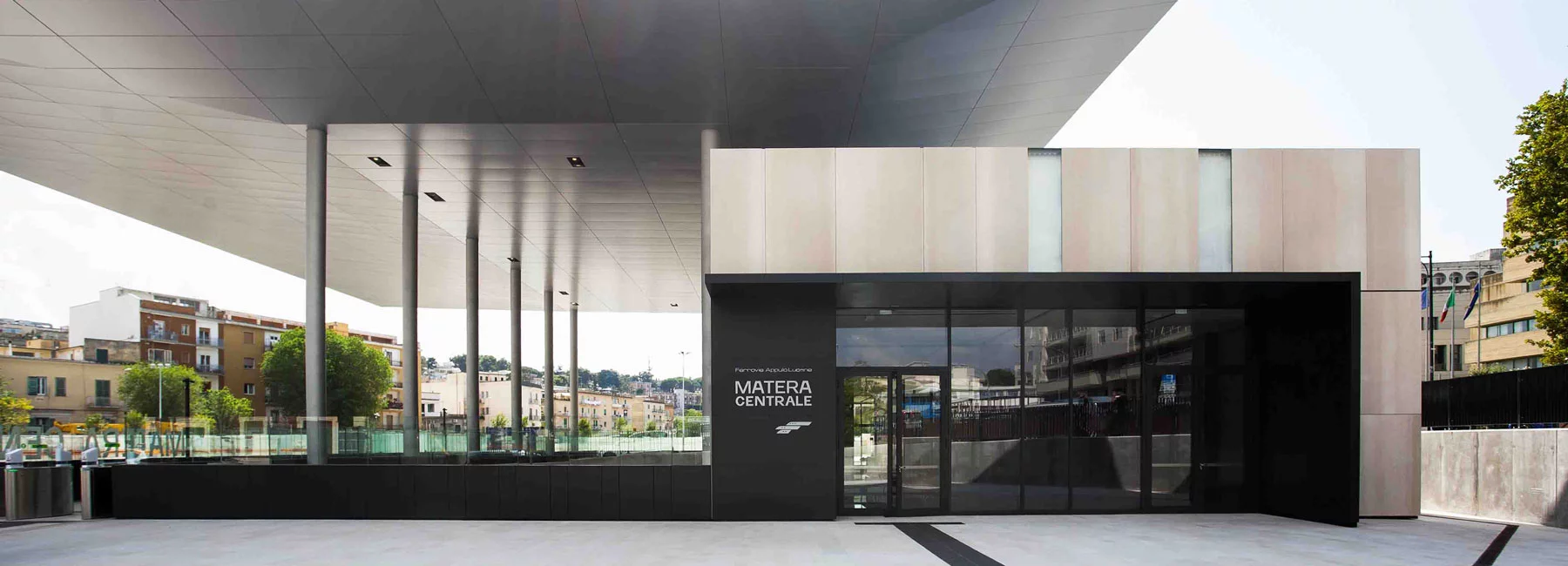
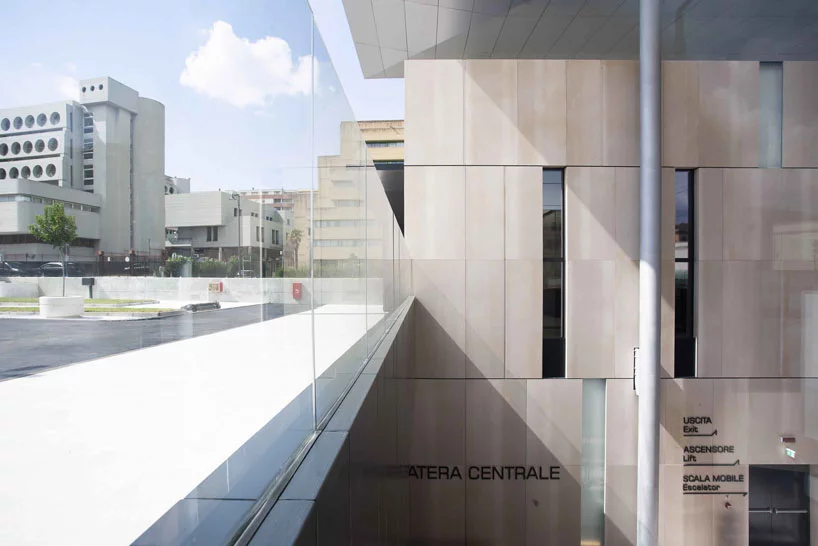
Apricena stone recalls the local of the ancient city of the Sassi, and steel is evocative of the city’s contemporary condition. Elsewhere, stone is used to clad the station building and aluminum covers the emergency platform.
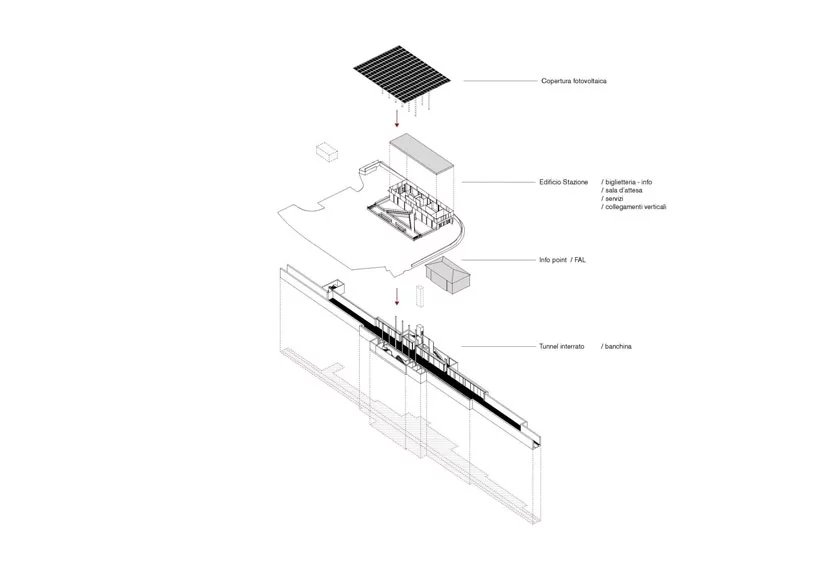
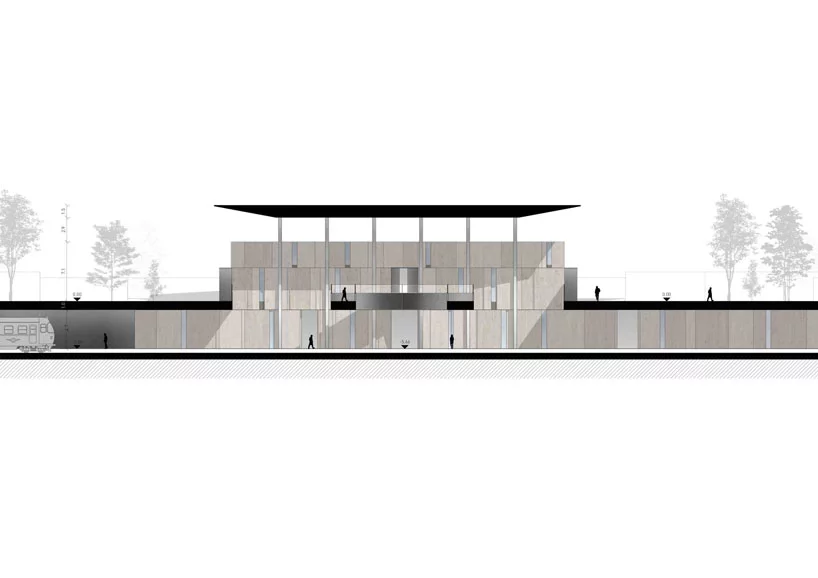
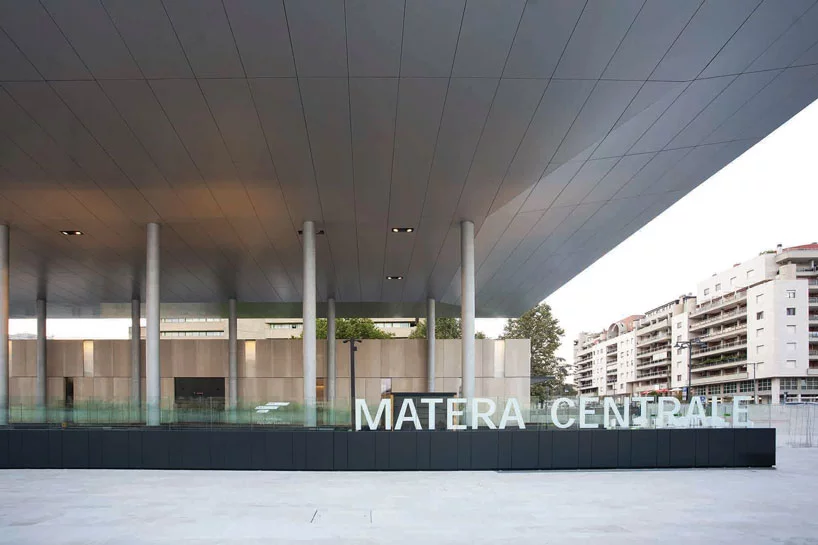
The new public space consists of two empty areas: one that runs alongside the railway tracks six meters below ground and a piazza at ground level, which is sheltered and demarcated by a large roof. 12 meters above the piazza this large roof is supported by twelve steel columns that emerge from an ‘iron floor’. It extends beyond the underpass to create a large sheltered space that is open to the public throughout the day.
A large rectangular 440m2 opening links the public square to the platforms, flooding the underpass with natural light. Meanwhile, Stefano Boeri has fitted the station’s roof with enough solar panels promising enough energy to eventually supply the entire piazza and park with power sometime in the future. 696 horizontal panels are installed discretely over an area of 1250m2, producing 271.440 kwh per year.
The Global Award winner will be announced in December in London. (Globals)