Boomers flock to live in green hotel environments
AUCKLAND: Boomers embrace of rental housing options has opened up green urban hotels as a living option.
In the new breed of green urban hotel, chandeliers and plastic wrapping for guest laundry and dry-cleaning are out while reusable bottles, recycled water and ubiquitous luxuriant plants are in.
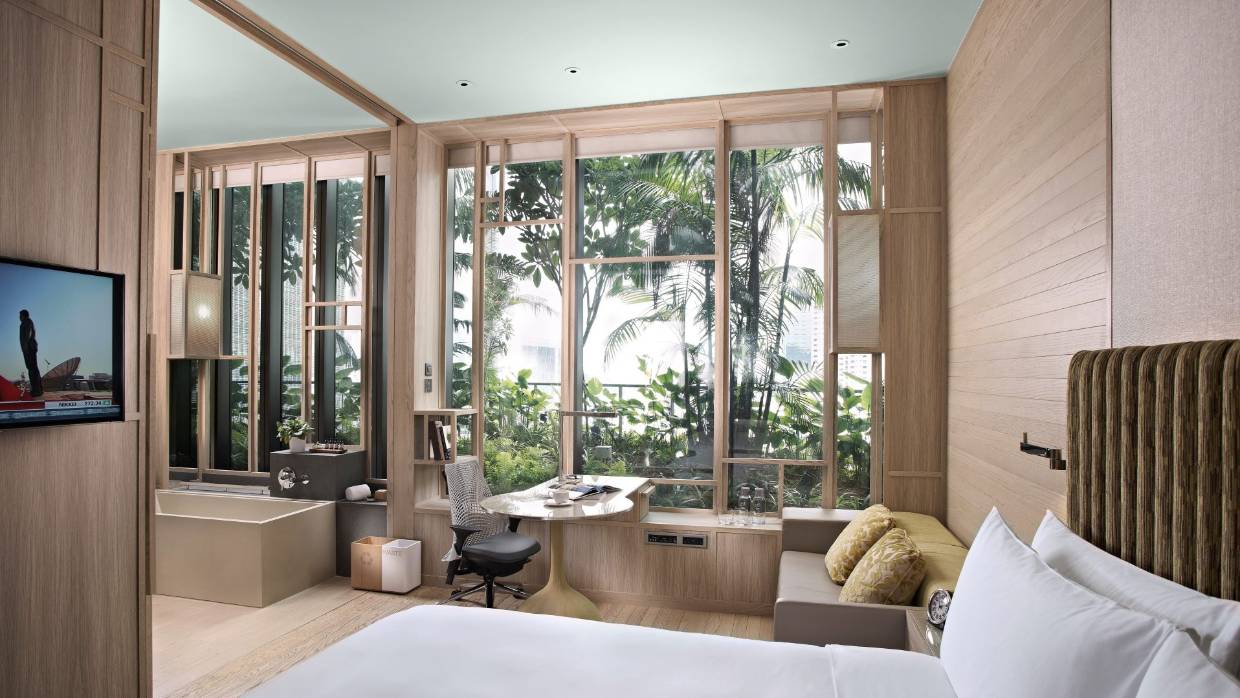
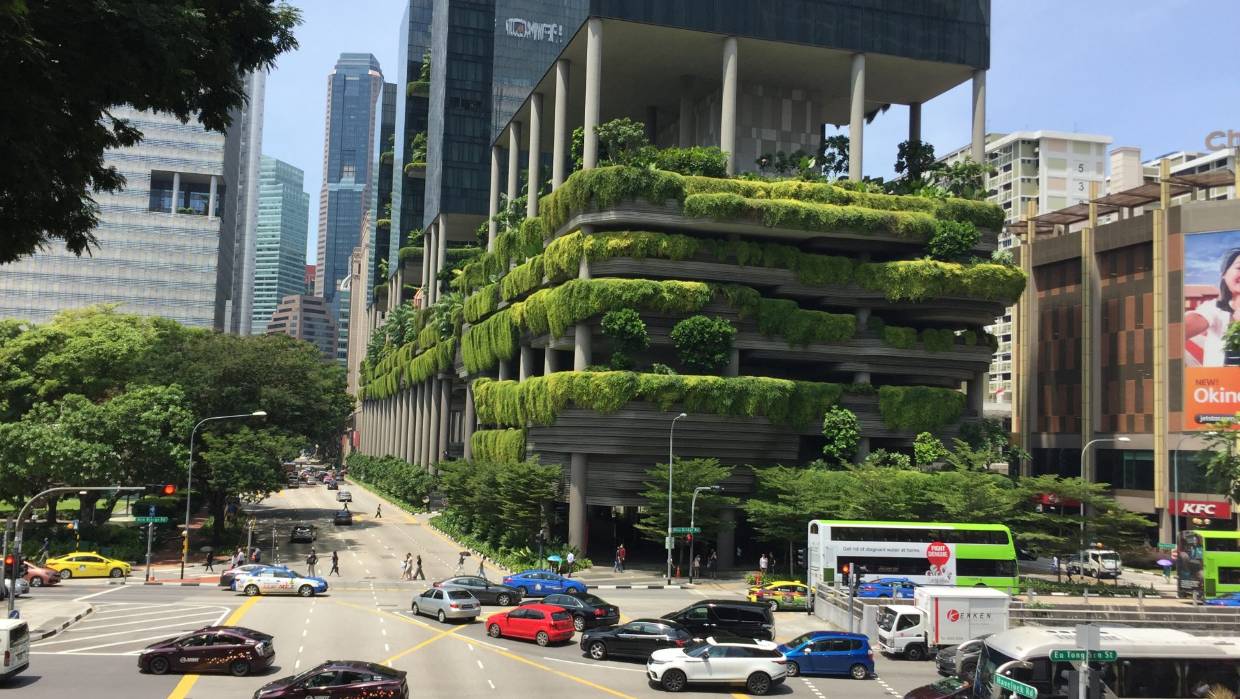
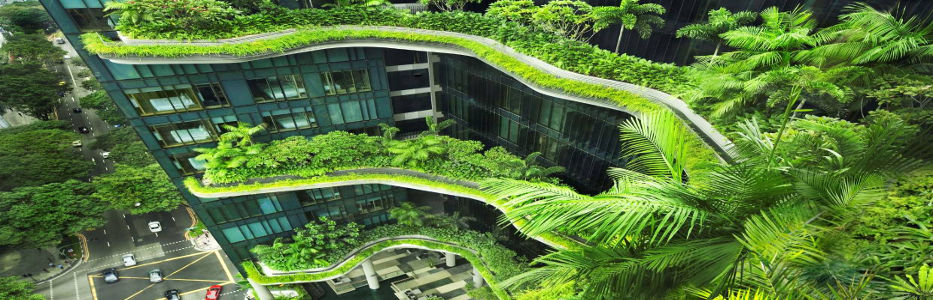
Take Singapore’s scene-stealing Parkroyal on Pickering. It has no fewer than 15,000 square metres of hanging gardens spread across 16 storeys with its rooms accessed by open corridors. The hotel harvests rainwater and uses automatic sensors to regulate energy and water, has a plastic-free policy, and is designed to maximise natural light.
“We want to offer accommodation that is tranquil, that alleviates the stresses of travel,” explains Matthew Tan, vice-president, technical services with Singapore’s Pan Pacific Hotels Group, which operates the Parkroyal on Pickering.
“[But] we also want to speak to the hearts and minds of our guests, to engage with them about preserving and protecting the environment. It is the most energy-efficient hotel we have, and it is also one of our best-performing hotels in terms of occupancy.
The five-year-old Parkroyal on Pickering, which is enjoying renewed relevance in the new era of sustainability, is set to have some serious eco competition when Pan Pacific’s next hotel, the Pan Pacific Orchard, opens in 2021. Designed to be zero waste and zero impact, the hotel will not only set new standards for sustainability, but also for visitor experience.
“We have a whole series of environments in the building that the rooms look into,” says Richard Hassell, the Australian-born co-founding director of WOHA, the Singapore-based architects behind both the Parkroyal and the Pan Pacific Orchard.
“The arrival level is called Forest Floor, then we have a Beach Terrace and a Garden Terrace. The highest level, the Cloud Terrace, is where the ballroom is.
“You can literally have a misty wedding in the clouds: we have worked with a company in Germany that has found a way to create a superfine mist even in Singapore’s high humidity environment. It is really nice to pull things together that are both romantic but also intensely practical.”
As with the Parkroyal, the total area covered by the new hotel’s gardens, spread across several levels, will be larger than the plot on which the hotel stands. Hassell stresses that incorporating plants into the fabric of the building is about more than aesthetics and wellbeing; it is about helping cities function more effectively.
“Plants are just about the only thing that you can put out in the sun and they don’t heat up; anything else that you put on a building facade will either heat up or reflect the sun onto something else. So plants are the only thing that really solve the urban heat island effect,” he says. “In a climate like Singapore, lowering the temperature by just a few degrees, say from 38 to 32 degrees, is the difference between being unbearable or feeling comfortable.
“Plants also improve air quality by removing industrial pollutants, and having wet soil is also the only thing that gets rid of dust.”
Hassell is optimistic that his company’s green hotels will have flow-on effects to other forms of architecture. “We have seen the migration of ideas from resort architecture into residential architecture. When people get to experience a lifestyle in hotels, they start to say, ‘Why can’t I have this every day?’.”
Singapore’s green hotels are one manifestation of a trend that is reshaping the travel world. Over the past few years, increasing numbers of operators are investing in sustainability in a meaningful way. In some cases, the changes are driven by guest demand.
In other instances, they are a considered response to the ever-more-evident effects of climate change. What the leaders in this field share is a willingness to grapple deeply with the issues, and an awareness that going green is about more than only changing guests’ sheets every third day.
There are, of course, still plenty of companies eager to cash in on a trend, as proven by the flood of announcements by properties around the world announcing that they are banning plastic straws.
However, many companies are taking a broader view, evaluating their wider impact on the world around them using an approach that Andrew Fairley, who has helped shape strategies for organisations including Tourism Australia, Zoos Victoria and Ecotourism Australia, calls “the quadruple bottom line”.
Fairley says his first experience of it came when he was part of the team responsible for developing Fiji’s Turtle Island resort. “Obviously, every decision has to make financial sense; that is the first bottom line,” he says.
“Every decision also has to have environmental integrity, and it also has to benefit the local people – that is where you get your social licence from. And we also had to look at our purpose which, being in the Yasawa Islands, was to celebrate the heritage and culture of the place.”
Some of the leaders in this area are boutique companies. Take Echo Resorts, which has a portfolio of three eco-resorts in Sabah, one of the two Malaysian states on the island of Borneo. Although the company has long emphasised sustainability in its operations, owner Gillian Tan says guest response has changed dramatically over the past decade.
“When we started, people didn’t understand the eco-resort idea,” Tan says, adding that guests were reluctant to do without amenities such as airconditioning. These days, however, guests are not only more aware of environmental issues, but also eager to get involved.
“When the company introduced invited guests to help remove the rubbish that washed up on the beach during monsoon season, it was overwhelmed by the response. We have had so many requests from our guests that we are now doing it right through the year.”
One company that has been at the forefront of eco-conscious luxury over many years is Soneva resorts. Sonu Shivdasani, chief executive of the company and co-founder, with his wife Eva, of both Soneva Resorts and Six Senses resorts, opened Soneva Fushi in the Maldives in 1995.
Soneva resorts are designed to interact with the natural environment. Soneva Fushi’s residences are hidden amid dense tropical foliage, and at the company’s other Maldives resort, Soneva Jani, the villas have retractable roofs that let you lie in bed and gaze up at the night sky.
Shivdasani is heartened by the recent growth in luxury eco-tourism. “The demand for environmentally and socially responsible travel is increasing [as we realise that] our earth’s resources are finite,” he says. “Owners and directors understand that it makes a lot of business sense to be more focused on sustainability.”
Sustainability does not have to be expensive, according to Shivdasani; in fact, it can help a company save money. “Waste management is a huge challenge in the Maldives [and] at Soneva we recycle 80 per cent of our waste, which is quite remarkable when one considers that the city of Hong Kong only recycles about 45 per cent.
“At our Waste to Wealth Centre, our cardboard and leftover food is turned into compost, the branches that fall off the trees are put into a pyrolysis oven where we create charcoal. Eighty-three per cent of our non-structural building blocks are made from waste materials.
“We are producing a very fine cold-pressed coconut oil from our waste coconuts, and of course in Glasscycle, our state of the art glass blowing workshop, we recycle all our waste bottles and turn them into works of great of art. This is why we call it the Waste to Wealth Centre as it is now self-sustaining in that the cost of its operation is refunded by the savings we generate.”
Even small changes can bring big results, Shivdasani says. “Producing your own bottled water is good for the environment as you eliminate plastic bottles. It is also good for the business as you reduce your cost of sales of the water. A win-win situation.”
However, not all of the benefits of sustainability are so easily quantified. “[Our commitment to sustainability] renders us with a core purpose, making us a company that goes beyond being primarily for the profit of the stockholders,” Shivdasani says. “This is highly motivating and engaging for our employees. They come to work each morning passionate about their company and what we are doing.”
Shivdasani says quantifying the effects of the company’s operations is essential. Soneva’s annual Total Impact Assessment (TIA) looks at environmental, human, social, economic and fiscal impacts not only of the company’s arrangements, but also those of its supply chain.
Soneva is not the only company using statistical analysis to improve its operations. Many of the world’s largest hotel brands, including Marriott, InterContinental, Hyatt and Hilton, have committed to big-target sustainability programs.
While many are adopting inventive approaches – including Spain’s NH Hotel Group, which has recycled has several thousand kilograms of wine corks into floor and wall coverings used in hotels – it is often more traditional techniques that bring big savings.
“At Hilton, we have an ambitious goal to cut our environmental footprint in half by 2030, and doubling our social impact, and we have already reached $US1 billion in cumulative savings since 2008,” says Heidi Kunkel, vice president, operations, Australasia.
The company has used a range of measures from installing solar panels, rainwater catchments and low-flow taps to recycling soap, which is provided to disadvantaged communities, and replacing plastic pens with so-called paper pens, made with a sturdy form of cardboard.
“We are also doubling our investment in sourcing goods from minority- and locally owned companies, and working to reduce plastic,” Kunkel says. However, she points out that in a company with 5300 properties across 14 brands, making changes is rarely a quick process.
“Take slippers. We are moving away from having them wrapped in plastic to having them wrapped in a paper band. We have 26 properties across Australasia and we want to capture as many of those hotels as we can, so we need to look for suppliers who are able to provide services at least across the majority of hotels, which include Australia, New Zealand, Fiji, Port Moresby and Bora Bora,” she says.
“Then we need to make sure we do not conflict with any existing agreements, that it can be delivered in line with all expectations, including price, and then negotiate the agreement.”
So far, many of the savings have been made in the back-of-house area. However, Hilton is looking at getting its guests more actively involved in making sustainable choices.
“Our Hilton Honours App will soon give guests options to control the temperature and lighting of their room, which includes options to conserve energy consumption,” Kunkel says. “If you set your temperature control for 22 degrees instead of 20, that actually gives a tremendous amount of energy savings.”
The process of encouraging guests to become more involved in sustainability is something that is long overdue, according to Dr Susanne Becken, Professor of Sustainable Tourism and Director of Griffith Institute for Tourism at Griffith University.
“The hotel industry is often too afraid to confront their customers with the issues, but I think people are actually very understanding,” she says, pointing to the way that hotel guests no longer expect to have towels and sheets changed daily. “No one wants to be a bad human being.”
Becken would like to see travellers encouraged to be more water-conscious, particularly in countries where water availability is a problem. The issue was highlighted earlier this year when drought hit the city of Cape Town – among other measures, the city removed tap handles in its public bathrooms, instead providing hand sanitiser – and it remains a pressing issue in many less developed countries.
“When you look at the water footprint of tourists compared with locals, you will find that in countries like Australia, New Zealand and Europe, water usage per head in hotels is a bit lower than in the general population, particularly if hotels are using water-efficient showerheads and ensuring there is no leakage in their pipes,” Becken says.
“In the countries with the least water, however, it is a different story. You might get tourist resorts using 1000 litres per head, when locals are using just 40 litres a head. If you make visitors conscious of that issue, you may find they take shorter showers.”
Getting governments at all involves involved, rather than relying on the initiative of individual companies, is essential to in order to achieve meaningful results, according to Dr Xavier Font, Professor of Sustainability Marketing at England’s Surrey University.
“In Copenhagen, more than 80 per cent of all [hotel] beds are certified as sustainable, because only certified hotels and restaurants are allowed to be part of the supply chain for the city’s conference business. Many of those hotels also serve the leisure market,” says Font.
Governments also have a role to play in managing another of the most pressing eco-tourism issues around: over-tourism. “With tourism growing at a rapid rate, we have to find ways to ensure that we don’t exhaust the good will of the local community and that we don’t destroy the capacity of the attraction to deliver the experience that visitors want,” Andrew Fairley says.