Community housing provider takes healthy homes to new heights
LONDON: A community housing provider is endeavouring to lift the quality of wellness outcomes in affordable housing.
New home environment monitoring technology, which uses the Internet of Things (IoT), is key to one community housing provider’s quest to provide healthier homes to its tenants.
The Government’s healthy homes standards, which set minimum requirements for heating, insulation, ventilation, moisture, drainage and draught-stopping in rental properties, passed into law in 2019.
The changes are being phased in over several years, and registered community housing providers do not have to comply with them until next year. But the Community of Refuge Trust (CORT) wants to get ahead on creating healthy housing.
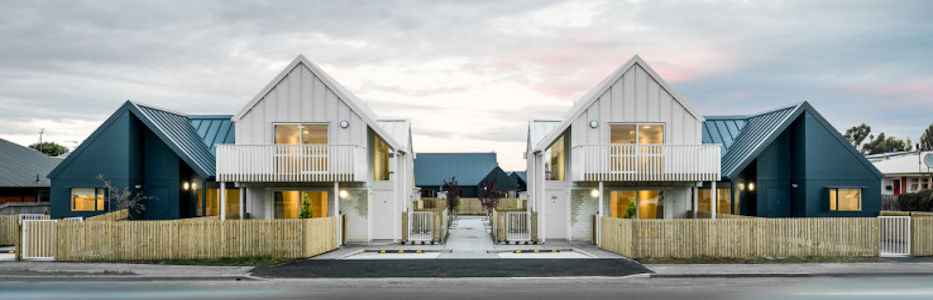
The Auckland provider operates more than 400 medium density properties which house over 550 people, and it has more than 100 more dwellings under development.
CORT operations manager Stephen Hart said community and affordable housing must be treated with the same ongoing care, maintenance and investment as other residential developments, and not forgotten after construction.
The NZ Building Code outlines regulatory requirements to maintain safe, healthy and durable dwellings, but the framework alone does not ensure these conditions are actually met in the real world, he said.
“We wanted to understand our buildings better, and if they work as well as we think. We wanted to know if they were warm and dry in winter, but cool in summer, and if they were easy to ventilate.
“We have a strong focus on the people who live in our buildings, so we also wanted a tool we could use to work with our tenants to understand how they can use their home more effectively.”
These goals led them to New Zealand tech company Tether’s IoT sensors and software which operate on the Thinxtra 0G Network to monitor temperature, humidity, carbon dioxide levels, light and noise.
Information from the sensors goes into mobile and web applications, containing dashboards that offer a real-time view into living conditions.
Hart said the technology will improve their knowledge of the living conditions in each home, beyond what they could get from observing and speaking with tenants.
“We will be able to tell if a building retains heat to the level it should when the temperature drops outside and, if it is, whether that requires a trade-off in ventilation terms, and what that means for the people living in it, for example.”
Information collected and learnt from one building will be applicable across their portfolio and useful for future developments, he said.
“But it is also passed back to the tenants of our buildings, fostering a partnership where tenancy managers can proactively discuss improvements if there is a need. We have found many tenants are interested in the system.”
Hart said the technology has been in use for some months, and they are pleased with the results so far.
“We will share what we learn about using technology to create healthier homes widely. This is not just about social housing or affordable housing, it is about understanding buildings better, so we can improve all homes around the country.”
A large amount of New Zealand’s housing stock, and particularly its rental stock, is under-heated, cold, and damp.
Insulation to prevent heat loss, ventilation to manage moisture in the home, and heating to keep warm in winter are critical for healthy living environment, and the healthy home standards were intended to address this.
But tenant and healthy housing advocates have argued they do not go far enough, with many calling for a rental property warrant of fitness or a certified independent assessment system.
NZ Green Investment Finance chief executive Craig Weise says IoT technologies provide a significant opportunity for smart building management and greener buildings, and also help cut carbon emissions.
“Remote monitoring helps reduce vehicle movements as there’s no need to visit a large, dispersed asset base in person, and measuring air temperature supports more efficient heating and cooling.
“The added benefit from a low-carbon investment such as this drives healthier housing.”


