French lessons in art of urban regeneration show ‘People come first’
LONDON: Around the world, there is talk of regeneration — but in name only, says the urbanist Nicholas Boys Smith. Councils, landowners and government bodies write vision statements, pay overpriced experts for top-down master plans and perform “quasi-mendacious” public engagements that fail to ask the most important question: what places do people like and why, he says. “If they did, they would do something different.”
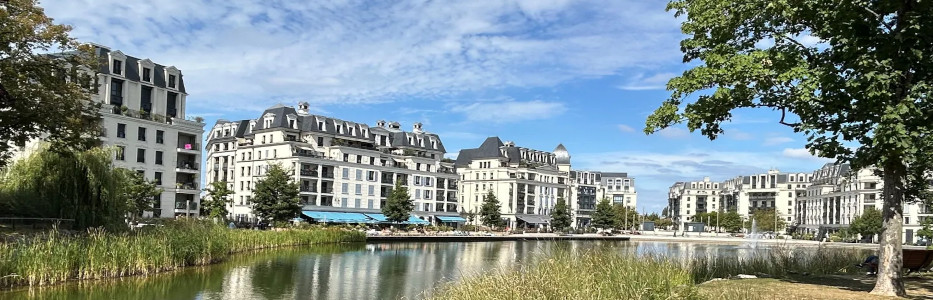
They would do what the French did in the impressive new Panorama district in Clamart, an old town in the Parisian suburbs. “It is better urban regeneration than anything done in the UK in my or my parents’ lifetimes,” Boys Smith writes in a report from his think tank, Create Streets.
About 30 minutes by Metro and then tram from central Paris, this vibrant new lakeside district has sprung up in less than a decade. After a new tram stop opened in 2014, the area’s mayor worked with architects to redevelop the 35-acre brownfield site, which used to be an energy research centre. Now homes there sell for 15 to 20 per cent above the local average. \
What makes the Panorama district so good?
• They put a lake in the middle of it. Studies show lake views add as much as 90 per cent extra value to a property. This is profit but could also fund better facilities, lovelier buildings and social homes (in this case, 25 per cent of the homes, plus 5 per cent supported ownership).
• The design dares to be popular. Buildings are in the Parisian Haussmann tradition. “This is the architecture of place, it says, ‘You are in Paris,’” Boys Smith says. Yet it is “cleverly done”: creamy reconstituted stone looks like Lutetian Parisian limestone, but is not as expensive. Windows are high and long, with balconies everywhere — “far more than would be normal in historic Paris” to (rightly) milk the lake views. “They are in communion with the past but not thoughtlessly aping it,” he adds.
• Buildings are rich in details that mirror nature, with curved roofs and patterns of leaves and acorns.
• The “gentle density” of mansion blocks of five, six or seven storeys has created a lot of new homes — about 2,000 — in a walkable neighbourhood without towers or “dehumanising groundscrapers”, Boys Smith says.
• A tight network of streets makes this a good place to walk and cycle. Children can easily ride their bikes along the tree-lined paths, even without their parents. Residents can jump on the new tram into the city, or into their cars for trips to the countryside. Cars are permitted but must park in underground garages. “People come first,” Boys Smith adds.
• Panorama’s gardens are either clearly public, or safely private.
Outdoor seating for the “Papa Pool” restaurant in the Clamart Panorama regeneration scheme, with a construction sign in the foreground.
The Panorama district has restaurants, cafés, two schools, a nursery, gym, offices, playgrounds and a town hall
• Most bins are communal and sleek (or underground), “avoiding the death by wheelie bin which plagues so many British streets”, Boys Smith says.
• This is “town-building, not just housebuilding”, he adds. The Panorama district is about eating, working, shopping and playing. It has a rich mix of shops, restaurants, cafés, two schools, a children’s nursery, a gym, offices, playgrounds and a town hall with a Doric portico. All of its 21 businesses are open. At the brasserie, a waiter says: “Everyone comes here. It gets really, really full, particularly in the evenings. Last night we had 200 covers. All the flats are full. People adore the architecture. I really like it.”


