Global awards want to show how design can energize a community
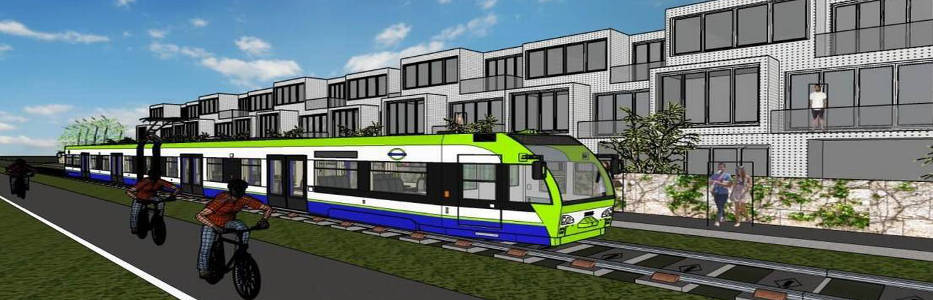
LONDON: A college of design is in the running for a Global Award for its public interest/community creation initiative.
The Globals are in their seventh year and will be held in London in November. Nominations will be accepted until October 20. Email your nomination to [email protected].
The College of Design at N.C. State is reaching out to communities statewide with a new initiative called public interest design.
Its aims are multifaceted. First, it takes on real-world projects and looks at social, ecological and economic issues. It’s not top-down, client-focused architecture from an ivory tower. Instead, it emphasizes collaboration between architects, students and users – like residents in need of affordable housing. It’s not about the 98 percent against the two percent, but about serving 100 percent of the public.
The College of Design is one of only two schools in the nation with a formal program of public interest design – and it can benefit the citizens of North Carolina. Already, the team at N.C. State has gone to Wilmington to help brainstorm ideas for an area that’s expected to be redeveloped.
“It’s about availability to an underserved community,” says Mark Hoversten, dean of the College of Design. “It’s based on deep stakeholder and community empathy. The question is: Who does the project serve?”
Bryan Bell, who joined the College of Design in 2001, has been tapped to head up the new public interest design incubator at N.C. State.
The incubator here is reaching out to communities in two ways. It has added a certificate in public interest design for its graduate students – but it also offers that educational opportunity to the public.
“If you’re an NGO (non-governmental organization) and want to learn how to do this stuff, it’s open to you,” Hoversten says.
And it’s looking for groups across North Carolina in need of design assistance.
“What we’re looking for are community partners who need to make their built environment more accessible to a broader range of people,” he says. “They may not know what their problem is or how to solve it – and the solution may be research, design, or design/build – but it will always be collaborative.”
A series of grants – from the A.I.A and the National Endowment for the Arts – enabled him to begin work on simple rental housing. He started with 700-square-foot 2-bedroom units built from basic materials, designed to last 50 years. That met the needs of the farmers who paid for them – and who benefited from 50 percent grants for construction costs, offered by Design Corps, a nonprofit Bell established.
The homes were durable – and respected. “They had incredible insulation, and were easy to clean up, with drains in the middle of the kitchen and bath, and a porch,” he says. “We wouldn’t get inspected because the inspectors knew they met the needs of the farm workers and the farmers – and that was my goal as a designer.”
After a year, he circled back to see how the units were being used and discovered that rather than being home to a four-person family, they more often served groups of four workers. “We asked: ‘Would they rather have one bedroom for four guys?’ ” he says. “And that’s what we did.”


