Home builder tests multigenerational prefab with 20 day build
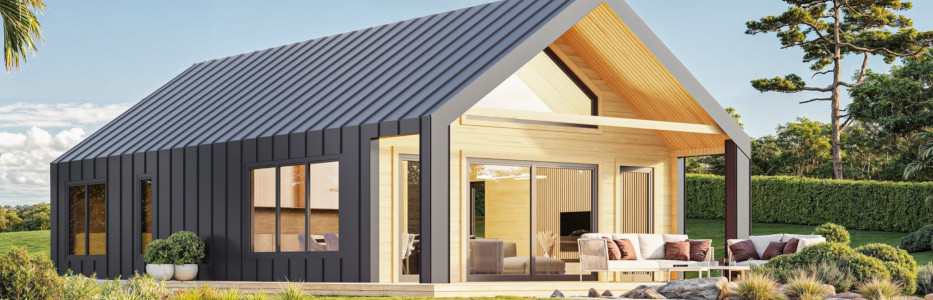
LONDON: A home builder is set to test building a multigenerational prefab within a 20 day timeline.
Metricon, the country’s largest home builder, has built two three-bedroom family houses in just 20 days using prefabricated components that were made in a factory and transported to the site for assembly.
The detached homes, which sit on a 330-square-metre block and sell for between $650,000 and $700,000, mark the first time the builder has tested the technology that it says makes business sense in regional areas and for portfolio buyers of social and affordable, as well as build-to-rent homes.
While the completion time of 20 business days meant it took a calendar month effectively to build, the contrast with traditional construction methods was huge, Metricon’s Sam Gribble said on Thursday.
‘‘We were able to go from a finished slab to a locked-up home within four days, and that home included bathrooms that were in situ,’’ Gribble said.
‘‘You could have a shower four days after the slab, and that’s remarkable. It means that you’ve got a home that’s clad on the outside, it’s got plaster on the inside, it’s weatherproof. The windows are in. The doors are in. You can lock it up when you leave within four days.’’
Building homes faster through methods such as prefabrication was a priority flagged by the federal government’s National Housing Supply and Affordability Council in April, when it warned that disruption to supply chains resulting from the Iran war would put Australia further behind its target of 1.2 million new homes by mid2029.
But Gribble, head of Metricon’s project home business EveryOne Homes, which builds for clients such as financier Tetris – currently developing 500 affordable homes under a Queensland government program – said prefabrication, under which about 90 per cent of a home is made in a factory, made more sense for regional work than in metropolitan areas.
Truganina in Melbourne’s western suburbs, where Metricon built the two pilot homes, didn’t need prefab as there was a large and efficient base of contractors and subcontractors that was the lowest-cost way to build.
But in a regional town such as Hamilton in western Victoria, where the company received orders for 30, 50 or 100 homes at a time and the cost was 15-20 per cent more because the supply chain was thinner than in an area such as Truganina, it made sense, Gribble said.
‘‘We’ll probably be building a lot [by prefab] in Hamilton or Townsville, or Wodonga or Wangaratta,’’ he said.
‘‘It’s going to be in places where the supply chain is challenged, and we’re trying to get projects to amplify without crushing that existing supply chain. We do that by building more of it in a factory and less on site.’’
Consultancy Hartigan & Associates last year said modern methods of construction (MMC) could increase Australia’s new home build total by up to 192,000 homes over 20 years.
But one risk that could prevent builders and manufacturers from investing in the manufacturing capacity to make home elements was Australia’s building cycle and the fragmented construction sector.
A manufacturing-led system of building, by contrast, needed constant and predictable demand to be manageable, said Hartigan & Associates principal Hugh Hartigan.
‘‘MMC requires a strong and predictable pipeline to justify that upfront investment,’’ he said.
‘‘This makes the transition particularly difficult when demand rises and falls with the economic cycle.’’
Gribble said governments had a role to play in smoothing out the cycle.
‘‘If government can focus on supporting the dips in the cycle – and avoid amplifying the peaks with incentives and so on, just because an election or whatever is coming along – if we could have a bipartisan approach to smoothing out the dips in housing that would create consistency,’’ he said.
The prefab components Metricon used for the two homes were made in China and supplied by Signex, a prefab technology company started by developer and Golden Age boss Jeff Xu in 2024.
‘‘Australia is not a manufacturing country,’’ Xu said. ‘‘But we are a very good innovation country. Also, our building standard is very high.’’
The company, which has already partnered with other builders – such as smaller Victorian concern Kincaid – wanted to team up with more builders and doing so with Metricon and Stockland would prove its worth to other potential partners, he said.
‘‘Metricon is the best and the largest home builder in the country. Stockland is the largest home and landowner in the country. If I have already started business with these two, that means this model is already real.’’
Metricon is now in talks to try prefab construction of seven townhouses in the developer’s Highlands masterplanned community in Craigieburn, 30 kilometres north of the Melbourne CBD.
The technology was unlikely to be used for a home built for an individual client, as prefab was most efficient when employed at scale and equipment such as a crane could be used to lift components such as prefabricated walls into place for multiple homes at the same time, Gribble said.
‘‘It’s far less likely that we’ll be talking to a mum and dad about an individual home being built through off-site construction, and far more likely that we’ll be working with clients on a project basis,’’ he said.


