Homegrown fixes to boost regional housing short fall
LONDON: Developers and community groups are taking up the challenge to help boost the number of much-needed homes throughout the nation’s diverse regional areas.
Building new homes at scale isn’t as easy in rural areas – land may be cheaper, but the regions don’t always have as many builders or resources as the cities.
Still, many of these areas are vulnerable to sudden jolts in housing demand from infrastructure developments, major resource projects, tourism booms and more.
While towns and rural areas welcome new jobs, people and investment, they often face pressure to house the new arrivals and keep up their levels of services.
Available rental housing is sparse across rural locations, with the regional rental vacancy rate sitting at just 1.28 per cent in July, according to PropTrack. That’s 42 per cent lower than before the pandemic.
But groups and businesses are making it their mission to address the regional housing challenge, and shared their ideas on the sidelines of the Regional Australia Institute’s Regions Rising Summit in Canberra.
Take Nestd Villages, a social enterprise and developer that works with local government and private landowners to construct social, affordable and key worker housing in regional areas.
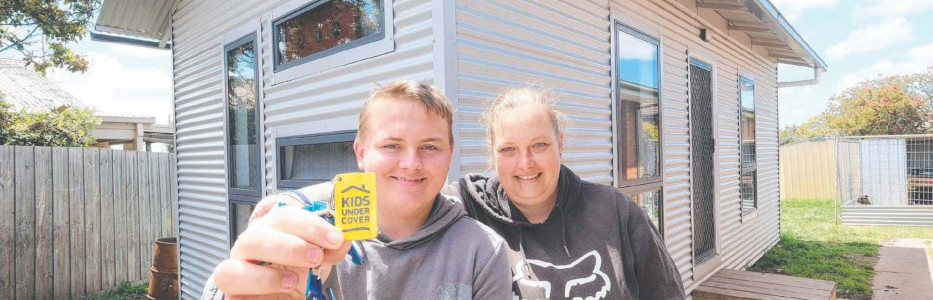
The organisation, which supports youth homelessness charity Kids Under Cover, works on mixed-use and mixed-tenure developments ranging from 200 to 400 homes in rural locations.
Nestd executive director Greg Muller said its secret was to focus on ways to fast-track planning, design and construction.
“When we’re working on projects, we’re often working very closely with local councils because they’re closest to their municipality and their residents,” Mr Muller said.
“Councils need to be appropriately open to be able to progress planning much faster than they historically have, and we’re seeing elements of that, but they need to facilitate that more.”
Modular housing is also being used to help towns and regional areas provide temporary homes for workers on major construction projects.
Passive Place managing director Nick Lane said there was an opportunity to use modular housing in better ways to bring about diversified housing options quickly and within the existing planning systems.
Mr Lane said transportable, architecturally designed modular homes could be delivered to regional areas home to major projects and then be rented out for the project’s duration.
The accommodation could then be transported away once completed and reused for other projects, Mr Lane said.
“This is scalable, so every infrastructure project that needs extra workforce accommodation could pick up this housing and share it with them,” he said.
“So there are multiple opportunities with that kind of scale.”
While some are looking at how to deliver homes more efficiently, others are looking at how to get land ready to build homes on.
Housing infrastructure such as water, electricity and sewerage connections are a major cost that can slow down the delivery of new homes, especially in regional areas.
“Getting the land ready for houses to be built on is a huge barrier in many local councils in regional areas,” Regional Australia Institute chief executive Liz Ritchie said.
“They simply can’t afford to do it.”
That’s why the federal government has earmarked $500m for state, territory and local governments to use to boost housing-related infrastructure, as well as a further $1bn for the state and territory governments for similar works.
The efforts to boost regional housing comes after a turbulent few years for many rural locations. Many city-dwellers flocked to regional areas during the peak of the pandemic, driving up home prices and rents.
While the number of people making a tree- and seachange has slowed since the peak in 2022, there were still 24 per cent more people moving from the city to the regions compared to the other direction, according to the March quarter Regional Movers Index.
“This sustained trend provides tangible evidence regarding the importance of investing in and supporting the regions, to ensure communities have the services, skills and infrastructure they need for their growing populations,” Ms Ritchie said.


