Innovation flourishes as health entrepreneurs rally to help

MELBOURNE: Difficult times can bring out the best of human condition.
The examples keep multiplying. True Value heard from its more than 4500 affiliated hardware stores last month that hand sanitiser was flying off the shelves, leaving store staff with none for themselves.
At the company’s factory in Cary, Illinois, which makes cleaning products and paint, John Vanderpool, the company’s divisional vice-president of paint, recalled asking, “What can we do to help here?”
After a tip from his wife, a pharmacist, he consulted the Food and Drug Administration, then huddled with his maintenance team and engineers over two weekends to retool two paint-filling lines to produce jugs of FDA-approved hand sanitiser.
They are being shipped free to affiliates for their own use. The product will go on sale to the public eventually.
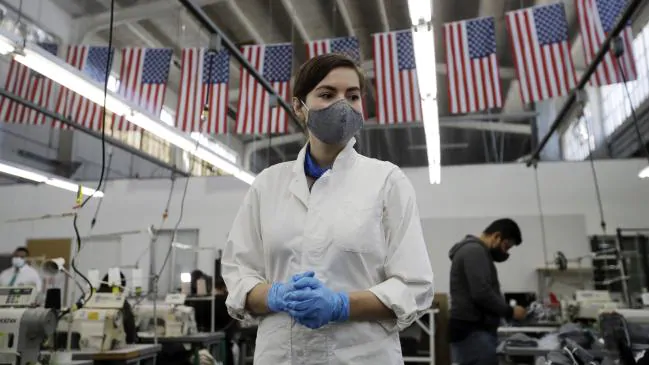
The changeover at True Value’s factory from paint to hand sanitiser is one of countless private-sector initiatives that comprise an underappreciated asset in the US fight against coronavirus.
It is a 21st century version of the “Arsenal of Democracy”, the mobilisation of industrial might that helped win World War II, only this time to make personal protective equipment, ventilators, tests and vaccines instead of uniforms, ammunition, tanks and bombers.
And where that arsenal was orchestrated by the federal government, this one has been largely the spontaneous, unco-ordinated effort of businesses, entrepreneurs and innovators driven as much by the urge to contribute as by profit.
They run the gamut from individuals using 3D printers to turn out N95 respirator masks and academic labs repurposing themselves into coronavirus test centres to General Motors teaming up with Ventec Life Systems to manufacture ventilators. Hundreds of treatments and vaccines for COVID-19 are in development around the world.
Moderna, a Massachusetts biotech company, has already begun human trials on a vaccine, barely two months after the virus’s genome was sequenced. At the start of the crisis, tests had to be sent to distant labs, and took days to deliver results. Since then medical-device companies have rolled out tests with progressively faster turnaround times, including one by Abbott Laboratories that can deliver results in less than 15 minutes in a doctor’s office.
Private ingenuity will be key in helping the economy reopen, which, given signs the pandemic is peaking, could come in the next few months. Apple and Google are developing software that would alert users if they came in contact with someone infected with the virus. Employers from meatpackers to theme park operators and carmakers are redesigning their operations to integrate social-distancing and temperature checks.
Joel Mokyr, a historian at Northwestern University, said national crises such as wars and pandemics generated a hive of entrepreneurial innovation, such as the late 18th century search in England for a treatment for smallpox.
“We have this huge reservoir of creative energy spread around the economy,” he said. “When you have an event like this all of a sudden, everyone says, ‘oh wow, let’s look at this problem, let’s see what I can do to solve it’.”
This time, innovators are exploiting tools and methods that didn’t exist in previous crises to speed up the acquisition and dissemination of solutions. In mid-March, Lennon Rodgers, director of the Grainger Engineering Design Innovation Lab at the University of Wisconsin, fielded a plea from the university’s hospital to make 1000 face shields.
He often gets requests from around the campus to manufacture various items and “initially, I didn’t take it too seriously”, he recalled. But after his wife, an anaesthesiologist, told him the shields were indispensable for dealing with highly infectious patients, he went out to scour hardware and craft stores for parts.
He teamed up with Delve, a local design firm, and Midwest Prototyping, a contract manufacturer, to design their own “Badger Shield”, named after the University of Wisconsin mascot.
They expected to use 3D printers, then concluded that wouldn’t achieve the necessary scale. They uploaded the design to their website along with the necessary parts for anyone to download. A few days later Ford did, and, with tweaks of its own, began turning out face shields for Detroit-area hospitals.
Mr Rodgers and Justin Boutilier, an engineering professor, have built a “pop-up supply chain” around the design. Hospitals that need shields and factories offering to make them fill out forms on their website, then are matched by an algorithm. The website also connects manufacturers to suppliers of the necessary material. More than 300 manufacturers have submitted production plans totalling 2 million shields a day, well in excess of demand.
These remain minuscule enterprises by wartime standards. The US was already furiously rearming when Pearl Harbor pushed it to a war footing. Washington’s hand was everywhere.
Agencies such as the War Production Board and the US Maritime Commission decided what should be produced and which companies would get contracts, which generally had a guaranteed profit margin. It barred the production of civilian products like passenger cars to free up capacity for military trucks and tanks. It also co-ordinated production with allies Britain and Canada.
Political leaders have cited the wartime analogy repeatedly since the pandemic began. “This is going to be our Pearl Harbour moment,” the US Surgeon General, Jerome Adams, warned on April 5.
Yet compared with wartime, the federal government has thus far played a supporting role in mobilising resources to combat the pandemic. Most of the acquisition and production of vital supplies has fallen to states and healthcare providers working with private suppliers and intermediaries.
In recent weeks, the federal government has stepped up its involvement, such as ordering masks and ventilators to distribute to states. But states have complained about having to compete with each other and the government for private supplies.
On March 19, Kepner Scott Shoe, a specialty children’s shoe manufacturer with 18 employees based in Pennsylvania, was forced to halt production when the governor ordered all non-essential businesses to close.
“My family aren’t the type to sit around and watch things happen,” said Audrey Zimmerman, who manages the company her great-grand father bought in the 1960s. She learned of shortages of protective masks from friends and relatives who are healthcare workers.
“We knew we could source fabric. We had our seamstresses who could sew these masks. They have years of experience so a new pattern, whether it’s a shoe or a mask, is easy to do.” Ms Zimmerman obtained a waiver from the state to reopen. The cotton masks are donated to healthcare workers to wear over their N95 respirators, extending their lifespan.
The virus won’t ultimately be tamed until a therapy or vaccine is available, and that has become the intense focus of the pharmaceutical industry. More than 200 experimental drug treatments, repurposed drugs and vaccines for the coronavirus are in development worldwide, according to Jefferies, an investment bank.
Michael Yee, a biotech analyst at Jefferies, said the biotechnology industry has raised record amounts of capital in recent years through venture financing, initial and follow-on public offerings. “Biotech innovation over the last 10 to 20 years … has allowed us to come up with early potentially promising therapies in weeks, not years,” Mr Yee said.
There are big caveats to these efforts. First, relative to wartime, the amounts of money involved are puny. Viruses, unlike hostile armies, can’t be defeated with sheer brute force. Mr Yee estimates less than $US500m ($780m) has been committed to early-stage drug research on COVID-19 thus far. That is about half the average cost of bringing a new drug all the way to market.
Secondly, they may not be enough. Fast as manufacturers are trying to ramp up production of personal protective equipment and ventilators, they are lagging behind the pandemic, which is expected to peak soon. By next month, domestic N95 mask production will still be less than a third of estimated demand. A vaccine, even at today’s unprecedented pace of development, may not be available for 12 to 18 months.
Mr Mokyr, the economic historian, said these efforts still served a valuable purpose. Each pandemic, he said, added to our store of knowledge and tools, enhancing our response to the next. The human influenza virus was discovered in 1933, 15 years after the 1918 pandemic. It took mere weeks to isolate the virus that causes COVID-19. When the next pathogen comes along “we’ll have the tools, the labs, the microscopes, the computers, and we will be ready. This is a war of knowledge against evolution. I’m betting on knowledge.”