Locals bought pub to bring life to community
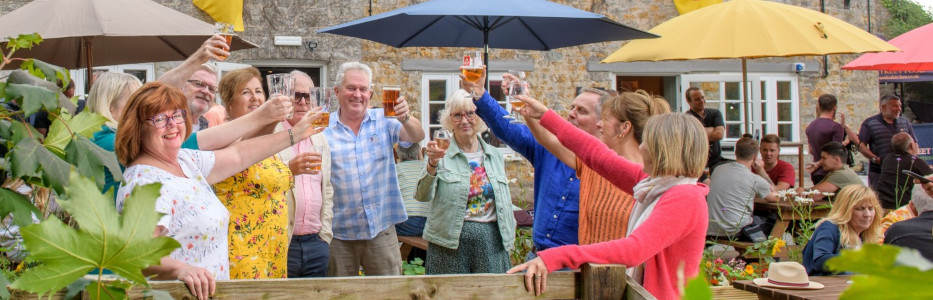
LONDON: A group of village residents have acquired the local pub to bring back the joy of community life.
New towns are set to appear all over the country as the government attempts to build 1.5 million homes in the next five years. So how do we make sure they are bustling instead of bland, identikit housing estates?
This is a puzzle Robert Boughton, the founder of the housing developer Thakeham, has been trying to solve. In 2014, he worked with the charity Shelter to survey 80,000 people about new housing. “We found that people accept that we need more housing, but what they are worried about is the strain it puts on facilities,” Boughton says.
In a recent conversation with a councillor, he says they complained about a new development that had no facilities “just loads of housing, and how the impact was a higher-than-usual suicide rate and social problems”.
Then one morning, Boughton discovered Plunkett UK, while reading The Sunday Times. The charity helps communities to set up locally owned and managed businesses, and it has a high long-term survival rate: more than 92 per cent of the shops it has set up are still trading, compared with 44 per cent of new commercial businesses.
Boughton asked Plunkett to set up a community shop on his newest housing estate in Woodgate in Pease Pottage, West Sussex. Typically commercial premises are let once the residents have moved in, but Boughton wanted a community-led business there from the outset.
Thakeham built the shop premises, fitted it out and gifted it to Plunkett, then the developer spent £4 million building a primary school, £7 million on road improvements and built a hospice and café that is rented to St Catherine’s Hospice for a peppercorn rent of £1 a year.
About 16 months later, Woodgate is a thriving village with 619 homes, but it paid off for Thakeham, too. Boughton believes the revenue and sales rate was far stronger at Woodgate than for comparable developments as a consequence.
Nick Harris, 71, has run the community shop in Woodgate since it opened in May. He moved with his wife from Horley, which is ten miles north of Pease Pottage, for a quieter life during retirement, but he was drawn into volunteering after attending the AGM of the community shop’s management committee. “The only place [the residents] had nearby was the motorway services, which are horrendously expensive, so it’s been a huge help to the estate,” he says.
Like most of the businesses Plunkett advises, the shop is run as a community benefit society, a type of co-operative. Residents are invited to buy a share in the business, set at a minimum price of £1. Shareholders have an equal vote and then elect a management committee that is changed annually. Any profits can be used to pay off debt, pay interest to shareholders, or it can be reinvested into the business, or donated to a local cause.
There are about 60 shareholders in the Woodgate community shop, but Harris hopes to add more at its summer fête next Sunday. He hopes the community will be able to take over the soon-to-be vacant development sales office, too.
He says: “We get so many people coming from nearby estates saying, ‘We were promised this service or this community centre and it’s never happened. We’ve got nothing.’ And they are usually bigger estates than us. It’s imperative that the new towns have the right infrastructure.”
Boughton wants to put a community shop in all his new developments, but admits he is usually met with scepticism. “Our industry’s good at making promises but not delivering,” he says.
Plunkett, which has supported more than 800 community businesses to set up, is talking to developers, planners and land promoters about embedding its services earlier in the planning process. This is a departure for the charity, which is usually contacted by rural communities to save or replace a valued local asset.
Key to the success of its businesses are their adaptability. Without profit-driven targets, or a central strategy to hold them back, the premises quickly evolve into community hubs that are shaped by local need. A Plunkett-backed pub in Lancashire is home to a community allotment and hosts church services upstairs. A former hospital in Suffolk advised by Plunkett is now a community centre, garden, café and shop.
Since the Covid pandemic, Plunkett’s services have been “in enormous demand, with more than 500 starts a year,” James Alcock, the chief executive of Plunkett, says. “By May this year, we had delivered the same amount of business support as we did in the whole of 2023.”
The loss of businesses during the pandemic, the isolation that followed, and the rise of home-working explain the rise in community businesses. Alcock says: “The high street is not what it was and people are looking for ways of interacting.”
One of those people is Mel Cooper, 54, the shop manager of Westbury community shop in Buckinghamshire, who started working there after she was furloughed during the pandemic. “It feels like I was meant to do it,” she says.
The shop champions local businesses, selling local beer, wine, honey and bread, and the café is renowned for its quirky menu that includes Cadbury Creme Egg toasties and sausage roll panini. Community businesses can also provide employment training and life skills.
Westbury community shop offers two work experience shifts twice a week during term-time for the students at Furze Down, a special educational needs school in nearby Winslow. Cooper says: “It started through a conversation with a mum who wanted somewhere for her son, Thomas, to learn how to pay with his [bank] card in a safe place.”
There also are outdoor theatre shows, a cinema night for the over-50s and a social event every Friday. “We want people to feel that, if they’re not doing anything on a Friday night, there’s always something going on with us at the shop,” Cooper says.
This community-led approach is transformative for isolated and low-income communities and people living with disabilities, or caring responsibilities. In the village of Alhampton, Somerset, there are just 67 houses. In November 2022, the Alhampton Inn closed having struggled with rising costs and energy prices. “It was almost like a black hole sucking energy out of the village. Something had to be done,” Jeremy Burks, who has lived in Alhampton for 15 years, says.
Burks, along with three others, recruited 130 shareholders and raised £120,000 to save the pub. It’s run by a general manager and paid staff, but volunteers do much of the office work and step in to help behind the bar when needed.
After the pandemic, one fifth of the houses in the village changed hands and the average age decreased as young people left cities and moved to the countryside for a better life. Now the pub hosts dining events, a “boozy book club”, a francophone gathering and, importantly, it makes a profit.
The British Beer and Pub Association warns that 2,000 pubs could call time by December, most of them in rural communities. There are 150 community-owned pubs and that number is growing. Burks says: “There’s something powerful about people realising they can’t rely on others to do things for them. We need to step up.”


