Multigenerational project with 2,400 homes get financial boost
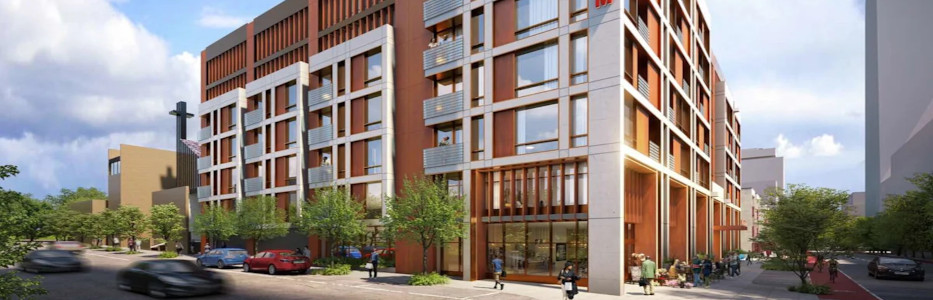
LONDON: A multigenerational project with 2,400 homes in the pipeline has been given a major financial boost.
After years of trying to close financing gaps, Freedom West 2.0 has a new public subsidy and a proposed 25-year development agreement with the city to push it forward – and is again aiming to break ground.
Its first building, a 115-unit affordable housing building for seniors, would precede the market-rate towers planned for the four-block site in San Francisco’s Fillmore District.
City officials call that building “Phase 0,” an early step meant to give the project a place to relocate current co-op residents as construction advances, beginning with its most vulnerable. The project now has a $23 million commitment from the Mayor’s Office of Housing and Community Development, or MOHCD, alongside gap financing from investors like the Crankstart Foundation, the Housing Accelerator fund and Common Spirit Health. Groundbreaking is now expected in the first half of next year.
“This is a transformative moment for the Western Addition. Residents of Freedom West and this community have long advocated for this vision, and, today, we are moving to make it a reality,” said Mayor Daniel Lurie, whose office on Tuesday will announce legislation to establish a 25-year development agreement with the city.
Paired with project specific zoning, the agreement adds long-term certainty, allows towers as tall as 345 feet and locks in the rules and phasing for the massive redevelopment effort, which at completion will add nearly 2,400 new homes to the area, of which 17% will be income restricted.
A total of 1,885 units planned at the property will be market-rate, rising alongside 267 replacement co-op units, with the existing buildings to be demolished and replaced. City leaders and the project’s developer, MacFarlane Partners, say the overhaul answers residents’ long-standing call and advocacy for modern homes after four decades of deferred maintenance, while preserving co-op ownership and allowing most current shareholders to remain homeowners.
“Freedom West 2.0 shows that San Francisco can build at scale without displacing the families who built this neighborhood,” said Victor MacFarlane, the development firm’s CEO and executive chairman. “Limited-equity cooperatives have long been shut out of traditional affordable housing tools. This partnership changes that, and it gives Freedom West residents what they have fought for over decades: the right to stay, and a real stake in the value being created around them. ”
Rebuilding several city blocks has required an unusually layered financing strategy. The project has been previously valued at $2.3 billion, but has been pending since 2020 as its developer grappled with how to cover nearly $600 million in upfront costs.
The co-op’s limited equity structure makes it difficult to use tax-credit programs that commonly help finance affordable rental housing. A state law by Sen. Scott Wiener now gives the city another option: its Office of Community Investment and Infrastructure can use some future property tax revenue generated by the redevelopment to help pay for replacement affordable homes. The city said it plans to direct millions in this funding to Freedom West, pending required approvals, to help close the project’ financing gap.
The nonprofit co-op, known as Freedom West Homes Corp., has also agreed to sell two-thirds of its property for market-rate development, but only after replacement homes and additional affordable housing are built. It was founded after 1960s urban renewal displaced thousands of Fillmore and Western Addition residents, and sits on a 10-acre site near Jefferson Park. Of its roughly 1,000 shareholders, more than half are seniors.
“Our founders built this cooperative so that Black and immigrant families pushed out of the Fillmore would have a place to stay and to own. For more than fifty years, we have held on,” said Freedom West Board President Mattie Scott. “Our families will not be moved out to make way for progress. We will be part of it, in new homes we own, for our children and grandchildren.”


