My son never left home. Then he evicted me
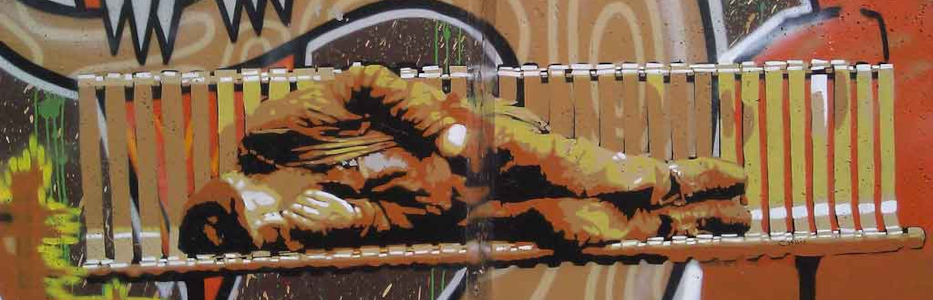
LONDON: Even if Arindam Choudhary did not expect his son to carry him on his shoulders in a basket like Shravan, the mythological embodiment of filial devotion, he might have expected a bit better than what happened three months ago.
Choudhary, 55, a former business executive, speaks in clear English as he relates how he came to be homeless. He brought up his son, Mayur, in their one-bedroom flat in Purulia, West Bengal, he says, pausing every so often as emotion overcomes him.
He says he eventually turned over ownership of his flat to Mayur, who like many other young people was priced out of housing and still living at home aged 35.
Choudhary said that shortly after he gave his son the flat, his son told him to leave. That was three months ago. “Just give me a 5ft by 5ft space and some food,” he told Mayur. “That’s all. Please. In return, I will be your servant. How long am I going to live anyway?”
His son, Choudhary says, was having none of it. “But what if you live another 25 years?” he supposedly asked his father.
Now living in a shelter for parents who have been evicted by their children in Okhla, southeast Delhi, Choudhary was given hope that the state was planning to support people like him.
Faced with children increasingly throwing out old parents, the southern state of Telangana has passed a law that requires any state employee or elected representative found guilty by a tribunal of neglecting their parents to lose up to 15 per cent of their salary. The money will go straight into the parents’ bank accounts.
If it is possible to judge a civilisation by how it treats its elderly, Indian states are trying to burnish their reputation. “You have become officers because of your parents’ hard work and sacrifices,” Telangana’s chief minister told civil servants. “Never forget your background or where you came from.”
Assam, in the northeast, passed a similar law in November.
India is grappling with an ageing population in which 153 million people are over 60. By 2050 this is expected to rise to 340 million, or 20 per cent of the population. In Kerala those over 60 already form nearly 20 per cent of the population.
Yet across the country there is next to no provision for them. There are only 1,100 care homes catering for about 100,000 residents. No minister has announced a national policy to deal with the demographic change.
Indians’ life expectancy has increased to about 70, and people who often used to die by their fifties are now living into their seventies and eighties. Where before parents might have needed care for a decade or so, now they might need three decades after retirement.
At the same time the migration of young people to urban areas has undermined the notion of generations of one family living under one roof. Today, young couples live and bring up children in tiny flats on small and precarious incomes.
These pressures are thought to have combined to drive the increase in children evicting parents. Shocking stories of neglect abound, particularly among the 8.8 million Indians who have dementia, often abandoned at temples, police stations, busy markets a long way from home or railway stations.
In the case of Raju, 55, it was a hospital. It was his misfortune that a road accident six years ago in Nagpur, where he lived with his two sons, left him blind. He needed surgery for his injuries and could never work again as a cook.
Sitting on a bed in the clean ward at Sheows, a shelter in Okhla, Raju is being treated for jaundice. He cannot stop crying as he says that his sons took him to a hospital in Delhi for “treatment”.
“They left me on the gurney and said they were just going to get some food,” Raju says. “I waited and waited, but they never came back.” Like Choudhary, Raju had transferred ownership of his flat to his eldest son before he was abandoned.
There is not a man or woman at the home who does not break down when talking about rejection by their child, no matter how long ago it happened.
It is the fathers who are rejected the most, experts say. “Mothers tend to be thrown out less often because they are seen as useful in looking after young children and doing housework,” says Saurabh Bhagat, the head of Sheows. “About 70 per cent of our 110 residents are men.”
In the huge open hall where meals are served, Lakshmi, 50, begins to cry when she mentions her son’s name, John. She used to live with him and the grandchildren in Maharashtra but she says he forced her to beg for food in the property her dead husband had built. She says: “One day, he told me, ‘Go and die wherever you want.’”
India passed a law in 2007 that made it a legal obligation for children to provide monthly maintenance to elderly parents. It is little-enforced and few are even aware of it. “Hardly anyone has used that law unless the cruelty has gone beyond all limits,” says Himanshu Rath, chief executive of the Agewell Foundation. “Hardly any parent will complain about their child.”
Once in a while, though, a story ends happily. Bhagat remembers a woman from Karnataka in the southwest who got separated from her family and boarded the wrong train. She ended up in Delhi to the north. She could give no number or address to Bhagat’s team, but her family tracked her down and, a few months later, took her home.
“When we have contact details and if the resident desires it, our staff make contact with the children,” Bhagat says. “We have had some reconciliations, scenes that have melted the heart.”
He believes people must learn one lesson before it’s too late. “There is no welfare state here,” he says. “They must save something for themselves, not blindly give everything to the children. They need to realise that society has changed and they must have some resources to look after themselves.”
Choudhary, who left home with the clothes he could get into a carrier bag, agrees and becomes animated. “Just be a little bit selfish,” he says. “Just a little. It’s the only way to keep your dignity.”


