New eco-cities are helping elderly age in place
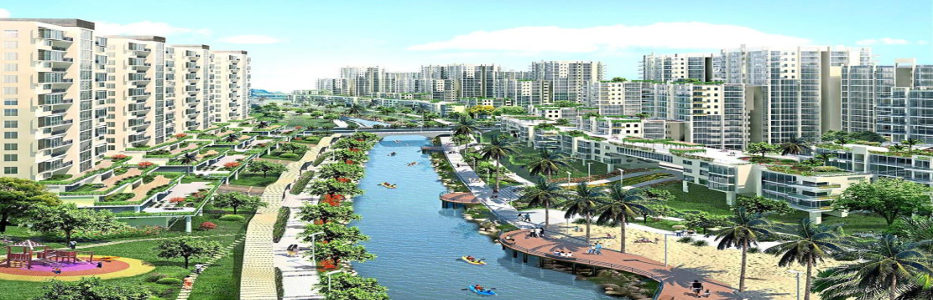
SINGAPORE: When it comes to urban planning and development, most, if not all, cities attempt to realize two issues – sustainability and liveability.
Singapore is not any exception, says Dr Belinda Yuen, analysis director of the Lee Kuan Yew Centre for Revolutionary Cities, a analysis institute on the Singapore College of Know-how and Design.
Yuen was one of many keynote audio system on the current 10th Worldwide Convention On World Class Sustainable Cities 2018 (WCSC 2018).
The convention, themed “Kuala Lumpur: Today & Beyond”, was co-organised by the Actual Property & Housing Builders’ Affiliation Malaysia Wilayah Persekutuan Kuala Lumpur (REHDA KL), the Malaysian Institute of Planners (MIP) and the Malaysian Institute of Architects (PAM), supported by Kuala Lumpur Metropolis Corridor (DBKL).
Singapore was ranked probably the most habitable metropolis in Asia by human assets consulting agency Mercer within the 20th Annual High quality of Dwelling survey 2018, a place it has retained since 2016. Globally, the identical survey ranked the city-state because the 25th most habitable metropolis on the planet.
“When we talk about sustainable development, we talk not only about economic prosperity but also a sustainable environment and high quality of life. These are desired outcomes much sought after by cities across the world and Singapore is no exception,” stated Yuen in her presentaton.
From the very early days, she added, Singapore has put in place a system of built-in planning and improvement to assist maintain the circumstances wanted for a sustainable and habitable metropolis.
One of many manifestations of that’s the notion of eco-cities.
Yuen says constructing an eco-city is about designing neighbourhoods and cities which have the smallest potential ecological footprint for residents. Photograph: The Star/Norafifi Ehsan
The idea of an eco-city is usually traced again to Richard Register, famend American theorist and writer in ecological metropolis design and planning, shared Yuen.
“Building an eco-city is about constructing cities and cities sustainably, about designing neighbourhoods and cities which have the smallest attainable ecological footprint for residents.
“Eco-city is an umbrella term that covers various notions and approaches to sustainable urbanism, and is not a uniform phenomenon. Over the last few decades, we have seen growing international interest in eco-city initiatives of various kinds,” she stated.
Europe, Asia and Australia have the most important variety of eco-city initiatives. Based on a current Forbes journal report, China alone is constructing 285 eco-cities!
“There is no one-size-fits-all eco-city model. General, overall goals are about promoting environment-friendly redevelopment that improves quality of life and makes cities more sustainable,” defined Yuen.
Particular objectives embrace minimising demand for land, main materials and power consumption, decreasing transport demand, minimising influence on the pure setting and other people’s well being, and maximising psychological well being and wellbeing.
In March 2007, Singapore began constructing an eco precinct referred to as Treelodge in Punggol city, a pilot challenge to reveal that innovation and sustainable improvement might be each sensible and price efficient, with the emphasis on inexperienced dwelling and growing inexperienced consciousness among the many group.
The undertaking was accomplished in December 2010 and the precinct, measuring 2.9ha in measurement, options seven condo blocks with a complete of 712 models.
“The precinct was designed with triple aims – to lower maintenance cost, meet environmental targets in energy and water resources capability and, most importantly, enable the community to experience and live an eco lifestyle,” stated Yuen.
A number of the inexperienced options embrace photo voltaic panels, LED lighting in widespread corridors, rainwater harvesting, movement sensors in multi-storey carparks, and connection to LRT and MRT stations.
Such eco parts elevated the price of development by 5% to eight% however it has been estimated that the power financial savings may be transformed into energy that may help 400 four-room households for a yr.
“And that energy saving is for the long term,” reminded Yuen.
Following the success of the Treelodge, in 2012, Singapore’s Housing and Improvement Board (HDB) launched the HDB Greenprint programme as a part of its street map to raised dwelling in HDB cities.
“Greenprint is a complete and built-in framework of objectives and methods to information greener public housing city improvement and to create sustainable houses.
“For Singapore, this is very important because HDB supplies the bulk of the housing needs of the people. More than 80% of the population live in public housing and under the Greenprint framework, the concept of green and sustainable lifestyle is extended beyond the Treelodge precinct.”
To extend group consciousness and participation in eco dwelling, HDB additionally launched an e-book and e-games to assist residents study extra about inexperienced options present in Treelodge, in addition to carried out programmes to advertise consciousness amongst faculty youngsters.
In 2010, HDB introduced plans to resume and additional promote the notion of sustainable township developments, extending the thought of the eco precinct at Treelodge to the whole Punggol city.
Presently into its second part, Punggol eco city’s city options and targets embrace decreasing carbon emissions, optimising useful resource utilization, encouraging greener types of transport, enhancing biodiversity, and attaining larger effectivity in water and waste administration and useful resource utilisation.
“Punggol serves as a living map to test new ideas and technologies in sustainable development, integrating urban planning and solutions to create a green living environment,” stated Yuen.
Planning for an ageing inhabitants
On the subject of city planning, housing and infrastructure that cater to an ageing inhabitants are necessary elements.
By 2050, almost two-thirds of the worldwide older inhabitants, or about 1.three billion individuals, shall be dwelling in Asia Pacific.
“As early as 2030, one in 4 individuals in Singapore can be aged 65 and above, making Singapore the quickest ageing nation in Asia.
“In the area of land and housing, Singapore’s policy is to build an ageing-friendly city that enables older people to live actively and to age in place confidently,” stated Yuen.
Ageing in place is outlined as “growing old in the home, community and environment that one is familiar with, with minimal changes or disruption to one’s lives and activities” (Singapore’s Inter-Ministerial Committee Report 2006).
A 2013 HDB pattern family survey confirmed that ageing in place is favoured by many older individuals themselves, with 60% of these aged 55 and above and 80% of these aged 65 and above stating a choice to proceed to reside of their present flats.
And once they have to maneuver, additionally they favor to stay in one other flat inside the similar city.
“So the challenge is to provide age-friendly features and infrastructure that enable older persons to continue to live within their community for as long as they like. These include elder-friendly housing and a barrier-free city,” stated Yuen.
HDB has been creating new housing ideas akin to multi-generational flats in addition to studio flats to allow residents to age in place.
For instance, the Kampung Admiralty improvement, opened late final yr, integrates senior housing models with social and healthcare amenities in a one-stop improvement for lively dwelling.
Older, present flats haven’t been forgotten, with carry upgrading work, house enchancment and neighbourhood renewal programmes carried out.
Inside older residents’ houses, age-friendly installations like slip-resistant flooring tiles in bogs, ramps, hand rails, wider doorways for wheelchair entry, and in addition barrier free amenities in and across the precincts are additionally carried out.
“Older residents have the flexibility to choose and customise the improvements they want within their flats. And to ensure affordability, each improvement in rented flats is fully funded by the government and for those homes who are owned by the older residents, there is a subsidy of up to 95% for the cost of these installations,” shared Yuen.
On the similar time, to accommodate altering housing wants, senior precedence schemes permit older residents the selection to downsize their flats or assist them transfer nearer to their youngsters for household help.
In a 2015 survey that concerned about three,000 individuals aged 55 and above, carried out by the Lee Kuan Yew Centre for Revolutionary Cities, nearly all of respondents have been most involved about entry to healthcare, transportation, security and safety when it got here to their future housing wants.
“Beneath Singapore’s Motion Plan for Profitable Ageing, we will anticipate extra built-in age-friendly developments shifting ahead on the neighbourhood in addition to metropolis ranges.
“The strategy is to incorporate more senior-friendly infrastructure in the city, for example toilets, foot paths, lighting, exercise equipment, parks, gardens, as well as neighbourhood facilities to support those living with dementia,” stated Yuen.
Nevertheless, enabling ageing in place isn’t just concerning the constructed surroundings as motion can also be wanted in constructing senior-friendly group care, extra person-centred social and healthcare. Principally, it’s about holding seniors wholesome and lively.
“As designers of the built environment, planners, architects and developers, we have the opportunity to make a difference to our cities. Let’s seize that opportunity to rethink, re-evaluate and re-imagine the way we plan, design and build our housing, infrastructure, neighbourhoods and our cities,” stated Yuen.


