New medical service model set to evolve from frustration
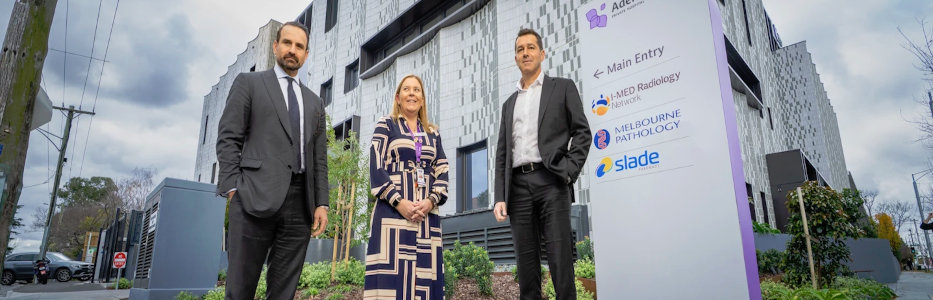
LONDON: There are just 11 seats in the small reception area of Adeney Private Hospital. That’s the same number of treatment chairs on the top-level, third-floor medical infusion ward, where patients undergoing chemotherapy can gaze over the rooftops of Melbourne’s leafy suburb of Kew to the CBD.
Space is valued, and so is cost management in the new facility, which bills itself as Australia’s first purpose-built gap-payment-free private hospital, meaning surgery patients pay nothing extra for surgeon, anaesthetist and radiology fees or expenses such as prescribed PBS medicines.
The cover for procedures including colorectal, oncology, orthopaedic, breast, plastic and reconstructive and urology surgery is currently limited to eligible customers of health insurers Medibank Private and Bupa, but the net could widen as the hospital negotiates with other medical funds.
It’s a headline-grabbing claim, especially after the collapse of Healthscope, the country’s second-biggest private hospital operator, which put the spotlight on challenges facing the 600-plus private facilities that account for 70 per cent of Australia’s elective surgery.
It’s also new. Adeney Private, officially opened in April, is just the third hospital in Australia to be owned by a health fund, with Medibank owning stakes in East Sydney Private Hospital and Western Hospital in Adelaide. It shows the model of healthcare is changing fast, as private healthcare funds shore up their finances.
But doctors and traditional hospital operators are uneasy about private health funds owning facilities, warning it will put Australia on the path of the United States, where insurers have complete control over who treats a patient and where.
“We are concerned Australia is hurtling towards a US-style system of vertically integrated managed care, where health funds have too much say over the clinical care that patients receive,” Australian Medical Association president Danielle McMullen says.
Plans that Bupa announced in May to open 130 integrated medical centres around the country over the next three years only heightened that concern.
“It is crucial that we avoid a scenario where profits are put before patients, like we have seen happen in the US with disastrous results,” McMullen says.
“Clinical decisions must remain in the hands of doctors and their patients – not influenced by insurers or corporate ownership – so that care is guided by need, not by financial incentives.”
Others say it can work and insurers argue they are better at innovating and embracing modern models of care than traditional hospitals which are financially motivated to keep people in beds longer.
“There are good and bad models,” says former federal health minister Greg Hunt.
The private sector dominates healthcare in the US, with big health insurers often running networks of hospitals and clinics. They have more control over how a patient is treated and which doctor or surgeon they see. In New Zealand, the country’s largest private healthcare network, Southern Cross, is a charitable trust that works with the public sector to reduce backlogs of patients.
“In the US you have managed care which is completely unacceptable in Australia. But New Zealand has Southern Cross, which is both an insurer and a hospital provider, and it is an exemplary company,” says Hunt.
In healthcare, the biggest risks are already underwritten by taxpayers through public hospitals. They take on more chronic cases, as well as patients who can’t afford private cover.
But many people with complex cases also have private insurance, so how does any private hospital remove the cost risks of treatment, inherently an unpredictable process?
“I don’t think it’s completely derisked,” says Dr Sherryl Wagstaff, Adeney Private’s medical director, an ENT surgeon – and one of its owners.
“We need to understand the business of healthcare. That’s where the synergies haven’t happened in the past.”
Wagstaff is one of 42 doctors in a consortium that owns 51 per cent of the hospital. Insurer Medibank Private subsidiary Amplar Health owns the remaining 49 per cent, just as it does with the other two hospitals in NSW and South Australia.
Giving doctors a direct responsibility for profit means they think carefully about costs. They use more costly treatment methods when it makes sense to do so – Wagstaff gives the example of using a laser to improve the chance of clinical success in a stapedectomy, a procedure to reduce hearing loss by replacing a small bone in the ear with a piston, a prosthetic device.
“To do that with great clinical success needs a laser,” she says. “It is expensive. We have a laser.”
In contrast, they cut down on their use of Optiflow, a high-flow oxygen device used for difficult situations during surgery. Traditionally used in procedures such as endoscopy, Wagstaff says there is no basis for it to be used universally.
And then there are bed costs. Adeney Private chief executive Louise O’Connor says the hospital tries to minimise the average cost of $1200 per patient per day.
“A lot of the hidden cost in hospitals is patients staying too long,” O’Connor says. “Hospital staff are under some pressure to look at people critically.”
The ownership mix of doctors and health fund allows for the right balance between healthcare and commercial rigour, she says.
“A lot of doctor-owned hospitals have failed because, they don’t know how to efficiently operate a facility, whereas this gives the best of both worlds,” O’Connor says.
Adeney Private sits on the Cotham Road site that previously held a Healthscope-owned facility, Cotham Private Hospital.
O’Connor, who previously worked for rival hospital operator Epworth, realised the site Healthscope closed in 2018 would work as a temporary hospital for patients at a time when Epworth was developing new facilities.
Developer and Hamton Property Group chief executive Paul Hameister agreed to buy the site, knowing he could lease the existing hospital property to Epworth for two years, while he designed and secured approval for a new residential development on the arterial road.
But when Centuria – a developer and investment company with $20 billion worth of assets invested in 400 properties across 140 separate funds – offered $21.1 million for the site he’d purchased for $9.9 million, Hameister took the offer.
“We never foresaw flipping the site to another hospital developer,” he says. “The financial returns based on the transaction proposed by Centuria were so compelling it made no sense for us to continue with the project. It was purely a numbers game.”
The $100 million hospital building developed by Centuria Healthcare is now one of four assets held in the $200 million Centuria Prime Partnership, a joint venture between Centuria and Morgan Stanley Real Estate Investing.
For Centuria, which until 2017 focused on office property, healthcare was the next leg of an expansion strategy that started with industrial property and widened when the company in 2019 took a majority stake in Heathley, a private investment manager with a portfolio of healthcare assets.
The value of the healthcare portfolio has grown from about $700 million to $1.5 billion since then, Centuria Capital joint chief executive Jason Huljich says.
“We’d like to do more in the space, and we’re learning a lot as we do it,” Huljich says. “But it’s been challenging across all the healthcare real estate business. Everyone’s had challenges in the last few years since COVID to grow and to produce profitable developments.”
In a private hospital, staffing makes up 60 per cent of operating costs and rent 20 per cent. Supplies, equipment, food and utilities make up the rest.
While Healthscope was unique in being unable to service its high level of debt, most private hospital operators struggle with soaring wages and other costs.
The Adeney Private proposal required Centuria to do what no landlord had done, which was to build a new facility from scratch to operate under this new business model.
“We want the hospital to make money, right? You want a strong tenant. And you’ve got to look at these new methods of care and business cases for healthcare,” Huljich says. “It was a hard, tough journey. No one had done it before.”
Working out how to make it work “involved a lot of gymnastics”, says Huljich’s colleague Andre Bali, Centuria’s head of development.
“It’s very unconventional. It’s not just a tenant taking some space and leasing,” Bali says.
“We work backwards now and say, well, your operating costs are going to be X, and that’s 25 per cent of your overall cost. And we work out, ‘What can we build for that? What as a real estate asset, can we develop for that? And what rent can be paid?’ So that’s really where we go to it.”
Construction cost about $58 million – more than originally expected. Builder Hansen Yuncken lost money on the job, as did most fixed-price building contracts following the COVID-19 pandemic, Bali says.
“We acquired the site and started the whole planning process and council [approval] and design and COVID hit us,” he says.
“Given the COVID challenges, the cost challenges, the labour challenges and everything else, to come out the other side and be able to open the hospital is a pretty big deal in an environment where a lot are closing.”
Hansen Yuncken executive director Richard Hansen declines to comment on the cost.
“It was not a stellar time for the industry,” Hansen says. “Nothing was easy.”
But he’s proud of the result, particularly the curved facade of glazed bricks that accentuates the morning and afternoon sun.
“A lot of work went into it,” Hansen says. “It was quite a detailed facade. But it’s come up well.”
The project only started because the doctors were willing to stump up for it as a first step.
“The doctor investors came on board before anything was even signed,” O’Connor says.
“They had to put their money on the table. They had to pay for the integrated fitout and the medical equipment. The doctors, within 12 weeks, raised something like $15 million. It was done very, very quickly.”
That commitment – and equity – gave Centuria the confidence to go ahead.
“We obviously needed that certainty to push the button on acquiring the asset,” Bali says.
It’s a tightly designed building on a 2245-square-metre site. The short-stay hospital building with a ground floor and three floors above that and a two-level underground car park has a 5000-square-metre net lettable area with 60 beds and five operating theatres.
The facility, designed by architects Silver Thomas Hanley, had to be tailored to the operating model of the planned new hospital. It couldn’t be retrofitted into the existing structure on the site.
“When the Healthscope assets came up, you know, I got quite excited,” Huljich says.
“It was a big chunk of real estate, and I went to Andrew [Hemming, managing director of Centuria Healthcare] and I said, ‘Look, we should have a good look at these’. He goes, ‘No, no.’ He said, from the start, ‘These don’t work. Some of these are very unprofitable.’”
Traditional hospitals have a use of space that didn’t fit with the revenue raising needs of newer commercial operations, Bali says.
“A lot of those big operators will come into it having done it for 100 years and say, ‘This is the way we do it – an operating theatre needs to be 83 square metres’ or whatever. We’re saying it doesn’t need to be.”
Current federal government regulations put a 60-square-metre minimum on operating theatre size.
Decisions about hospital design had to include hands-on feedback from the doctors who were going to own it and work in it so that any compromises needed to make the hospital operate economically weren’t to the detriment of the way it functioned, Wagstaff says.
“It’s not so much how big that individual theatre has to be, it’s how it flows with the rest of the hospital,” she says. “Silver Thomas Hanley had started doing the plans with Centuria, and we revised them 16 times with them.”
There’s a natural size limit for hospitals to work profitably under this model, Bali says.
“Those big, 10,000-square-metre hospitals – they’re just too big,” he says. “They will never work under this sort of model.”
But they exist and Centuria is looking for others – including two in NSW – to bring into its fold.
A future hospital in the portfolio doesn’t have to be a standalone building.
“It can be co-located with a public [one] in the sense that people working in it can work in both,” Bali says.
“They can still run their private hospital, but the actual doctor can then do half his work, whatever percentage is in the private, and also jump across to the public.”
Huljich cautions, however, that without an operator that can make the model work, it can’t go ahead. “You want a tenant that knows what they’re doing. There are plenty of groups that don’t.”
But the best chances for new-build projects came up as older hospitals reached the end of their economic life – just as the original 1961-built Cotham Private Hospital did – Bali says.
“That’s usually a trigger point. The doctors are going to be saying, ‘we’re working in this 50-year-old building, and it’s not great’, but that’s when the conversations will start.”


