Retirees refusing to downsize and buying bigger instead

LOS ANGELES: There is a growing trend for retirees to refuse downsizing and to actively seek larger properties.
“We’ve never been bungalow people,” Robert Mileham explains, “and not everyone’s retirement is sitting around doing less, waiting to die.”
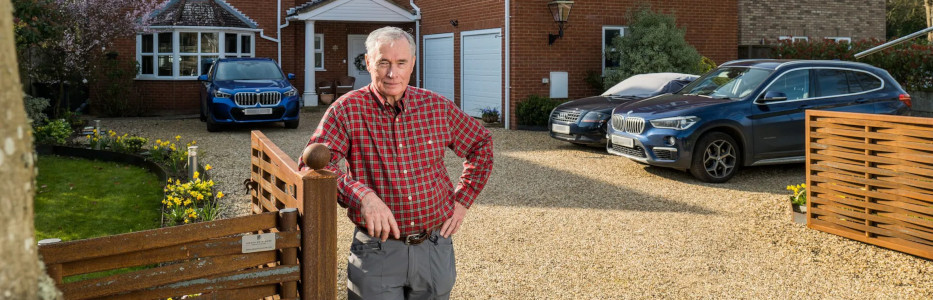
Six years ago he moved into a five-bed property with his wife, Pauline, bucking the trend of downsizing in your 60s and making a profit in the process.
As he chats, the 72-year-old is on a long walk with his four dogs. “Doing less” is certainly not his style.
Robert is aware that his move goes against the grain. “People might think we should be living in a one-bed retirement apartment, but that’s not the life we’re after,” he says.
The couple now live an idyllic life near the Norfolk coast, a stone’s throw from their son’s young family, and have become active members of the community. “Lots of people expand their horizons when they retire,” Robert says.
Pauline, 73, is a keen gardener, while Robert has become secretary of the village preschool where his grandson goes, as well as getting involved with the local church and book club.
The village of North Runcton is full of sociable retirees, adds Robert.
Their retirement is comfortably supported by two large pensions. Robert worked as a Metropolitan Police inspector, and Pauline enjoyed two very different careers – one in fashion and one in transport management. Robert appreciates that those who have been less fortunate with pension savings may be forced to downsize.
Indeed, their lifestyle change is not one that everyone can afford.
Baby boomers, the cohort born between 1946 and 1965, are widely considered to have benefited from a previously booming housing market, accruing considerable wealth from properties they bought for a fraction of the current price.
Between 1975 and 2025, the average house price in Britain rose from £10,978 to £271,619, according to Nationwide – an almost 25-fold increase.
It means that, as of last April, the over-60s hold £2.89tn of net housing wealth, according to estate agency Savills.
Experts often argue that if more retirees downsized, a portion of the housing market would be unlocked for younger families.
And for some pensioners, mobility issues mean a smaller property is more suitable.
But Robert says: “Going up and down the stairs keeps my legs going. If we ever get to the stage where we can’t get up and down the stairs, we’d just install a chairlift – it’s cheaper than moving.”
In their five-bedroom property, the couple use one bedroom as an upstairs living room and space for Pauline’s arts and crafts and one for Robert’s model soldier collection.
They have ample space for entertaining friends and family and for accommodating their grandson, his hoard of toys, and their four dogs.
Nigel Bishop, of buying agency Recoco Property Search, says that one of the key benefits of retirement is the gift of time. “A lot of retirees looking to upsize do so to host family, take up gardening or have space for a hobby room.”
“Society always assumes that as we get older, we want to downsize, but that’s not always the case,” adds Bishop. “Most retirees will also be chain-free buyers, which could make them more attractive bidders in the eyes of the seller.”
The mortgage on the Milehams’ four-bed property in Surrey, where they raised their two children, ended in 2018. They’d spent 30 happy years there but had always dreamt of retiring by the coast.
Cornwall had been the original plan, but they decided they wanted to be closer to family.
Despite being bigger, their new home cost less than the previous one sold for. The Milehams upsized in 2020, and so benefited from the stamp duty holiday introduced to give the market a boost during the pandemic.
Stamp duty is often blamed for trapping families in their homes, so much so that voices on both sides of the political spectrum have called for it to be reformed.
The Conservatives have pledged to scrap it for primary residences, and think tank Labour Together has called for it to be replaced with a proportional property tax.
The Milehams are certainly unusual in their decision to upsize.
Downsizers bought the largest proportion of homes last year – 37pc – according to estate agency Hamptons. But a national shortage of bungalows means that many who want to downsize can’t.
In August the HomeOwners Alliance reported that one in seven homeowners aged 55 and older has put plans to move on hold in the past two years.
More than a third, 34pc, said this was because of a shortage of suitable homes. Bungalows make up just 2.5 million of the 26 million homes in the UK, according to government data.
Some homeowners turn to leasehold retirement properties, but this leaves them on the hook for spiralling service charges.
However, happy and settled in their forever home, Robert and Pauline are shielded from these issues. “We’ll never move again,” says Robert.
“I’ve worked since I finished my A-levels back when I left school in 1971. Why on earth should I be obliged to downsize?”