Seven new multigenerational towns unveiled in big housebuilding push
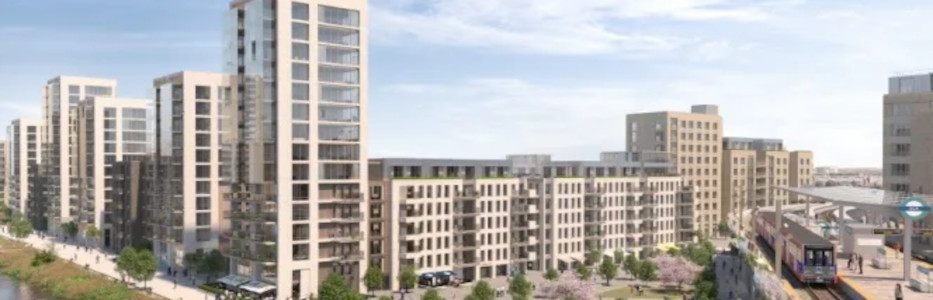
LONDON: The locations of seven new towns have been announced by the government as part of its plans to kickstart the biggest housebuilding push in more than 50 years.
Each proposed location will be expected to provide at least 10,000 homes, while several will build more than 40,000.
The seven chosen locations are: Tempsford, Leeds South Bank, Crews Hill and Chase Park, Manchester Victoria North, Thamesmead, Brabazon and West Innovation Arc, and Milton Keynes.
The government has scrapped proposals for six new-town locations in Adlington, Heyford Park, Marlcombe, Plymouth, South Barking and Wychavon Town.
However, the locations have been deemed to be credible development land and may continue to benefit from investment through existing housing programmes.
The Ministry of Housing, Communities and Local Government has not decided on the names of the new towns yet.
Five names under consideration include Elizabethtown, after the late Queen, Pankhurst, after the organiser of the suffragette movement, and Attleeton, after the Labour prime minister Clement Attlee, who started a massive postwar new towns programme.
Athelstan, considered the first King of England, is another option, as is Seacole, after Mary Seacole, the Jamaican-British nurse who cared for wounded soldiers during the Crimean War.
Any names will go through a public consultation and local leaders will sign them off.
The new towns are central to Labour’s election manifesto pledge to build 1.5 million new homes by the next election, expected in 2029, and to expand home ownership. The government has faced criticism that it is lagging behind its commitment. The chief executive of Lloyds Bank warned last month that it would “take a miracle” to hit the target.
Announcing the locations of the new towns, Steve Reed, the housing secretary, said: “People want real change, homes they can afford, local infrastructure that works and good jobs in thriving communities.
“Our next generation of new towns marks a turning point in how we build for the future.
“From the ground up, we’re planning whole communities with homes, jobs, transport links and green spaces designed together so we can give families the security and opportunities they deserve.”
One of the largest towns is set to be Tempsford in Bedfordshire, where up to 40,000 homes will be built around a new east-west rail station linking residents to Cambridge, Oxford, London and Milton Keynes. Similar numbers will be built in Brabazon and the West Innovation Arc, centred on the former Filton airfield near Bristol, and in Milton Keynes.
Crews Hill and Chase Park in Enfield, north London, will host 21,000 homes designed to help meet the capital’s acute housing need.
Up to 20,000 homes will be built in Leeds South Bank in West Yorkshire, while at least 15,000 homes will be constructed at Manchester Victoria North as part of a regeneration project at the heart of Greater Manchester with a new Metrolink stop connecting residents to the city.
Thamesmead in Greenwich will include 15,000 new homes on riverside land that is inaccessible at present but will be opened up by an extension to the Docklands Light Railway.
New towns in the UK have usually been named after existing villages or landmarks in the area, such as Stevenage and Milton Keynes. There are some exceptions: Telford in Shropshire, which was established in the 1960s, was named after the engineer Thomas Telford, and Peterlee in Co Durham, founded in 1948, was named after a local miners’ leader called Peter Lee.
There have been some unsuccessful attempts to give new towns more adventurous names. Proposed names for Letchworth in Hertfordshire, whose development as a modern town started in 1903, included Alseopolis and Homesworth, but shareholders and residents opted for the local village’s name instead.
Rachel Reeves, the chancellor, said: “For decades this country’s planning system has been a direct obstacle to building new homes, ramping up costs and pricing young people out of the housing market.
“Two years ago, I promised that we would grasp the nettle of planning reform. Now we’re planning to build a new generation of new towns, opening up the expansion of our most dynamic cities and raising up new communities.
“Our economic plan is the right one. Through stability, investment and reform we are building a stronger and more secure economy.”
Simon Century, chief executive of the National Housing Bank, said: “From day one, we’ll use deep expertise to back innovative, large-scale delivery, accelerating the supply of high-quality affordable homes and thriving places people want to live.”


