Startup offers to build tiny studios in homeowners backyards

MELBOURNE: A startup hopes to combat housing shortages by building tiny homes for rent in backyards.
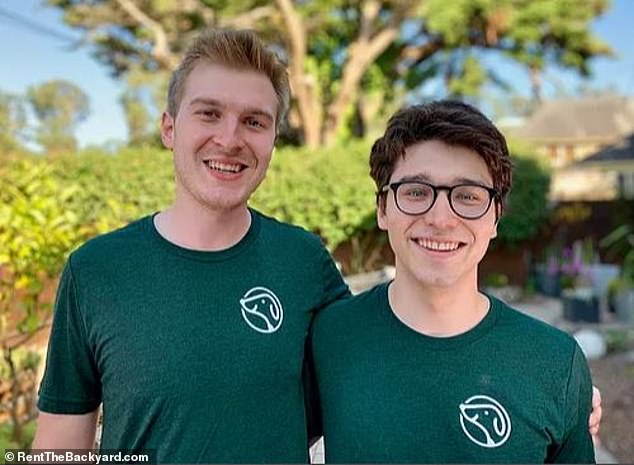
Rent the Backyard, which was founded by Brian Bakerman and Spencer Burleigh, seeks to ‘help people better use their property’.
For anyone interested in participating in the project, the 400-800 square-foot home would be built in the homeowners backyard at no cost.
Homeowners would ‘pay nothing’ unless they sell their homes. The tiny home would then be listed for rent online for short-term guests.
And even better, the homeowner would get half of the unit’s monthly profit, according to the Rent the Backyard website. The site says that homeowners could make up to $17,500 in extra yearly income.
In order to qualify, a person has to own a home in the San Francisco Bay area. Their backyard has to be at least 30 feet by 30 feet in size, and the homeowner would need to live at their residence most of the year.
For anyone interested in participating in the project, the 400-800 square-foot home would be built in the homeowners backyard at no cost. Homeowners would ‘pay nothing’ unless they sell their homes
The home would then be listed for rent online for short-term guests. And what’s even better, the homeowner would get half of the unit’s monthly profit. The website says that homeowners could make up to $17,500 in extra yearly income
Rent the Backyard promises to be able to build the homes within ‘as little as a week and a half’.
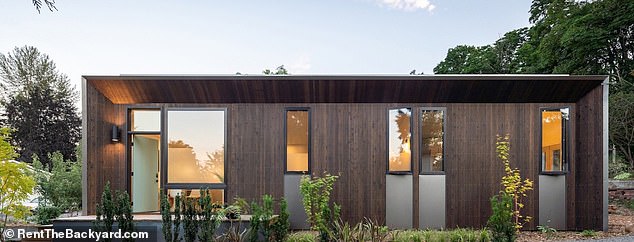
The company is also working with Node, which builds modern, modular homes.
‘Most of the builders are building the units almost entirely off-site, so there’s minimal disruption to the homeowner,’ Burleigh told Fast Company.
The startup would essentially take care of everything, including managing the tenant and maintenance.
According to Rent the Backyard, the apartments will rent at the fair market value.
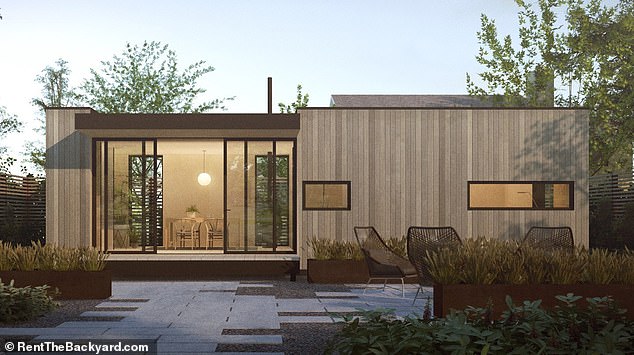
They are small studios that feature a large living area, kitchenette, and bathroom.
Last year, a project was approved that will pay people in Los Angeles county to put up basic homes or units in their backyard that homeless people can then rent at a low cost.
Los Angeles county has been facing a growing homeless population, and there are currently nearly 58,000 people without living shelter.
The first leg of the project was launched in August 2017, when the board of supervisors approved a $550,000 pilot program.
The homes, referred to as ‘granny flats’ or ‘in-law units’, were either built in backyards or constructed out of converted garages on the properties of individuals who agreed to host a homeless person or family.
In February 2018 the second leg of the project got kick-started when Bloomberg Philanthropies awarded Los Angeles a $100,000 Mayor’s Challenge grant.
The grant allows the city to study the feasibility of backyard units for homeless individuals within the city limits.
Rent the Backyard, which was founded by Brian Bakerman and Spencer Burleigh, seeks to ‘help people better use their property’
According to Rent the Backyard, the apartments will rent at the fair market value. They are small studios that feature a large living area, kitchenette, and bathroom.
Tenants of these backyard homes would contribute 30 per cent of their incomes to pay rent, and the rest would be covered by low-income vouchers.
Officials are hoping these backyard options provide a fast and inexpensive way to house some of the most stable homeless individuals throughout the county.
The idea for the project came after state legislation in 2016 and 2017 eased local review rules.
The city and county are now experimenting with financing options, low cost-materials and designs to promote these units.
Voters in the city limits of Los Angeles agreed on a total sum tax of $1.2billion to pay for new homeless housing.
Local government could then pay $15,000 annually for three years for each granny flat, roughly the same price as a bed in a homeless shelter.
Units can cost up to $350,000 a piece, and are often built for disabled people.
The goal is currently to build 10,000 new apartments, but that will likely take years.
In total, Los Angeles county could handle tens of thousands of homes in unincorporated areas if the project is ever expanded.
The dwellings will come equipped with plumbing and cooking facilities, and tenants will be screened ahead of time and receive social services such as case management, counseling and job training.
So far, many of the homeowners Burleigh has met with have been interested in building backyard homes.
‘We hear from homeowners again and again, that they were familiar with ADUs [accessory dwelling unit] and they’ve been excited about them,’ he told Fast Company.
‘Maybe they even had a site visit from a builder, but they didn’t feel comfortable enough to pull the trigger and actually start the unit. With us, with the no-money-down solution, and being able to sort of insulate homeowners from those charges and that concern, we’re able to sort of de-risk that construction of an ADU,’ he added.